Outdoor Furniture: What Actually Drives the Price of Solid Wood Furniture
Walk into any furniture showroom in Singapore and the price tags on solid wood pieces can feel like a roulette wheel. One dining table is S$899, another in the same showroom carries a S$3,400 sticker, and both claim to be "solid wood." I spent three weeks pulling apart the difference, including a long Saturday at the MIDHILL showroom in Foshan over video walkthrough, because what sits between those two numbers is rarely what the sales tag tells you. Below is the grounded version: the actual cost drivers, the local friction points Singapore buyers face, and where your money is genuinely working harder.
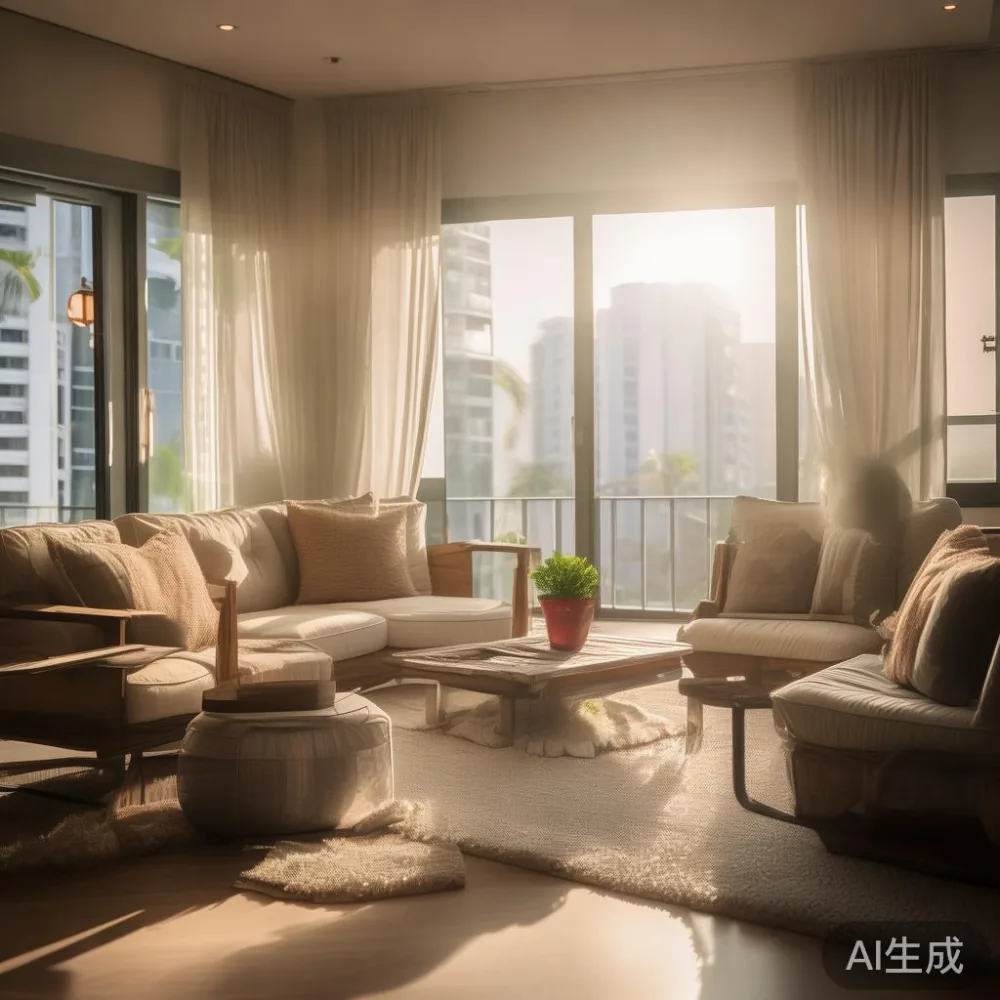
Singapore has a specific furniture economy. We import roughly 95% of household furniture, the bedrooms of a 4-room HDB in Tampines need a bed frame that fits a 1.5m mattress, the lifts in older Bedok blocks cap at 1.1m door width, and condo corridors in Punggol often turn 90° at the refuse chute. Every one of those realities changes what "expensive" and "cheap" actually mean once delivery day arrives.
What does "solid wood" actually mean at the point of purchase?
The phrase covers a wide spectrum. At one end sits engineered wood (MDF, particle board, plywood with a 0.6mm veneer) which can be called "wood furniture" legally in most markets. At the other end sits FAS-grade (First and Seconds) hardwood, kiln-dried to 6-8% moisture content, with no laminate, no veneer, no hollow chambers.
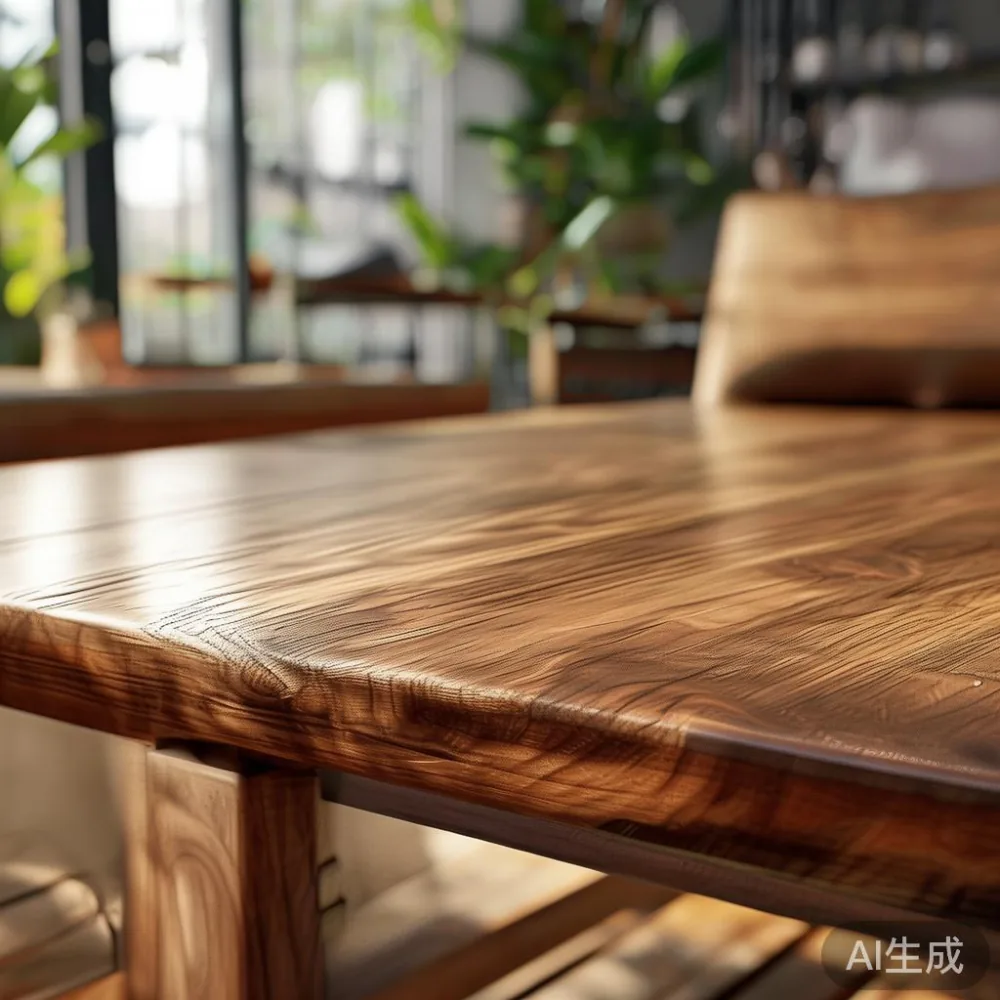
When a retailer in Jurong or a Taobao listing writes "solid wood sofa," I want to know three things before discussing price:
- Which species (rubberwood, ash, oak, walnut, teak)?
- Is it solid all the way through, or only on the load-bearing parts?
- Was it kiln-dried, and to what moisture percentage?
A rubberwood dining table running S$1,100 and an oak dining table at S$4,200 may both be honestly labelled "solid wood," but the raw timber input alone is roughly 2x, the waste factor is different (oak needs slower milling), and the finishing time is longer because oak's open grain needs three coats of sealer plus a 14-day cure. None of that appears on the price tag, but every minute of it is billed into the final number.

Which raw inputs actually move the price in 2025-2026?
Timber species dominates the bill of materials. Rubberwood, a plantation by-product from rubber tree plantations that have stopped producing latex, sells in Foshan at roughly RMB 3,800-4,500 per cubic metre in 2025. North American ash and red oak runs RMB 7,500-9,800 per cubic metre. Walnut has crossed RMB 14,000 per cubic metre for FAS-grade boards, and slow-grown Burmese teak now exceeds RMB 22,000 per cubic metre on the open market. A 2m dining table uses around 0.18-0.22 cubic metres of rough lumber, so species alone explains a S$1,400 swing before anyone touches the wood.
Then there is the hidden cost most buyers never see: moisture content. Timber at 12%+ moisture content, which is what you get if a workshop skips the kiln, will shrink 4-6mm across a 1.5m board once it lives in an air-conditioned Singapore bedroom at 24°C and 55-60% RH. That movement cracks joints, opens table leaves, and warps bed frame slats. Proper kiln-drying to 6-8% costs around RMB 280-450 per cubic metre in energy, but it is the single biggest reason a piece survives five Singapore humid seasons instead of three.
Hardware sits quietly in the corner of the bill. Soft-close drawer runners from Blum (Austria) run RMB 120-180 per pair; unbranded zinc-alloy runners run RMB 18-30. The first feels like a drawer pulled by a finger; the second slams. A four-drawer nightstand contains eight slides. That hardware alone contributes S$45-S$90 of the final retail price, and explains why two bedside tables that look identical sit at S$380 and S$620.
Why does Foshan keep showing up in solid wood sourcing conversations?
Foshan, in Guangdong province, runs the largest furniture manufacturing cluster in China. Within a 30km radius of Shunde you will find roughly 8,000 factories, separate timber yards, finishing lines, and upholstery workshops. This geographic density compresses lead times and raw material costs in a way no scattered workshop network can match. If you are researching European light luxury with storage at a workable price, Foshan furniture makers are typically the production base, even when the showroom brand is French-named.
I joined a video call last month with a MIDHILL production manager walking through a batch of solid wood bed frames destined for a Singapore distributor. The line was on batch 37 of a 200-unit run. Batching to 200 units of one SKU is what unlocks the S$1,100-S$2,800 retail band for genuine solid oak bedroom furniture. A 12-unit custom run for one client would price out 40-60% higher before shipping.
Singapore buyers get an unusual advantage here. Because the country imports heavily and re-exports little, container shipping from Yantian or Shekou to PSA takes 5-7 days door-to-door, and Foshan-to-Singapore road-rail-sea multimodal routes can land a 40HQ container in 9-12 days at roughly S$2,100-S$2,600 all-in for a furniture-load FCL. Mid-century modern for hotel developers in Singapore often ships through this exact corridor, which is why 4-5 star hotel refit timelines can absorb a Foshan sourcing window without derailing an opening.
Why are French light luxury and American light luxury priced differently from post-modern light luxury?
Styling language shapes cost because it dictates machining time, finish coats, and accessory counts.
French light luxury leans on chamfered edges, tapered cabriole silhouettes, brushed-brass or nickel hardware, and a warm honey or chestnut finish over ash or beech. A three-seat solid wood sofa frame in this style uses roughly 35-40 board feet of ash, requires steam-bending for the arms, and carries 8-10 visible decorative carvings that each take 4-6 minutes of CNC plus hand-sanding. Post-modern light luxury uses cleaner geometry: slab panels, mitred joinery, matte black hardware, and grayer oak tones. The same three-seat frame uses 28-32 board feet, less steam work, and 2-3 CNC details. Machining time drops by roughly 30%.
American light luxury sits between the two, with quarter-sawn white oak, shaker-inspired panels, and a satin finish that needs fewer coats than the French honey tone. When buyers search for the best French provincial sofa for 2026, they are usually comparing these machining loads without realizing it. Upholstery fabric changes the picture again: a S$28/yard performance boucle costs roughly half of a S$52/yard Italian wool blend, and a four-seater solid wood sofa wears 14-18 yards.
Closet systems follow the same logic. A French provincial wardrobe with moulded cornices, curved legs, and brass pulls carries 2.5x the finishing time of a flat-slab post-modern light luxury wardrobe in the same dimensions. That is part of why the question is light luxury wardrobe worth it often comes down to whether the visual layering justifies an extra S$900-S$1,500 over a cleaner slab design built from the same wood species.
What does Singapore delivery actually add to a fair piece price?
Delivery is the silent multiplier that buyers in countries with warehouse pick-up never see. A standard 4-room HDB requires a bed frame, two nightstands, a wardrobe, a dining table, and six dining chairs. At roughly 280-420 kg total, that furniture will not fit a single HDB lift unless it ships partially disassembled, and even then the longest single piece must clear a 1.1m lift door and a 1.3m corridor turn.
Conscientious sellers pre-break wardrobes into frames of 1.95m height x 0.6m width x 0.08m depth, pre-drilled with cam locks, and ship the side panels, top, base, doors, and shelves as a flat-pack weighing 18-26 kg per carton. Two delivery staff plus a four-piece flat-pack assembly run takes 3-4 hours on site. That is a S$120-S$180 service line in Singapore, before you add the loading fee at the warehouse (S$40-S$60) and the lift-side surcharge for ground-floor to 14th-floor walk-ups (S$15 per floor after the 4th, common for older Bedok blocks without a service lift).
GST at 9% (with the planned move to 10% by 2026) is applied to the subtotal plus delivery, which adds another 9% on top of the imported CIF value. A S$3,200 dining set imported CIF lands at S$3,488 to the customer, and once delivery and assembly are layered in, the same set delivered and built in your Tampines flat lands closer to S$3,720.
How long should a real warranty be, and what should it cover?
Structural warranty on solid wood covers joint failure, breakage of load-bearing components, and excessive cracking beyond 2mm at the time of warranty claim. Anything tighter than that risks being excluded quietly. 10 years is the realistic length for kiln-dried hardwood bedroom and dining furniture, and pairs naturally with a lifetime refinishing option because hardwood can be sanded back 4-6mm across decades of care. Softwood, plywood, and MDF do not earn that warranty because they cannot be refinished repeatedly without exposing the substrate.
Refinishing adds a real ceiling to the long-term cost. A S$3,800 oak dining table refinished twice over 25 years at S$420-S$550 per refinish costs roughly S$1,000 in cumulative upkeep. A S$1,400 engineered-wood table replaced twice in the same window costs S$2,800 plus two disposal runs and the environmental load of two more pieces in a Semakau-bound waste stream.
MIDHILL publishes a 10-year structural warranty on its core solid wood bedroom and dining lines, paired with lifetime refinishing for customers who ship pieces back to the Foshan facility. For a Singapore buyer, the warranty has to be readable before purchase: look for the named defects (joints, warping beyond tolerance, cracking beyond tolerance), the procedure for claims, and whether labour and shipping are covered or capped.
How do you read a price tag without getting steered?
Three rules of thumb I now use when I am asked about mid-range purchases, after walking roughly 40 showrooms over the past few months:
- Weight tells you density. A solid oak 1.8m dining table weighs 55-72 kg; an MDF-veneer lookalike weighs 28-34 kg. Pick the piece up at the showroom corner with the floor sample.
- Ask for the underside. A genuine solid wood bed frame has continuous end-grain on the slat rails; a veneered frame shows a 0.6mm printed layer.
- Run your palm across a joint. Mitered corners on a solid wood wardrobe leave a 0.2-0.4mm glue line, almost invisible to the eye; laminated MDF mitres run colder because the substrate conducts heat away from your hand.
A realistic Singapore budget for an entry solid wood bedroom set (bed frame, two nightstands, four-door wardrobe) starts around S$3,800-S$4,500 for ash or rubberwood and lands closer to S$6,800-S$8,400 for FAS-grade oak or walnut. A six-seat solid wood dining table with chairs in oak typically falls between S$4,200 and S$7,500 depending on whether you choose a French light luxury profile or a post-modern light luxury slab top.
What should Singapore buyers check before clicking pay?
Three operational details matter more than the brochure:
- Lead time of 30-45 days from order to delivery is realistic for made-to-order Foshan pieces, while stocked pieces in a Singapore warehouse can move in 7-10 days. Ask which one you are paying for.
- Free shipping over a threshold (often US$350, which equals roughly S$480) is genuinely useful for a first-time buyer, but check whether GST, lift-side surcharges, and assembly are inside or outside that threshold.
- Returns within 14 days for stocked pieces are useful only if the piece can leave your flat without lift-side disassembly. A made-to-order piece in the wrong configuration usually cannot be returned.
Outdoor furniture runs into its own constraints because Singapore's UV index sits above 9 for most of the year, humidity averages 78-82%, and afternoon thunderstorms are routine. An outdoor piece needs Teak or thermally modified ash with a marine-grade stainless fastener set, otherwise a single wet season warps every horizontal surface by 2-3mm. If you are budgeting for a balcony set in a Punggol condo, expect a S$1,800-S$3,200 entry band for a true four-piece outdoor set engineered for Singapore weather rather than a S$600 indoor-set repainted for outdoor use.
A solid wood sofa for a condo living room shares none of the outdoor specification, but it does share one rule: the species, the moisture content, and the hardware matter more than the marketing name on the showroom wall. A solid wood bed frame or a dining table from a reputable Foshan furniture maker will outlast an MDF alternative by a factor of three to four in cycle time, which is what you are really paying for when the price tag reads higher than a quick-ship online competitor. When you weigh the question of the best light luxury furniture for a Singapore household, weigh the kiln-drying log, the species stamp, the hardware brand, and the warranty wording more than the showroom price.
The buyer who walks in already knowing these separate cost drivers pays roughly the same sticker price as everyone else, but lands a piece that will still be in the flat in 2040.