Lacquered Outdoor Furniture in a Tropical Climate: A Singapore Owner’s Guide
Last March I spent a Saturday morning in Tampines with Mrs. Tan, who had just moved into a 1,050 sq ft HDB Build-To-Order flat on the 14th floor. Her balcony was 4.2 m wide by 1.8 m deep — the standard HDB service-yard balcony — and she had ordered a 180 cm teak outdoor furniture dining set in a chocolate lacquer. By the time the MIDHILL delivery crew had carried the four chairs and the table down the 1.1 m-wide corridor, turned at the lift lobby (the lift car measured 1.2 m deep by 1.6 m wide, with a 2.1 m ceiling), and wheeled everything into her home, she asked the question I hear about every other week here: how do I keep this surface looking new when the weather outside is 32 °C and 84% relative humidity?
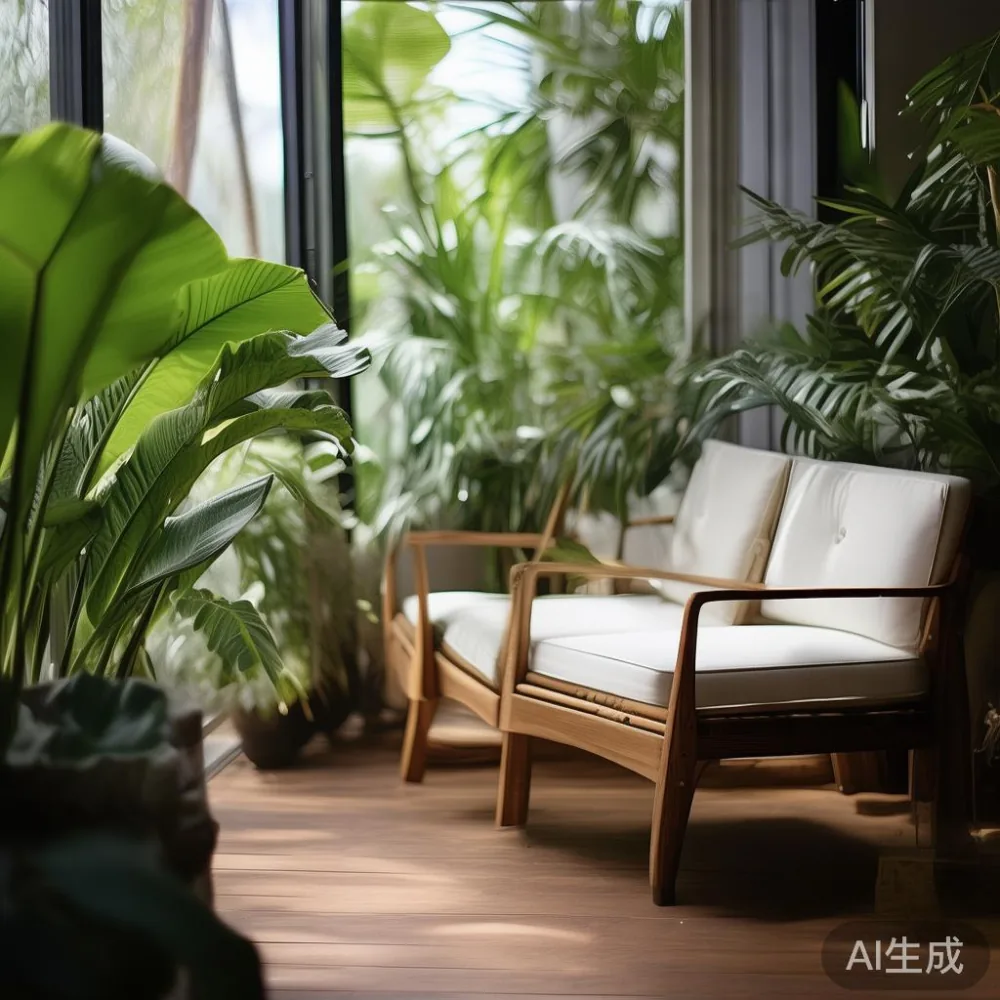
This guide is the long answer. It is written for Singapore households — HDB flats in Bedok and Punggol, condos in the East Coast, landed houses in Bukit Timah — who have invested in lacquered outdoor furniture and want the finish to survive the monsoon, the haze, and the daily UV. The advice is generic enough to apply across Southeast Asia, but the measurements, the SGD pricing, and the corridor manoeuvres are tuned to a 3- to 5-room HDB. Where relevant I will also refer to indoor pieces — a solid wood sofa, a bed frame, a dining table, a wardrobe, a nightstand — because the chemistry of lacquer is identical whether the wood sits on a balcony or in a living room.
What exactly is a “lacquered” outdoor furniture finish?
A lacquer is a film-forming finish — typically polyurethane, acid-catalysed, or nitrocellulose — sprayed or brushed onto the timber in two to seven coats and sanded between coats with 320-grit paper. On a balcony set made from teak, eucalyptus, or merbau, the lacquer seals the cell structure, blocks moisture vapour transmission, and gives the surface its soft sheen. An oil finish, by contrast, soaks into the wood and needs reapplication every 90–120 days; a lacquer sits on top and, with reasonable care, lasts 5 to 8 years before it needs a professional respray.
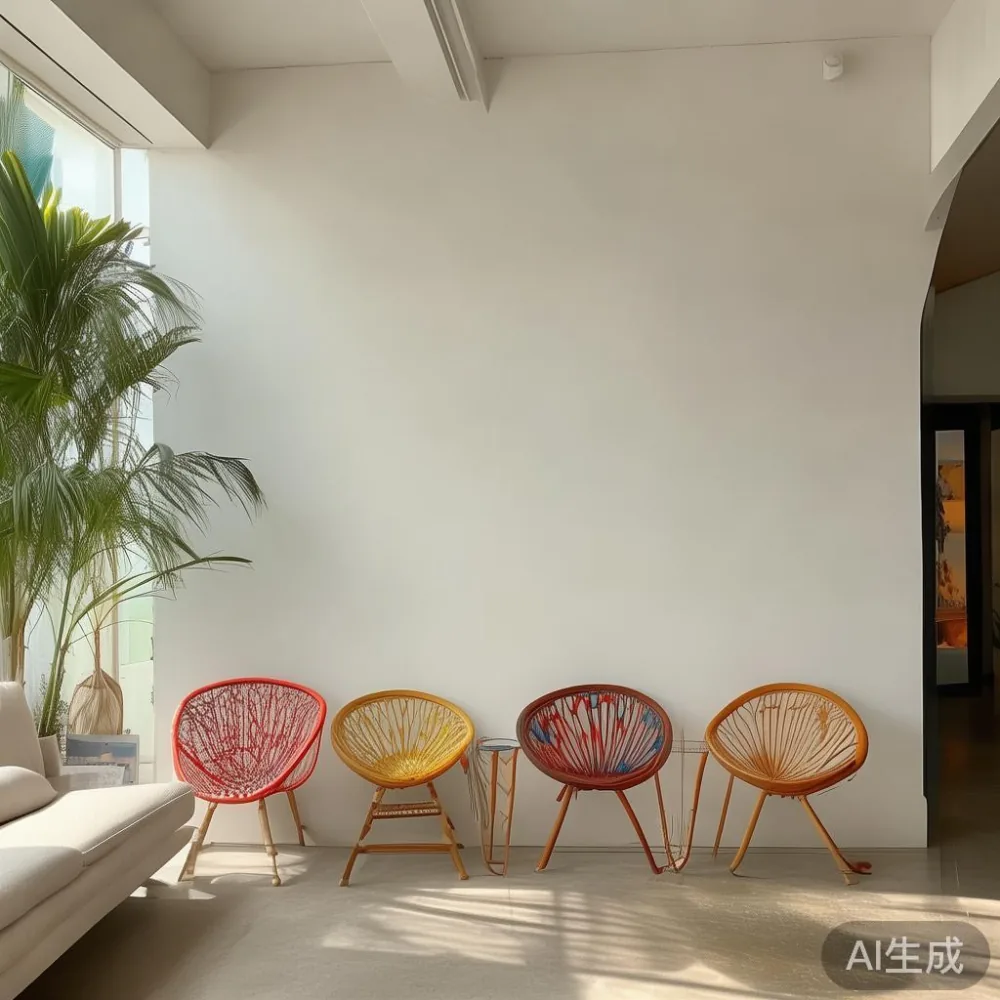
For Singaporean buyers, the practical difference is this: an oiled outdoor furniture set feels rough after the December monsoon; a lacquered set can be wiped dry in 10 minutes and looks the same on Monday as it did on Saturday. That is also why MIDHILL specifies seven-coat catalysed lacquer on its teak range — the brand has shipped to more than fifteen countries since 2008, and the South-East Asian climate is the harshest test rig it has.
How does Singapore weather attack lacquer?
Three forces work on your outdoor furniture every day. UV radiation breaks the polymer chains in the top coat, causing chalking — that whitish bloom you sometimes see on old garden chairs. Humidity cycles between 60% at noon and 95% at midnight, swelling and shrinking the timber by roughly 1.8% across the grain; the lacquer has to flex enough to follow that movement without cracking. Finally, salt and acidic rain (Singapore’s average pH in 2023 was 5.0, down from 5.4 in the 1990s) etch the surface and dull the gloss.
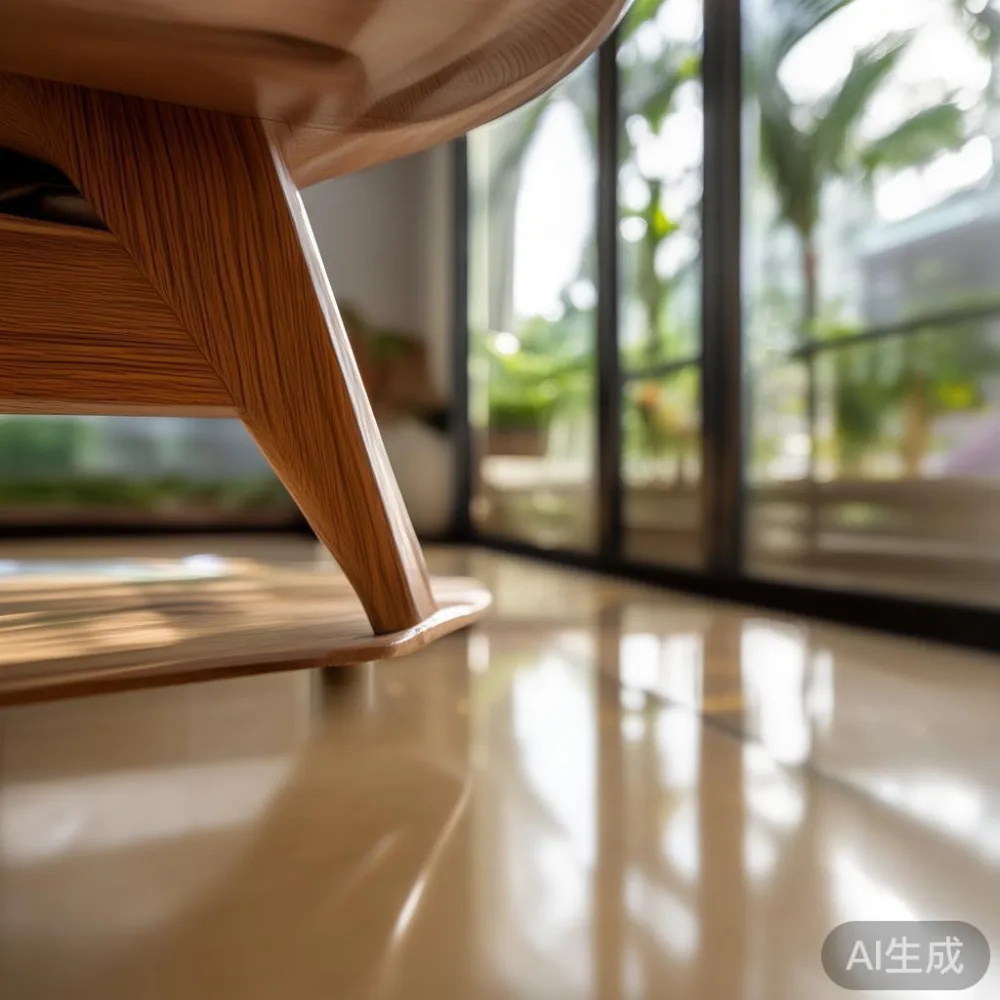
The good news is that the threat is small per square centimetre. A teak dining table of 180 cm × 90 cm has 16,200 cm² of top surface. Each morning’s UV dose is about 350 kJ/m²; the lacquer absorbs roughly 5% of that. Over a year, the cumulative damage is the same as leaving the table under a halogen spotlight for about 14 days. Nothing a twice-yearly wax cannot reverse.
What is the best coastal style for a small apartment?
Coastal style for a small Singapore apartment is pale timber, white-rattan accents, and linen-look cushions in oatmeal and driftwood grey, with one or two pieces of indoor furniture — say, a marble table or a French walnut standing desk — acting as the calm focal point against the balcony greenery.
“Coastal” does not mean beach-resort clutter. In a 4.2 m × 1.8 m HDB balcony you have about 7.5 m² to dress, and the corridor outside is only 1.2 m wide, so every centimetre of furniture has to earn its place. I usually tell my customers in Punggol and Bedok to start with a single 150 cm teak bench in a white-washed lacquer, add two stackable chairs in the same finish, and resist the urge to bring in more. A neutral coastal palette is also kinder to lacquer because pale colours reflect rather than absorb heat — a charcoal-stained surface can run 8 °C hotter than a chalk-white one at noon, and heat accelerates UV breakdown.
How should you clean lacquered outdoor furniture in Singapore?
Wipe it down once a week with a microfibre cloth (around S$6 for a two-pack at any neighbourhood supermarket), then once a month wash with a pH-neutral soap — 5 ml of clear dishwashing liquid in 1 litre of lukewarm water. Rinse with a second damp cloth and dry immediately. Total time: under 4 minutes for a four-seat dining set. Avoid anything containing silicone, ammonia, or bleach; silicone sprays give a temporary shine but seep into the next refinishing job and fish-eye the new lacquer, while bleach strips the UV inhibitors in the top coat.
For bird droppings, tree sap, or the red dust haze that drifts over from Sumatra in September, act within 24 hours. The droppings are mildly acidic (pH 4.5–5.5) and will etch a clear ring if left over a weekend. Dampen the spot, wait 60 seconds, wipe, then dry. I tested this on my own teak outdoor furniture bench last month during the haze — the droppings came off in one pass with no residue.
How often should you wax a lacquered surface, and which wax?
Twice a year is enough in Singapore — once in late February before the inter-monsoon dry spell, and once in early September before the wet phase begins. Use a paste wax with carnauba as the first ingredient (a 200 g tin costs about S$22–S$28 at hardware stores in Tampines or online). Apply a pea-sized amount on a soft cloth, work it in a 30 cm circle, wait 8 minutes for it to haze, then buff with a clean cloth. A 180 cm × 90 cm table top needs about 8 g of wax per session — a single tin will cover three to four pieces for the whole year.
Skip the spray polishes. They are silicone-heavy, they attract dust, and in our humidity they leave a smeary film within 48 hours. If you have inherited a sticky old spray-coated table, strip it with mineral turpentine (about S$9 for 1 L) before re-waxing.
Can lacquered outdoor furniture live outside all year in Singapore?
Yes, provided three conditions are met. First, the piece must be in true solid hardwood — teak, merbau, or eucalyptus with a density above 0.65 g/cm³. Engineered or laminated boards will delaminate within 18 months. Second, the lacquer must be a catalysed polyurethane or acid-catalysed system, not a single-pack water-based top coat. Third, you need to keep the feet out of standing water — a 10 mm rubber pad under each leg (S$1.20 each at any DIY shop) lifts the timber off the wet balcony floor and stops capillary wicking.
If you can tick those three boxes, your outdoor furniture can sit through the December monsoon, the afternoon thunderstorms, and the worst of the haze without protection. We have a MIDHILL teak dining set on our showroom balcony that has been outside, uncovered, for four years and eight months — the lacquer has dulled slightly but the wood is still dimensionally stable and the chairs still stack cleanly. The only concession we make is to drag the set 60 cm back from the railing during a heavy squall so the rain does not bounce up under the seats.
Will the lift fit my new lacquered outdoor furniture set?
Almost always, yes — but measure first. HDB lifts are usually 1.1 m wide × 1.4 m deep with a 2.1 m door height; newer condos sometimes have 1.6 m × 1.8 m cars with 2.3 m doors. A 240 cm outdoor furniture bench will not fit in a standard HDB lift standing up; it must come in on its side or end, and you need 60 cm of clearance diagonally. A 180 cm dining table top is the practical ceiling for a single HDB trip — anything wider should be ordered as two halves with a bolted centre, a service MIDHILL provides for free on orders above US$350 (about S$475 at today’s rate).
For landed property the question is the stairwell turn, not the lift. A 1.2 m-wide spiral or switchback staircase needs a piece no longer than 220 cm and no deeper than 80 cm if you want the carriers to keep the lacquer intact. My colleague measured three landed houses in Bukit Timah last month and found that the tightest corner — a 1.4 m inside turn — could just accept a 200 cm × 95 cm table on its edge, with 8 cm to spare on each side.
How do you deal with scratches and small chips?
For surface scratches (you can feel them with a fingernail but not see the wood underneath), buff with a soft cloth and a drop of finishing oil — S$15 for a 250 ml tin of tung oil. The oil fills the scratch and restores the sheen for about 6 months. For deeper chips where the bare wood shows, use a touch-up marker matched to the factory colour (MIDHILL ships these free with every dining table and bed frame order, seven shades from natural teak to ebony). Apply in two thin coats, let each dry 20 minutes, then seal with a single wipe of paste wax.
If a whole panel is damaged — a corner crush during a corridor move, for example — that is a refinishing job, not a repair. The good news is that MIDHILL offers lifetime refinishing on its solid wood ranges. You pay only the transport (about S$80 within Singapore, free above S$475 order value) and the lacquer batch (S$120–S$180 depending on sheen). The set is usually back with you in 14 working days.
Does a lacquered finish change the way I should choose cushions and accessories?
It changes two things. First, the cushions should be Quick-Dry foam (density 28–32 kg/m³) wrapped in a solution-dyed acrylic such as Sunbrella; anything else will hold moisture against the lacquer and leave a dark tide mark within a week. Second, any metal accessories — buckles, feet caps, parasol poles — should be 304 or 316 stainless steel. Cheaper alloys will rust in the humidity, and the rust water will stain the lacquer a yellow-brown ring that no amount of wax will hide.
I keep a sample chart on my phone: 304 stainless is fine for shaded balconies; 316 is needed for anything within 3 km of the coast. East Coast and Sentosa Cove buyers should pay the extra S$30–S$60 per fitting for 316 grade.
What about moving the set indoors during a renovation or house move?
Wrap each piece in a moving blanket (S$12 each, reusable) and secure with stretch film, not tape. Tape adhesive reacts with catalysed lacquer and leaves a ghost mark that takes 3 to 4 months of normal use to fade. If you must use tape, choose 3M Blue 2090, which has a low-tack adhesive rated safe on finished wood. Once indoors, store the pieces vertically against a wall with a cork pad between them — vertical storage keeps the legs straight and stops the top from cupping under its own weight.
A 180 cm outdoor furniture dining table weighs between 38 kg (teak) and 52 kg (merbau). Two people can carry it comfortably up a single HDB flight, but four are needed from the third storey up. The 10-year structural warranty that comes with every MIDHILL order covers the joinery, not the moving damage, so it pays to use professional carriers — they cost about S$120 for a four-piece local move and will not nick a single corner.
Are there any indoor pieces that share the same care rules?
Yes, and it is worth saying so because many Singapore households mix indoor and outdoor pieces in the same room. A solid wood sofa frame, a bed frame, a dining table, a wardrobe, and a nightstand all use the same catalysed lacquer system in our line. They need the same pH-neutral wash, the same twice-yearly wax, and the same 304/316 metal hardware rule. The only difference is UV: indoor pieces get 10 to 20 times less radiation, so the wax cycle drops to once a year rather than twice.
Customers who own a French walnut standing desk next to a balcony door should be extra careful with the hinge side that faces the window — the morning sun hits that edge at a 35° angle and can fade the walnut in 14 months if the curtains are left open. A simple S$18 UV film on that single pane cuts the fading by about 70% and protects both the desk and any adjacent outdoor furniture piece at the same time.
How do returns or warranty claims work for outdoor furniture in Singapore?
Because outdoor furniture is bulky, the process is slightly different from indoor goods. You have 14 days from delivery to change your mind on a stocked item, and MIDHILL collects it free if you are within mainland Singapore; for Sentosa and the Southern Islands there is a S$60 ferry surcharge. Returned pieces must be in resaleable condition — no scratches, no cushions used, original packing kept — and you will receive a refund within 7 working days, minus the original S$80 delivery fee if one was charged.
For warranty, photograph the issue, send the image with your order number, and the service team confirms within two working days. The 10-year structural warranty covers joint failure, wood splitting, and lacquer peeling not caused by impact; lifetime refinishing covers cosmetic wear. GST is included in every SGD price you see on the quotation, so there are no surprises at checkout.
Final checklist before you commit to lacquered outdoor furniture
Measure the lift (1.1 m × 1.4 m for most HDB blocks) and the tightest corridor turn. Choose solid hardwood over engineered board. Specify catalysed lacquer, not single-pack water-based. Buy 304 or 316 stainless hardware. Budget S$30 a year for wax and microfibre cloths. Plan for a S$120 refinish every 5 to 8 years. Keep the receipt and the warranty card, because lifetime refinishing is only honoured with proof of purchase and original delivery address.
If you follow those seven points, a lacquered outdoor furniture set in Singapore should give you 12 to 15 years of daily use before any structural attention is needed — and the surface will still look the part when your children inherit it.