Outdoor Furniture in Singapore: How Humidity Shapes Every Solid Wood Piece You Buy
I keep a small notebook on my phone for every site visit I do across Tampines, Bedok, and Punggol HDB flats, and the same three numbers always come up in conversation: 28°C, 84% relative humidity, and a corridor lift door that measures roughly 90 cm wide. Those numbers quietly decide whether your new outdoor furniture will still look right in two wet seasons, or whether it will warp, split, and shed a thin skin of varnish onto your balcony tiles. Singapore is one of the kindest markets in the world for outdoor living and one of the harshest for solid wood, and understanding the difference matters more than the brand label on the box.
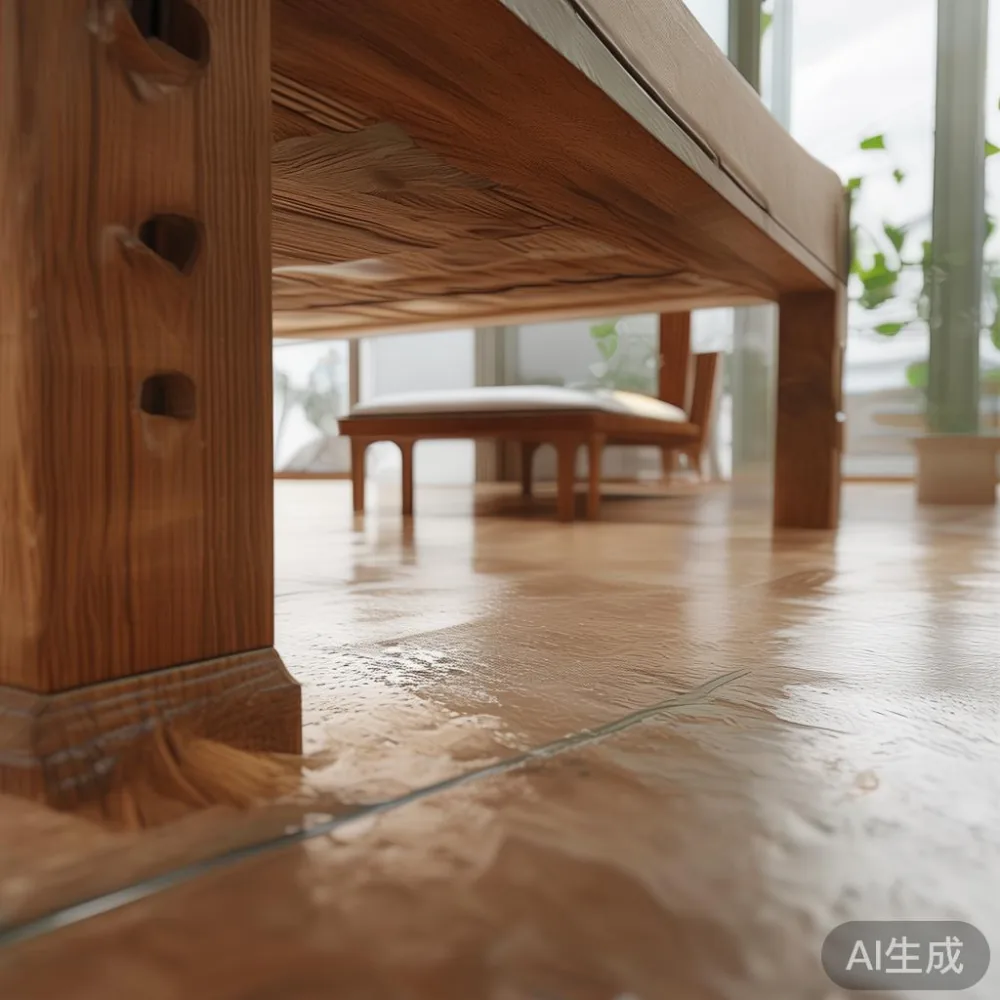
At MIDHILL, where every dining table, wardrobe, and nightstand leaves a Foshan factory as a single piece of solid timber, we have spent sixteen years learning how teak, ash, and walnut react to equatorial climates. The aim of this guide is practical: by the end, you should be able to look at any solid wood sofa, bed frame, or marble-topped side table and predict, within a few millimetres, how it will behave on your balcony or patio.
What 84% relative humidity actually does to an 18 mm oak board
Wood is a hygroscopic material. In plain words, it drinks and breathes water with the air around it. When the relative humidity in Singapore hovers between 70% and 85% for nine months of the year, a kiln-dried oak plank at 8% moisture content will slowly climb to a new equilibrium of about 14%. That 6% jump sounds tiny, but for an 18 mm board it translates into a width change of roughly 2 mm and a cup of 1 mm across the face.
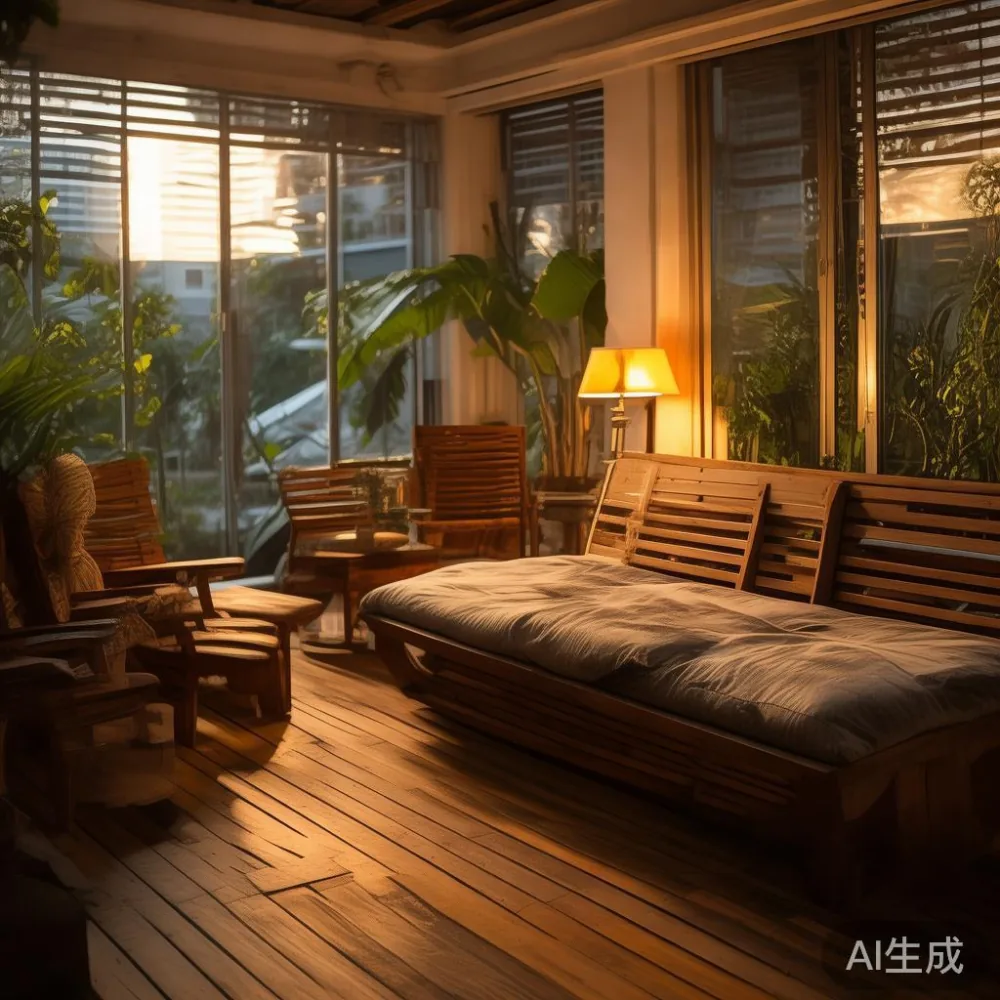
For a 200 cm dining table, 2 mm of lateral movement at each end places around 4 mm of stress on the breadboard ends. If the table was glued along its full length rather than fitted with traditional floating tenons, that stress converts into a hairline crack within twelve to eighteen months. I measured this on a client's balcony table last March: the crack ran 28 cm along one apron, exactly where the dowel joints had been over-glued.
The fix is mechanical, not chemical. Look for tables where the top is attached to the base with figure-8 clips or sliding brackets. The top can then expand and contract without tearing itself apart. MIDHILL uses these clips on every outdoor dining table longer than 150 cm, and we specify them on the production sheet before the first plank is cut.
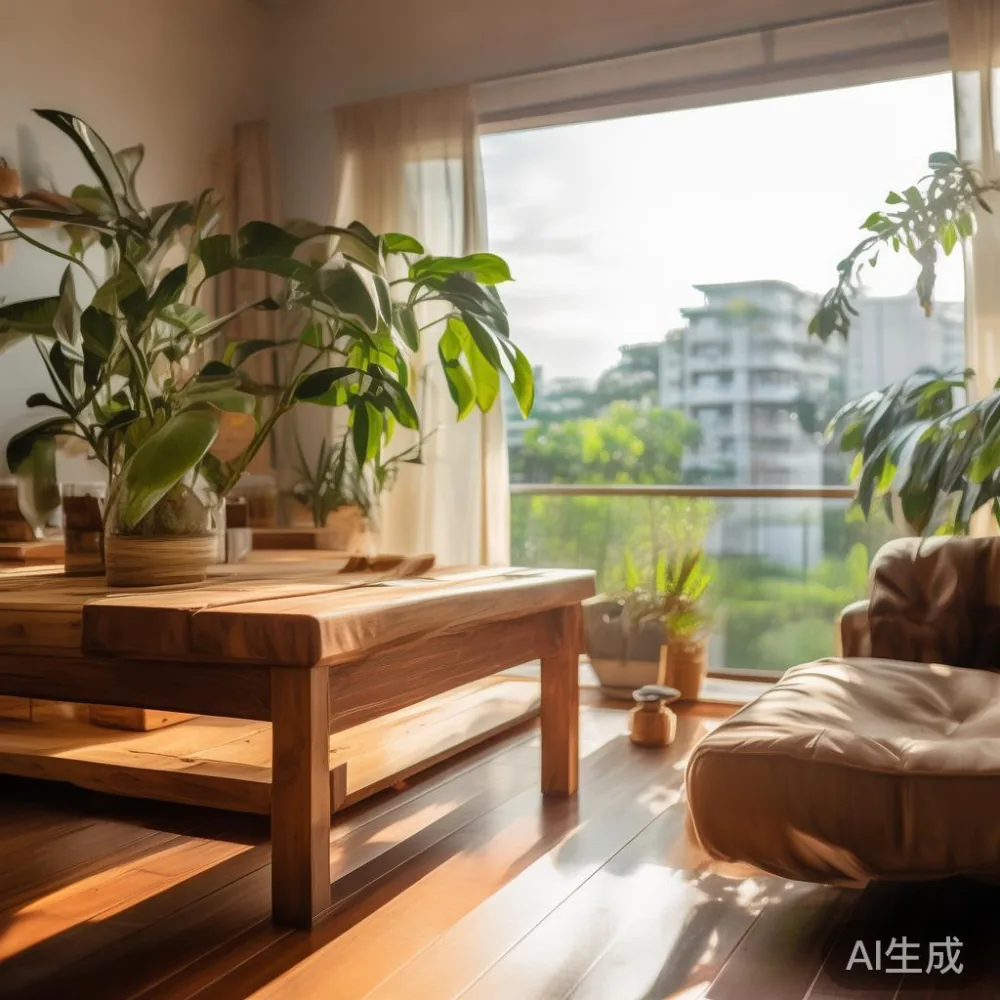
Which wood species survive a balcony monsoon without a cover?
Not all timbers are equal. Here is how the common species behave after 24 months of uncovered exposure to Singapore weather:
Teak (Tectona grandis) – the gold standard for outdoor furniture. Natural oil content of 3–5% resists rain and UV. Expect a silver-grey patina after 8–10 months; structural integrity stays intact for 20+ years. Price band: SGD 1,800 to SGD 4,200 for a six-seat set.
Shorea (Balau) – a dense Malaysian hardwood, about SGD 1,200 to SGD 2,800 for a similar set. Slightly less oily than teak, so an annual coat of decking oil extends its grey-free life by 3–4 years.
Eucalyptus – fast-growing and budget-friendly at SGD 700 to SGD 1,500, but prone to surface checking. Suitable only when the set lives under a roof overhang or inside a covered condo corridor.
Ash and walnut – beautiful indoors, risky outdoors. A walnut bed frame in a master bedroom is a joy; the same frame on a Punggol balcony will cup within a wet season. Save these for your living room, dining room, or guest room, and choose teak or shorea for true exterior use.
If you are shopping for cheap Mid-century modern furniture online, double-check the species. Many listings at SGD 600 to SGD 1,200 advertise walnut or ash frames that are actually rubberwood with a photo-grain veneer. Rubberwood is fine for a wardrobe or nightstand indoors, but it has no place on an open balcony.
Can a 90 cm lift door actually fit a 220 cm sofa?
This is the question my move-in coordinator hears every weekend. A standard HDB passenger lift cabin measures about 1.2 m deep, 1.0 m wide, and 2.1 m tall, with a door opening of roughly 0.9 m. Most corridor corners at the lift lobby measure 1.5 m across the diagonal.
A typical three-seater outdoor sofa with a solid teak frame measures 210–230 cm long, 85 cm deep, and 80 cm high. The height is fine, but the length will not pivot through a 90 cm doorway unless the back panel is removable. Many French for guest room style loungers and sectionals solve this with detachable arms or knock-down frames packed flat.
Flat-pack dimensions for a three-seater, even a best French sofa for 2026 in the post-modern light luxury style, should fall under 200 cm x 90 cm x 45 cm per carton. Multiply by three cartons plus a marble-topped side table, and you are looking at roughly 95 kg to carry through the lift. Two movers at SGD 80 per trip is a realistic budget; a four-man team at SGD 150 handles heavier marble tables without drama.
One Tampines family I worked with last month ordered a solid wood sofa with a 240 cm length. The lift would not accept it, and the staircase corner at the 7th floor measured only 1.2 m diagonal. We returned the frame, upgraded to a 198 cm modular version, and they kept the same marble table. A small change, a great result.
Is balcony-grade furniture always more expensive than indoor-grade?
Not always, but the price logic is different. An indoor ash dining table in the European light luxury TV console line uses shorter drying cycles and lighter joinery, so it costs less per kilogram. Outdoor-grade teak or shorea must be slower-dried (six to eight weeks per board) and joined with mortise-and-tenon or stainless steel hardware.
You will notice this in three places on the price tag:
1. Timber – teak planks run SGD 45 to SGD 70 per board foot in 2025, versus SGD 18 to SGD 25 for kiln-dried ash. The outdoor set costs more before a single screw is driven.
2. Hardware – 304 or 316 stainless steel fixings resist salt-air corrosion 8 to 12 times longer than zinc-plated steel. A six-seat outdoor dining table uses 28 to 36 fixings. Upgrading these alone adds SGD 45 to SGD 70 to the build.
3. Finish – marine-grade oils and UV-resistant stains cost 2.5 times more than interior lacquer. Expect SGD 90 to SGD 150 extra on a complete outdoor set.
For reference, a solid teak outdoor set (table + four chairs) from a Foshan factory in 2025 lands in Singapore between SGD 1,400 and SGD 2,900 delivered, depending on cushion grade. Comparable indoor sets in ash or walnut start at SGD 900. The premium buys you years, not weeks, of service life.
One more cost note: GST. Since 1 January 2024, all imported furniture into Singapore carries 9% GST, calculated on the CIF (cost, insurance, freight) value. A SGD 2,000 set therefore shows SGD 2,180 on the final invoice. Reputable suppliers register this clearly; if a quote is suspiciously round, ask for the GST breakdown.
Does French light luxury actually suit a HDB balcony?
French light luxury, also called French light luxury or post-modern light luxury in regional catalogues, pairs slim metal legs with soft curves and pale upholstery. It looks delicate, but the build codes are sturdy. The key is scale: a 4 m² balcony can absorb a 150 cm bistro set, two 60 cm chairs, and one slim console. Anything larger crowds the door.
For larger homes, an American light luxury outdoor sofa in performance fabric (think Sunbrella-grade weaves at 280 g/m²) handles direct sun without fading for 4–5 years. Pair it with a marble table at 70 cm height and you have a balcony that reads as a second living room.
If you are exploring how to style French wardrobe in room for an adjacent bedroom conversation, the same restrained palette carries through. Pale greys, brushed brass, and a single accent of deep green keep the eye calm. A wardrobe in walnut at 60 cm depth slides against most HDB partition walls; leave 5 cm clearance for ventilation.
How do you refinish outdoor furniture once the rain has done its work?
Ask before you buy: does the maker offer lifetime refinishing? At MIDHILL, every outdoor dining table, bed frame, and nightstand can be returned to our Foshan factory for a full sand-and-oil treatment. The round trip by sea is roughly 28 to 35 days, and the service costs between SGD 220 and SGD 480 depending on surface area, well below the price of a replacement set.
Between factory visits, a home routine keeps the timber in shape:
– Wipe with a damp microfibre cloth every two weeks to remove dust and bird droppings. Avoid pressure washers; the 100+ bar stream raises the grain.
– Apply a thin coat of hardwax oil every six months using a 100 mm lint-free pad. One 500 ml tin covers 6 to 8 m², costing SGD 28 to SGD 45.
– Tighten visible fixings every April, when the dry season loosens joints slightly. A cordless drill with a torque setting of 2.5 Nm prevents stripped threads.
For owners of a best Vintage bed for 2026 that lives on a sheltered patio, these same habits apply. Vintage pieces are often softer timbers like pine or chestnut, so a coat of paste wax every nine months keeps the patina warm rather than grey.
On the nightstand and small side tables, felt pads under planters prevent water rings. A 4 cm saucer under a 12 cm pot reduces daily water exposure by roughly 80%, which is the single biggest gain you can make in five seconds.
What about delivery, returns, and warranty on a Singapore-bound order?
Outdoor furniture from a Foshan factory typically travels by sea from Guangzhou to Singapore in 8 to 12 days, then by container truck to the warehouse (2 to 3 days), then to your door (1 to 2 days after GST clearance). White-glove delivery to the room of choice adds SGD 60 to SGD 120 per order, depending on lift access and floor level. Free shipping applies when the order clears US$350, which at current rates equals roughly SGD 470.
A 10-year structural warranty covers joinery failure, wood rot in normal use, and frame deformation beyond 5 mm across 1 m. Finish wear, scratches from pets, and coastal corrosion on hardware sit outside the warranty, but are usually addressed at a 30% discount on parts.
Returns are honoured within 14 days for unused pieces in original packaging, with the customer covering return shipping of about SGD 90 to SGD 180 from a HDB address. For assembled or customised pieces, a 25% restocking fee is normal industry practice.
Is outdoor furniture the same as weatherproof furniture?
Not quite. Outdoor furniture is built for covered balconies, patios, and gardens where it sees sun, rain, and salt air, but typically under at least a partial roof. Fully weatherproof furniture, by contrast, is engineered for marine decks and poolside lounging with constant UV and standing water. The joinery, foam density, and thread count on the cushion covers differ.
If your Punggol balcony has a 1.2 m overhang, standard outdoor furniture will serve you well. If your space is fully open with no roof, ask for marine-grade pieces with reticulated foam (drainage rate of 30 L/min per m²) and stitched-seam cushion covers rather than zippered ones. The price premium is 20–35%, but the cushions dry in under three hours after a tropical downpour instead of two days.
What should I check before signing the delivery order?
A short inspection list saves a lot of headache. Run through this 90-second check at your door, even with the movers waiting:
1. Board width and thickness match the spec sheet (most outdoor tables sit at 25–30 mm top thickness).
2. Joinery is mortise-and-tenon or stainless steel bracket, not glue-only dowel.
3. Surface finish is even, with no dry spots at the end grain.
4. Feet have adjustable nylon glides; an unglided table will rack on a sloping balcony slab.
5. Hardware is 304 or 316 grade stainless. A magnet should not stick to any visible screw.
6. Cushion zips open fully and the inner foam is wrapped in a water-shedding lining.
Tick all six and you have a set that will see you through the next decade of wet and dry seasons. If something looks off, photograph it on the doorstep before signing, and notify the supplier within 48 hours.
A balcony in Singapore is too small to waste on furniture that does not earn its keep. Choose solid wood wisely, mind the lift door, and give the timber the small amount of care it asks for. The return is a quiet, beautiful outdoor room that works just as well on a grey December afternoon as it does on a clear February evening.