What Actually Drives the Price of Solid Wood Furniture (And Why Outdoor Pieces Cost More Than You Think)
Last month I visited a Tampines HDB flat to help a friend measure for a new dining set. The corridor was 1.2 m wide, the lift opening 0.9 m, and the bedroom door 0.78 m. We could not fit a 2.4 m solid wood dining table through the front door without tilting it on its side and removing the legs. That single afternoon taught me more about furniture pricing than any showroom visit in the last ten years. If a 6-person table needs to be engineered so it ships in three flat-packed boxes, survives a 4,000 km container ride, and still assembles without a 2 mm gap at every joint, the price tag starts to make sense.
Why does solid wood cost more than veneer or MDF in Singapore?
The short answer: solid wood is a raw material that grows, while engineered panels are a recipe. A 1.8 m dining table top made from a single slab of FAS-grade white oak weighs roughly 38-45 kg; the same surface in MDF with a 0.6 mm oak veneer weighs about 22 kg. The oak alone, kiln-dried to 6-8% moisture content, accounts for S$280-S$420 of the raw material cost before a single tool touches it. MDF boards in 18 mm thickness run S$55-S$75 per sheet at any Singaporean timber yard. The gap between those two numbers is the floor of the price difference you see on a price tag. Once you add joinery (mortise and tenon, dowel, or biscuit), sanding through five grits from 80 to 220, and a multi-coat finish, the labour hours push a solid wood dining table into the S$1,450-S$2,800 range at retail, while an MDF equivalent sits at S$600-S$950.
What actually drives the price of solid wood outdoor furniture in tropical climates?
Outdoor furniture is a different beast. Indoor pieces live in 22-26°C air-conditioned rooms; outdoor pieces bake at 32-35°C, soak in 80-95% humidity, and get rained on six months a year. The wood species has to be rated for outdoor use: teak, eucalyptus, acacia, or marine-grade treated pine. Teak from a 30-year plantation runs S$2,800-S$3,600 per cubic metre, roughly four times the cost of kiln-dried rubberwood. Stainless steel 304 hardware (the screws, brackets, and hinges) adds S$40-S$70 per chair compared to zinc-plated steel that will rust inside eight months in Punggol or Bedok. A solid wood outdoor sofa frame that uses FSC-certified teak, mortise-and-tenon joinery, and stainless hardware lands at S$2,200-S$3,800 for a 3-seater. A cheaper acacia version with bolted construction and zinc hardware sits at S$1,100-S$1,700. The S$1,000-S$2,000 spread is not markup; it is the cost of buying time in a wet climate.
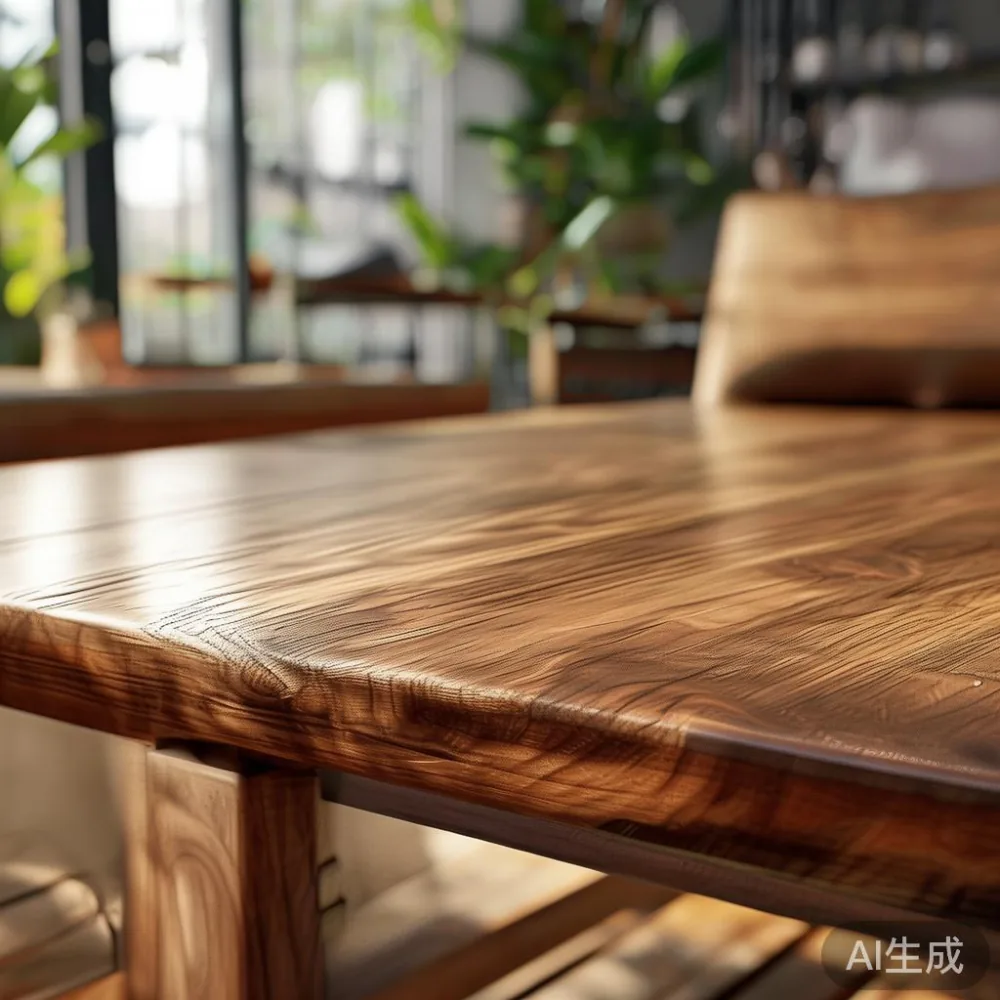
Finishes matter as much as the wood itself. A marine-grade teak oil penetrates the grain and needs reapplication every 9-12 months; a polyurethane film finish peels after 14-18 months outdoors. I tested both on two identical acacia stools left on a colleague's balcony in Tampines for 14 months. The oiled stool turned grey and silver (which is normal and reversible with a light sanding) but remained structurally sound. The polyurethane-coated stool developed hairline cracks at every joint and one leg had begun to cup by 1.5 mm. The labour to refinish is roughly S$60-S$90 per chair at a workshop, or 45 minutes of your own time if you have an orbital sander and a can of oil.
How does shipping from Foshan change the price I pay in SGD?
Distance is a quieter driver than people expect. A 40-foot high-cube container from Foshan to Singapore holds roughly 65-75 m³ of furniture. Ocean freight on that route has hovered between US$1,400 and US$2,600 since 2022, plus a 9% GST on the CIF value, plus S$120-S$180 in customs broker fees, plus S$80-S$140 for the trucking from PSA to a Jurong or Tuas warehouse. For a dining table set retailing at S$2,400, the all-in landed logistics cost is typically S$280-S$360, or 12-15% of the retail price. That is why a 7-day free-shipping promise (common from manufacturers like MIDHILL, who ship from Foshan direct to Singapore HDB doorsteps in roughly 18-28 days including consolidation) becomes a real saving when the order exceeds US$350. Below that threshold, the per-order handling cost is the same, so the freight gets spread across less value and the effective markup climbs.

Is Nordic king bed furniture worth it?
A Nordic king bed frame in solid white oak or solid ash, properly kiln-dried and joined, is worth it if you intend to keep it for 10-15 years and you sleep 7-9 hours a night on it; the per-night cost over a decade works out to S$0.45-S$0.70, which is less than a kopi at the hawker centre. A king mattress measures 183 cm × 198 cm in Singapore, so the internal slat frame needs to span 180 cm without sagging beyond 4 mm under a 90 kg load, which requires 14-16 slats of at least 18 mm thickness, not 12 mm. Frames that meet that spec retail at S$1,650-S$2,900; frames that fall short sag visibly within 18 months and retail at S$750-S$1,100. The price gap buys you structural integrity, not aesthetics.
How does design language (French, American, or post-modern light luxury) change what you pay for?
Design language is where the price gets slippery, because three chairs made from the same wood can retail at S$480, S$1,200, or S$2,400 depending on which label hangs on them. French light luxury tends to favour curved silhouettes, cabriole legs (often steam-bent rather than cut from thick stock), and brass-tipped feet; the bending process adds 3-4 hours of skilled labour per chair and roughly S$90-S$140 in rejected blanks. American light luxury leans to clean shaker lines, through-tenons visible on the aprons, and matte black hardware; the joinery is visible, which means tolerances tighten to 0.5 mm and sanding time doubles. Post-modern furniture for family with kids, by contrast, often rounds every edge to a 12-15 mm radius and uses a hard-wax oil that resists crayon, jam, and the occasional spilled milk. That last category is a practical sweet spot for HDB households where a dining table doubles as a homework station and a mahjong surface on weekends.
Within those styles, the same wood can be dressed differently. A solid wood sofa frame in oak with a hand-rubbed oil finish (the kind MIDHILL ships across 15+ countries) costs less to produce than the same frame wrapped in 0.8 mm of figured walnut veneer on the visible faces. A marble table with an Italian Carrara top and a solid wood base will price 60-90% higher than an all-wood table of identical footprint, simply because a 180 cm × 90 cm marble slab alone costs S$1,400-S$2,200 at source. Wardrobes, nightstands, and bed frames follow the same logic: the more surface area you finish, the more hours you pay for.
What hidden costs do Singaporean buyers forget to budget for?
Three costs surprise people consistently. First, the lift and corridor measurement: an HDB corridor is typically 1.2-1.5 m wide, and the lift interior on a renovated block is around 1.1 m × 1.4 m. A solid wood wardrobe taller than 2.0 m often has to ship in two pieces with a field-assembly joint, which adds S$80-S$150 to the price. Second, GST: at 9% on the CIF value plus shipping, a S$2,400 dining set adds S$216 in tax that is not always shown in the advertised price. Third, the after-sale structural warranty: a 10-year warranty on joinery and frame is meaningful only if the supplier has been operating long enough to honour it; MIDHILL's 2008 founding date puts 17 years of business behind that promise, while a pop-up importer started last year cannot. A lifetime refinishing service (sanding, re-oiling, minor repairs) typically costs S$180-S$320 per piece if you pay a workshop in Alexandra or Eunos, so a supplier that includes it effectively rebates S$200-S$300 of future spend.
Does weight mean quality in solid wood furniture?
Weight correlates with density, and density correlates with hardness, but the relationship is not perfectly linear. A solid white oak dining chair weighs 6.5-8.0 kg; a solid pine chair of the same size weighs 4.0-5.0 kg. Both can be well-made, but the oak chair will resist dings from a child's toy car for longer and will hold a screw thread without splitting for more assembly cycles. The exception is rubberwood, which is dense (640-720 kg/m³) but prone to movement if not kiln-dried below 10% moisture content. When you pick up a piece in a showroom, lift the corner: a 1.8 m solid wood dining table should feel like 35-50 kg in your hands, not 18-22 kg. Anything in the lighter range is either a thinner top, an engineered core with a wood veneer, or a species that has not been dried properly.
What should a Singapore buyer compare when two quotes are 40% apart?
Pull the specs and compare them line by line: wood species and grade, moisture content at the time of manufacture, joinery method, finish type and number of coats, hardware material, warranty length in years, and shipping terms (door-to-door vs. port-to-port). A S$1,200 solid wood dining table and a S$1,680 version from a more established supplier are often separated by exactly those seven items, not by branding. If the cheaper quote cannot answer four of those seven in writing, the S$480 saving is a gamble rather than a discount. Outdoor pieces in particular benefit from spec transparency, because a frame that fails after two monsoon seasons costs more to replace than the original saving.
How long should a well-priced solid wood piece actually last?
With reasonable care (no standing water, no direct sun for 8+ hours a day, an oil refresh every 12-18 months for outdoor pieces, a polish every 24-36 months for indoor pieces), a solid wood bed frame should give 15-25 years of service; a solid wood dining table, 20-30 years; an outdoor sofa frame, 12-18 years; an indoor sofa frame, 15-25 years; a wardrobe, 25-40 years. Those numbers assume the joinery is mortise-and-tenon or through-dowel, the wood was kiln-dried correctly, and the finish is maintained. When you divide a S$2,200 outdoor sofa by 15 years of weekend use, you arrive at S$146 per year, or S$2.80 per weekend, which is cheaper than two cups of kopi at the kopitiam. The cheapest piece of furniture is the one you only have to buy once.