How to Choose the Right Size Sofa and Furniture for a Singapore HDB Living Room
Last month I visited my colleague Priya in her new 4-room HDB flat in Punggol. She had just taken delivery of a 3.2 m solid wood sofa from a regional supplier, and the sofa physically could not make the turn into her living room. The HDB corridor at her block is 1.2 m wide, the lift opening is 0.9 m, and the sofa's backrest was 1.05 m tall. After two failed attempts and an extra S$180 delivery surcharge, the sofa sits in her parents' place in Bedok. The point is not to scare anyone away from buying online — it is to show that sizing a Singapore HDB living room is a measurement exercise before it is a styling exercise. This guide walks through the numbers that actually matter, from corridor and lift constraints to GST-inclusive budgeting, with a few notes on how a Foshan-based maker such as MIDHILL thinks about scale, joinery, and after-sales support.
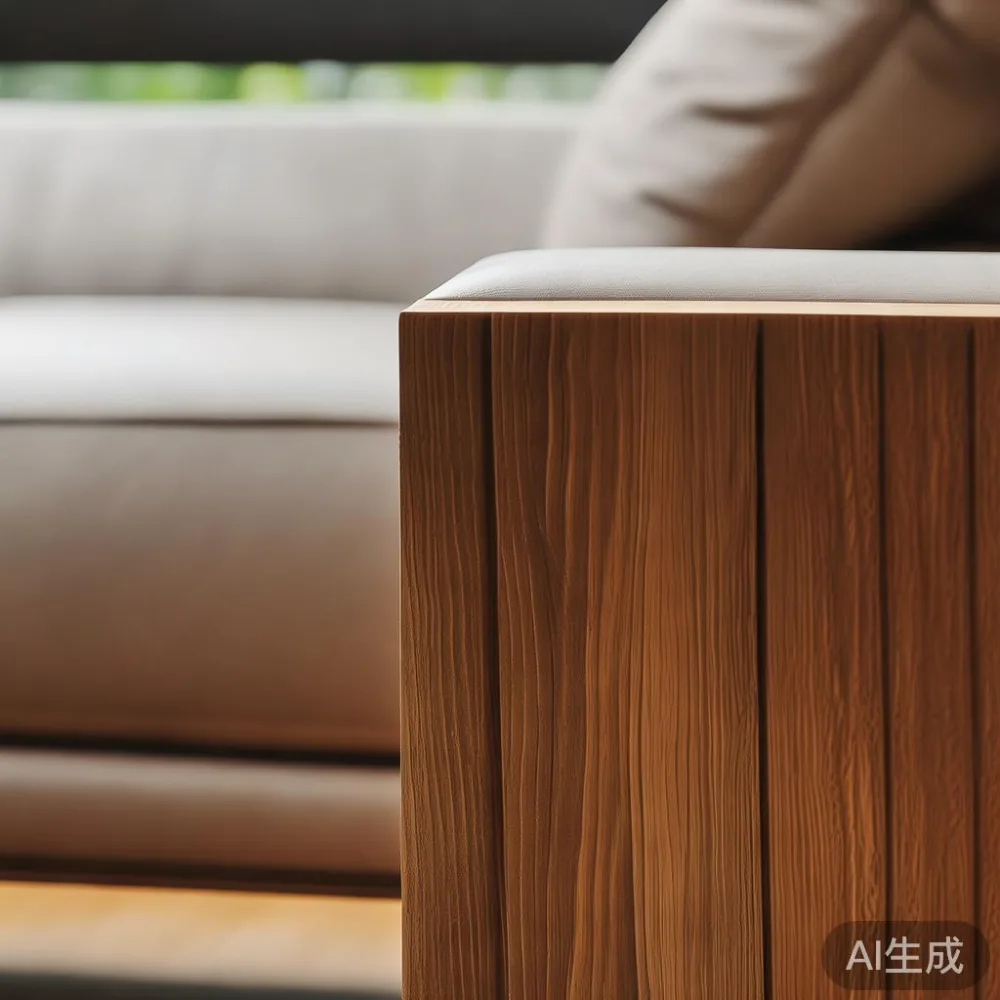
Why does a Singapore HDB living room force a different sizing mindset?
A typical 4-room HDB living room in estates like Tampines, Bedok, or Punggol measures roughly 3.0 m to 3.6 m in width and 3.5 m to 4.2 m in length, after the kitchen and service yard are excluded. That sounds generous until you remember that the same room has to host a 3-seater sofa, a coffee table, a TV console, side tables, and walking clearance of at least 70 cm around the main furniture pieces. Working backward from the room, a 2.2 m to 2.6 m solid wood sofa almost always fits where a 2.8 m or 3.0 m version crowds the room and blocks the corridor to the bedrooms.
Three constraints outside the room are equally strict. HDB lift cabins in most blocks measure roughly 1.1 m deep by 1.4 m wide with an opening of about 0.9 m, and goods lifts at older blocks can be as small as 1.5 m by 1.8 m. Corridors are commonly 1.2 m wide. A solid wood bed frame with headboard taller than 1.0 m, a wardrobe deeper than 0.6 m, or a marble dining table longer than 1.8 m can fail at any one of these three pinch points. Always ask the supplier for the packed carton dimensions, the gross weight in kg, and the longest single component — not just the assembled size.
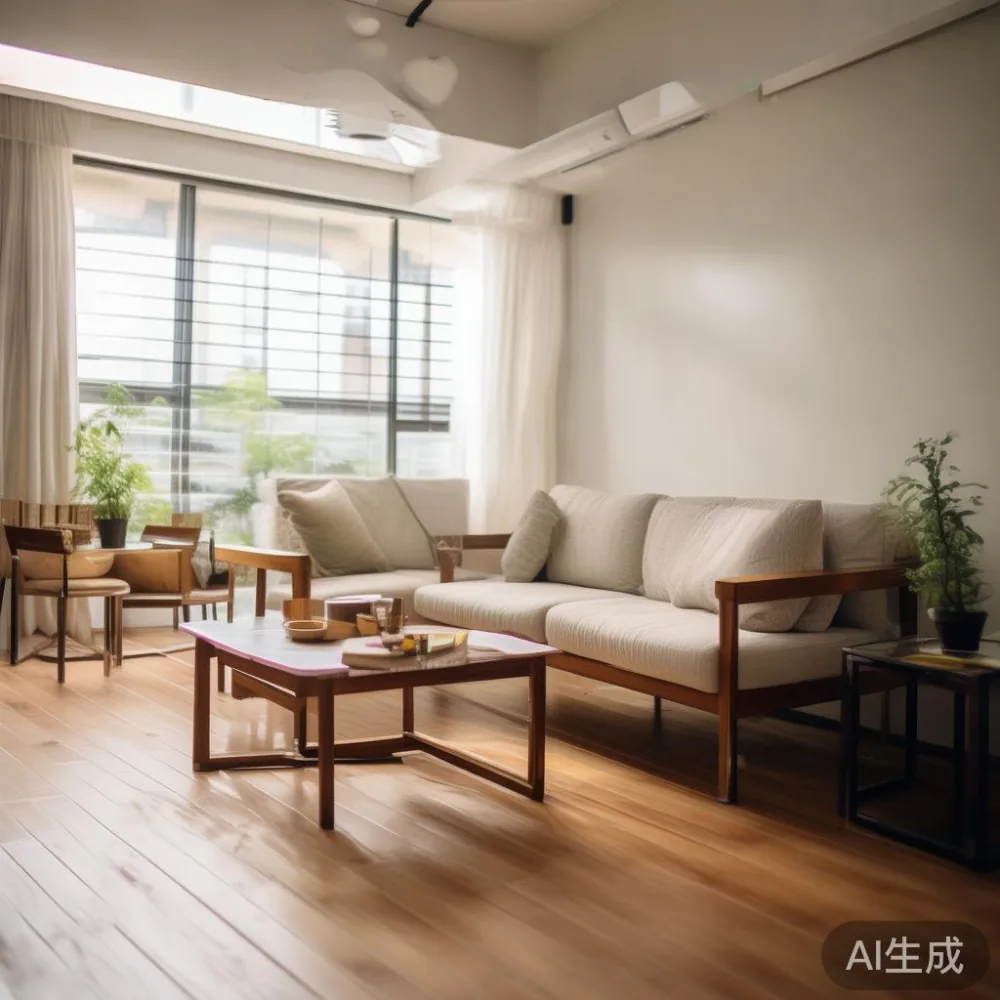
What sofa length actually fits a 4-room or 5-room HDB?
For a 4-room HDB living room, the comfortable range is 2.0 m to 2.6 m for a 3-seater. For a 5-room flat or an executive maisonette, 2.6 m to 3.0 m is workable if the room is at least 3.4 m wide. Anything beyond 3.0 m belongs in a condo or a landed terrace, where ceiling heights of 3.0 m and above can absorb the visual weight of a longer piece.
Depth matters as much as length. A standard Singapore-friendly sofa seat depth is 58 cm to 62 cm. Go above 65 cm and the sofa starts to look like a daybed, eating floor space. Height from floor to seat should sit between 42 cm and 46 cm for ergonomic comfort, which also keeps the centre of gravity low enough to feel grounded in a smaller room. If you are comparing French light luxury designs that usually show 3-seater lengths of 2.4 m to 2.8 m, the smaller end of that range is your realistic HDB ceiling.
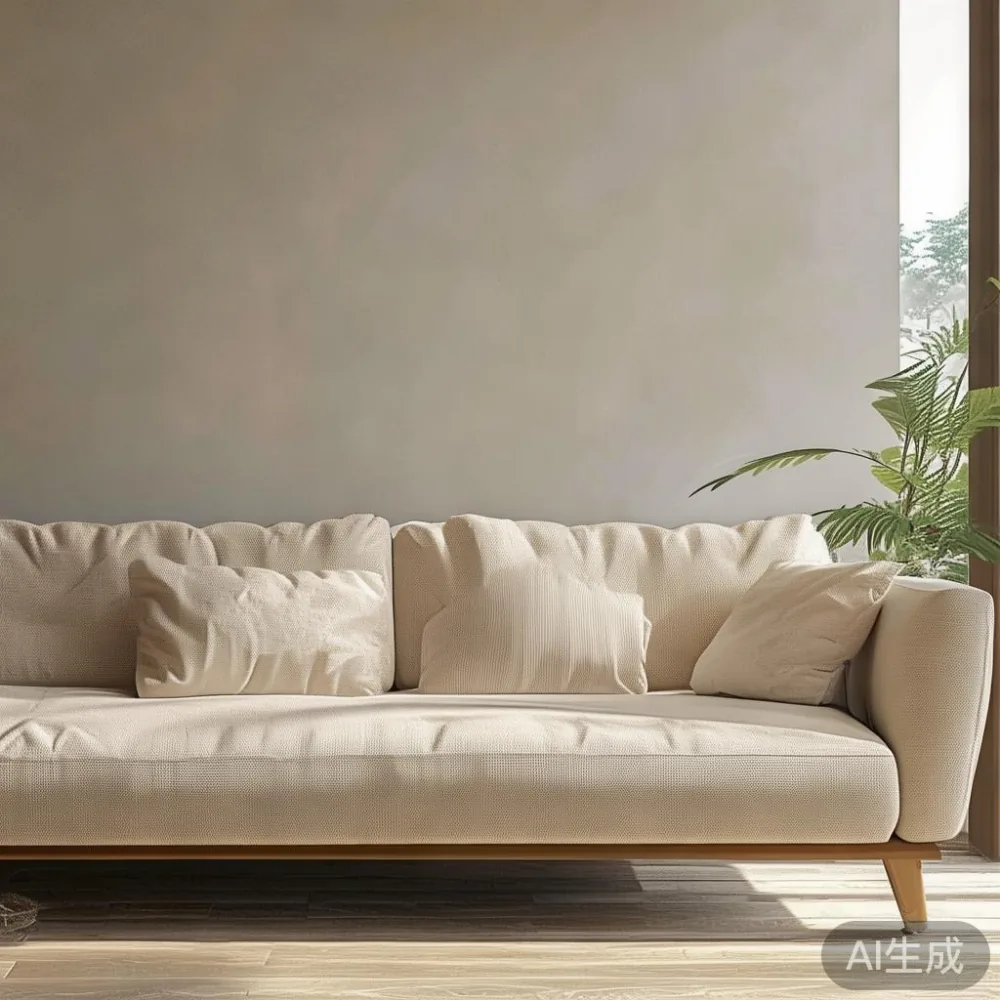
If you are browsing a French sectional sofa Malaysia regional catalogue, pay attention to the chaise module length — typically 1.5 m to 1.7 m — because it pushes the total L-shape out further than buyers expect. Measure the longer wall, not the shorter one, before approving the layout.
Is Italian light luxury master bed furniture worth it?
Yes, Italian light luxury master bed furniture is worth it for HDB owners who want a hotel-style master bedroom and are willing to measure the master room doorway, which is usually 0.9 m wide, before ordering. The frame itself uses lighter visual proportions — slimmer headboards around 1.05 m to 1.15 m tall, tapered solid wood legs, and upholstered panels in linen or microfibre — so the bed reads as luxurious without overwhelming a 3.2 m by 3.6 m HDB master bedroom. The premium is in the joinery and the warranty, not in the bulk.
For a king-size mattress at 180 cm by 200 cm, allow a frame footprint of roughly 195 cm by 215 cm. Leave at least 60 cm of walking clearance on both sides of the bed, which is the minimum for changing sheets without bumping a nightstand. A standard HDB master room can usually absorb this, but if your room is below 3.0 m wide, drop to a queen at 150 cm by 200 cm to keep both nightstands functional.
Price ranges in SGD for this category, before the 9% GST and including a 10-year structural warranty, run roughly S$2,400 to S$4,200 for a queen-size frame and S$2,900 to S$5,500 for a king-size. MIDHILL, a Foshan solid wood furniture maker established in 2008, ships similar frames into Singapore with kiln-dried oak or ash, mortise-and-tenon corners, and a lifetime refinishing service that costs about S$180 per visit after the first year.
How big should a dining table be for 4 to 6 people in HDB?
For 4 people in a typical HDB dining area, a 1.2 m to 1.4 m rectangular table or a 0.9 m to 1.1 m round one works well. For 6 people, push to a 1.5 m to 1.8 m rectangular table, which is also the upper limit before a marble table starts to fight the room. Marble tops above 1.8 m usually weigh above 90 kg, and the assembled unit will not fit through most goods lifts without disassembly. A 1.6 m marble table at 78 cm wide and 76 cm tall, weighing 78 kg packed, is the realistic sweet spot for a 5-room HDB.
Chair clearance is the number that gets ignored. Each chair needs about 60 cm of pull-back space, plus 25 cm of elbow room per diner. Around a 1.6 m table, you need at least 2.4 m of clear floor on the long side for diners to sit and stand without scraping a wall. If your dining area shares the living room, count the table footprint twice — once for the table and once for circulation around it.
For post-modern light luxury styling, mixed-material tables with a sintered stone top of 12 mm to 15 mm thickness on a solid wood base keep weight down to roughly 55 kg to 65 kg for a 1.4 m table, which is a noticeable difference when you need to move it during renovation.
Which wardrobe and nightstand sizes survive HDB doorways?
Most HDB bedroom doorways are 0.9 m wide and 2.1 m tall, with a few newer BTO flats at 1.0 m. A standard 3-door wardrobe assembled is around 1.5 m wide, 0.6 m deep, and 2.0 m tall, and it ships in flat-pack form, so the largest single carton is usually about 1.6 m long, 0.65 m deep, and 0.12 m thick — well within lift and corridor limits.
Where buyers run into trouble is with sliding-door wardrobes, whose individual door panels can run 0.7 m to 0.9 m wide. Always check the panel weight too: glass-fronted sliding doors at 18 mm thickness can hit 22 kg per panel, which is heavy for one person to lift into a lift cabin at an awkward angle. A hinged-door wardrobe with three 0.5 m panels is much easier to move.
For nightstands, the practical HDB size is 45 cm to 55 cm wide, 40 cm to 45 cm deep, and 55 cm to 60 cm tall — close to the height of the mattress plus a 5 cm to 8 cm topper so the bedside lamp is reachable without leaning. Two nightstands flanking a queen bed at 1.6 m wide eat about 1.0 m of width on each side, leaving the same 60 cm clearance rule from the wall.
What about outdoor furniture on the balcony or at the service yard?
Outdoor furniture is the most overlooked sizing decision in HDB flats because the balcony is treated as leftover space. A typical HDB balcony in a 4-room flat measures 1.5 m to 1.8 m deep and 3.0 m to 4.0 m long. HDB rules cap balcony railings at 1.1 m for safety, and any outdoor furniture taller than that can block airflow and light into the living room.
For seating, a 2-seater balcony sofa at 1.2 m to 1.4 m wide with a 0.7 m to 0.75 m depth leaves about 50 cm of walking clearance behind it, which is enough to mop the floor. A bistro set with a 0.6 m to 0.7 m round table and two stackable chairs is the smallest practical outdoor furniture configuration and fits even the narrowest service yard. Outdoor furniture made from teak, eucalyptus, or powder-coated aluminium tolerates Singapore's humidity of 70% to 90% better than untreated pine, and a UV-resistant outdoor cushion with a 200 g to 250 g polyester filling usually lasts 18 to 24 months before the fabric fades.
Heavier outdoor furniture pieces — a 1.4 m marble table, a concrete planter at 45 kg, a stone-topped bench — should be staged in two-person delivery slots and lifted in parts if they exceed 80 kg per carton. MIDHILL's outdoor furniture range, in particular, is engineered to ship in flat-pack cartons under 30 kg each, which is why it lands cleanly into HDB lifts without the drama of Priya's failed sofa delivery.
How do you budget realistically in SGD with GST and delivery?
A complete HDB furniture package — solid wood sofa, queen bed frame, 1.4 m dining table, 3-door wardrobe, two nightstands, and a small balcony set — typically lands between S$7,800 and S$13,500 before GST in 2026. Adding the 9% GST pushes the same package to S$8,500 to S$14,700. Shipping from a Foshan or Malaysian warehouse to a Singapore HDB doorstep runs S$280 to S$650 for a single 20-foot container consolidated with three or four other customers, or S$120 to S$220 flat-rate per order above a supplier's free-shipping threshold, which most regional sellers set around US$350.
Delivery lead times for made-to-order solid wood pieces run 30 to 45 days from Foshan, plus 7 to 14 days for sea clearance and last-mile delivery. In-stock pieces from a Malaysian warehouse can land in 5 to 9 working days, which is faster but offers fewer fabric and finish choices. A 14-day return window is standard for unused flat-pack pieces in original cartons, but custom upholstery is usually final-sale. A 10-year structural warranty on the frame, paired with lifetime refinishing on the wood, is the kind of after-sales structure that pays back over a decade rather than a season.
What checklist should you run through before you click pay?
Measure the lift cabin at your block — width, depth, and door height — and write the numbers next to each carton dimension on the invoice. Measure the corridor turning radius from the lift lobby to your front door, especially at the 90-degree corner outside your unit, because a 1.05 m tall headboard plus 0.1 m of foam wrapping plus 0.05 m of carton tolerance needs about 1.25 m of vertical clearance on the diagonal. Confirm the assembled depth of every piece against the room plan, including the 5 cm to 10 cm skirting gap that fitters forget to subtract. Finally, check the warranty certificate for a written 10-year structural term, not a verbal promise, and keep the refinishing service contact in a phone note the day the furniture arrives.
Once those boxes are ticked, sizing becomes a lot less stressful, and the living room in your Tampines, Bedok, or Punggol flat starts to feel like a room you measured on purpose rather than one the furniture measured for you.