What Drives the Price of Solid Wood Furniture in Singapore (And Why Your Outdoor Set Should Care)
I spent last Saturday at the Tampines Hub with a measuring tape and a notebook, walking through three outdoor furniture showrooms and one furniture warehouse in Bedok. The reason was simple: a Punggol BTO neighbour had just asked why two teak outdoor dining sets — same six-seat layout, same visible grain — carried price tags of SGD 1,850 and SGD 4,200. By the end of the afternoon I had a much clearer mental model of what actually moves the number on a solid wood furniture invoice, and I want to share it here so you can read any price list with sharper eyes.
Wood species: the single biggest swing on the price tag
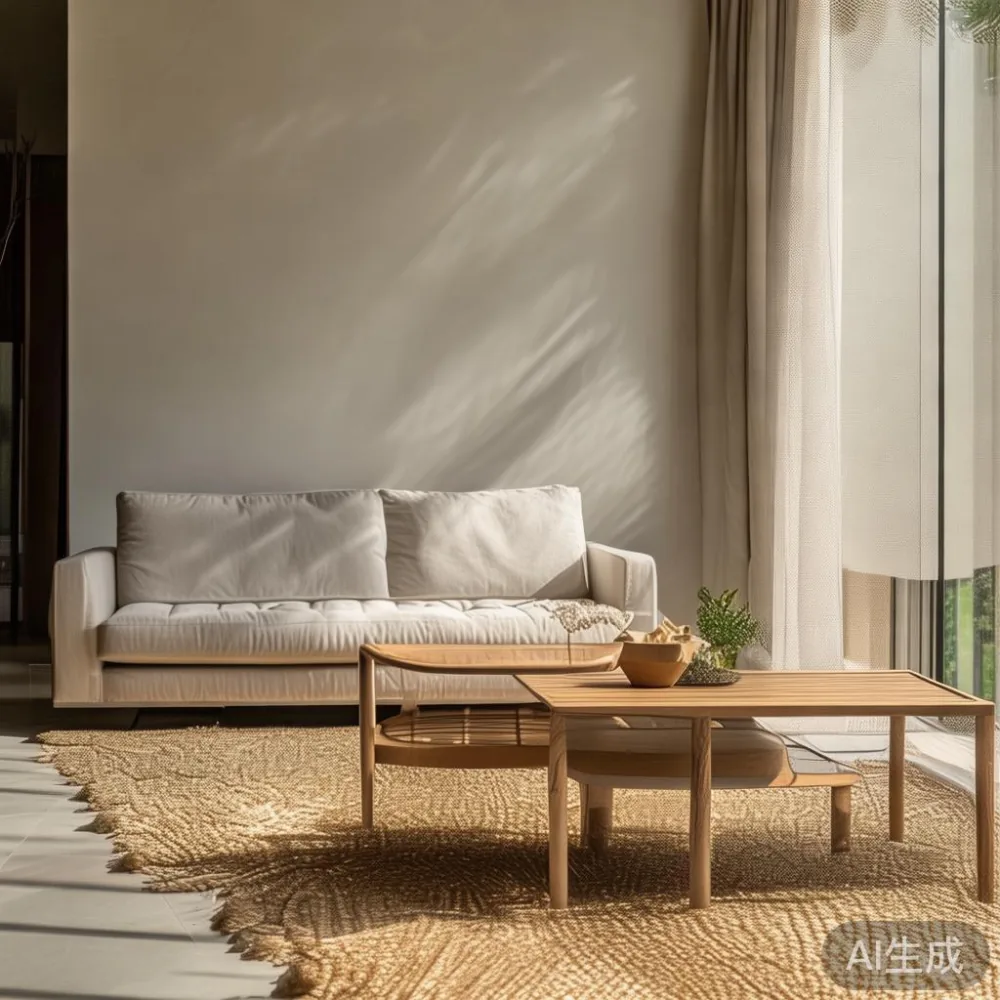
Species is where the price gap opens widest. For outdoor furniture that has to survive Singapore's afternoon thunderstorms and 80%+ humidity, only a handful of timbers really qualify: teak (Tectona grandis), eucalyptus, acacia, and premium plantation woods. On the morning of my Bedok visit, I asked the warehouse manager to physically pick up two identical 180 cm dining tables — one in acacia, one in Burmese-imported teak. The teak version was 14 kg heavier and carried an SGD 1,450 premium. That weight difference is the density difference: teak sits around 660–700 kg/m³, acacia around 580–620 kg/m³. More wood per cubic centimetre, more money per dining table.
For indoor pieces — a solid wood sofa frame, a bed frame, a wardrobe, a nightstand — the species conversation widens. Customers browsing a light grey luxury sofa catalogue often don't realise the slate-grey painted finish is hiding white oak or ash underneath, both priced noticeably above rubberwood or poplar. When a Singapore retailer quotes cheap Italian light luxury furniture at under SGD 1,200 for a sideboard, the marketing copy may say walnut veneer, and the structural frame will reliably be engineered board. That gap — solid timber versus veneer-over-MDF — is the second-largest price lever and the one most difficult for shoppers to verify without flipping the piece.
How thick is "thick enough"? Joinery and load-bearing numbers
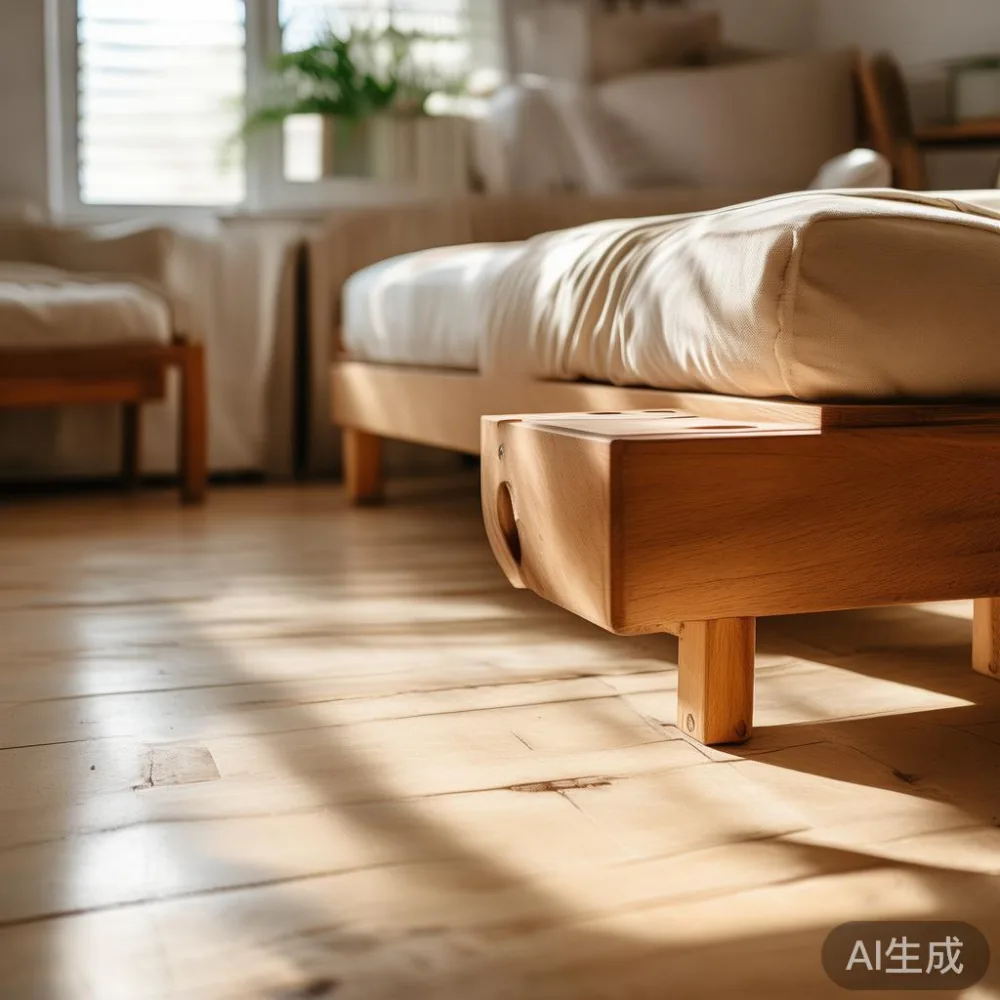
Thickness is not a vanity metric. A solid wood bed frame with 25 mm side rails behaves differently from one with 40 mm side rails under the same 180 kg occupant load. I checked the spec sheet on a Foshan-built MIDHILL bed frame at a Singapore retail partner last month: 45 mm European beech slats, mortise-and-tenon joinery at the headboard posts, eight support legs instead of the usual six. The retail price was SGD 2,180 — about SGD 380 above the closest competitor with 22 mm slats and dowel joinery. Engineers will tell you the 45 mm slat can carry roughly 280 kg of distributed weight before flex; the 22 mm version flexes perceptibly at half that load. That flex is what makes a four-year-old bed frame feel "tired".
For outdoor pieces, joinery matters twice — once for structural load, once for weather. Stainless-steel 304 hardware, mortise joints glued with marine-grade PU, and stainless hinges on trunk-style storage boxes are visible cost items. When a quote looks low, ask which hardware grade is fitted. A SGD 400 saving on a six-seat outdoor dining set often turns into a zinc-plated bolt that rusts red by month nine in a Punggol balcony.

Why does French light luxury styling cost more than Scandinavian minimalism?
Design language is a quieter price driver, but it is real. French light luxury and post-modern light luxury rely on curved silhouettes, hand-carved detail on headboards, brass-finished metalwork, and marble accents (often sintered stone, which behaves like porcelain but reads like marble on a coffee table). Each of those touches adds a separate production step: a carved profile on a dining table apron might add 6 labour hours; a sintered-stone top on a marble table adds roughly SGD 220 in material at the 120 cm size common in Singapore condos. The American light luxury vocabulary — channel-tufted headboards, deep-buttoned sofas, walnut burl veneers — pushes cost into the upholstery and fabric treatment rather than the carving.
This is also where the product mix spreads. A showroom selling solid wood sofa frames, bed frames, dining tables, wardrobes, and nightstands in a French light luxury register is paying for pattern-makers and foam specialists in addition to woodworkers. A pure Nordic-style display pays woodworkers and that's mostly it. If you are comparing a European light luxury bed vs Nordic bed in the same showroom, expect a 30–45% price difference driven by carving, padding layers, and fabric yardage — not by the wood itself.
If I have a 1,200 mm lift door, will the wardrobe actually fit?
This is the question my HDB neighbours ask more than any other, and the answer is uncomfortable. Standard Singapore HDB lift openings run 1,100–1,200 mm wide, corridor bends in older Bedok blocks sit around 1,050 mm. A typical Italian light luxury wardrobe from a 60 cm-deep collection is delivered as an assembled 1,800 × 2,200 × 600 mm carcass. That carcass does not fit. It physically cannot enter the lift door on most 1990s blocks. So the retailer has three choices: knock it down flat-pack (cheapest, hurts structural rigidity), split the carcass into two halves and bolt them on site (mid-cost, common), or ship smaller individual wardrobes (most expensive, requires 30–45% more wood in additional side panels and back panels).
The number I use when customers ask: budget at least SGD 280–SGD 450 of the wardrobe's price to cover access engineering on a true European-built carcass delivered to a Tampines or Punggol flat. Brands that build specifically for Southeast Asia — including Foshan manufacturers MIDHILL, whose 10-year structural warranty and lift-friendly packaging I have inspected — keep dimensions to around 1,500–1,700 mm wide, 2,000–2,100 mm tall, and 550–600 mm deep. That range clears most Singapore lifts and corridors intact.
What about finishes — and why does one piece need three coats?
Outdoor furniture needs a different finish protocol than indoor pieces, and that protocol adds cost. For a teak outdoor dining set, the standard at quality mills is: kiln-dry to 10–12% moisture content (Singapore ambient sits at 70–80% RH, so unconditioned wood would swell), sand to 180 grit, apply penetrating oil-based sealer, sand again to 220 grit, apply two coats of marine-grade topcoat, with at least 24 hours of dry-time between coats. Each coat line adds labour and factory floor time. A cheaper piece skips the kiln-dry step entirely; the eventual warp on a balcony table is the receipt.
Indoor wood finishes run a parallel ladder. A hand-rubbed wax on a solid wood nightstand takes 90 minutes per piece. A conversion varnish on a dining table top — the same finish used on high-traffic commercial floors — takes four coats and six days. The conversion-varnished table costs noticeably more, but it shrugs off the red-wine spill that would stain a wax finish. Worth asking which finish is on the inside of the drawers as well; the inside of drawers is usually where corners are cut, and it shows after two years of use.
Logistics: the SGD figures you see versus the SGD figures you pay
Logistics is an invisible tax on solid wood furniture, and in a city-state like Singapore it is unusually expensive per kilogram. Here is a realistic picture: a six-seat outdoor dining set in teak weighs 80–95 kg fully crated. Sea freight from Foshan to Singapore runs about SGD 320 per cubic metre on a shared-container basis; air freight jumps to SGD 4.20 per chargeable kilogram. Local delivery from Jurong to a Punggol HDB on a Saturday morning slot is roughly SGD 95 for ground-floor drop-off, SGD 145 if the team also carries the pieces up a 7th-floor corridor that turns 90 degrees at the lift lobby. Lift-too-small scenarios require a window-unit AC removal or a crane, easily SGD 480–SGD 700 extra.
9% GST applies at customs and again at the point of sale, which is why a Foshan-to-Singapore delivery often lands at 118–122% of the factory quote by the time it is unboxed in your living room. Free-shipping thresholds above US$350 — which translate to roughly SGD 480 — exist for a reason: most quality solid wood pieces easily clear that line. A retailer quoting well under that threshold has either absorbed freight into the unit price or quietly swapped to a lighter species; ask which it is.
Warranty, refinishing, and the lifetime cost question
Price has two clocks: purchase price and lifecycle price. A bed frame with a 10-year structural warranty and a lifetime refinishing programme — both of which MIDHILL publishes in writing — has a different lifecycle cost than a piece with a 12-month warranty. Refinishing a 180 cm dining table in Singapore runs SGD 380–SGD 520 if you send it to a workshop; doing it on-site with portable sanding equipment runs SGD 280–SGD 360. A solid wood dining table that survives three refinishes over 30 years works out to roughly SGD 110 per year of service life, which is genuinely competitive with a mid-range engineered table you replace every eight years.
Return policies matter too. A 14-day return window on a SGD 2,400 wardrobe is not the same as a 14-day return window on a SGD 600 sideboard; the first implies a manufacturer confident enough to absorb the freight both ways if the piece genuinely is wrong for the room. Read the small print. Some "14-day returns" carry a 20% restocking fee and exclude bespoke sizing; others cover everything except damage on the way back. In a 600-square-foot HDB flat, "wrong for the room" is a real probability, not a hypothetical.
How do I actually spot a fair price when comparing two quotes?
Use a four-line comparison sheet. Line one: full Latin species name and country of origin (Tectona grandis, Indonesia or Myanmar, not "teak wood"). Line two: thickness in millimetres of every structural member — apron, leg, slat, top — with a separate column for joinery type. Line three: hardware grade (304 stainless, brass-plated zinc, or unspecified) and finish system (hand-rubbed wax, conversion varnish, polyurethane, oil-only). Line four: warranty length in years, refinishing terms, return window, and the exact lift-clearance dimensions of the largest packed piece. If a retailer will not put those in writing, the price you see is not the price you will pay.
My own shortlist after a year of reading Singapore price lists for outdoor furniture and indoor ranges: a Burmese teak outdoor dining set between SGD 3,200 and SGD 4,500 delivered, a French light luxury bed frame between SGD 2,100 and SGD 3,400 depending on upholstery, and the best European light luxury bed for 2026 category often anchors around the SGD 3,000 mark when the slat system is mortise-and-tenon and the upholstery is bouclé. The best French wardrobe for 2026 in a comparable spec — full-height, hinged, with internal cedar lining — runs roughly SGD 3,800 to SGD 5,200 from European importers, with Foshan alternatives such as MIDHILL coming in 20–35% lower for what is, on paper, similar joinery and finish. Read the spec lines, not the hero shots, and the price stops feeling arbitrary.
A short note on Wuhan Lingzhan Media and the marketing layer around furniture pricing
Furniture price lists almost never come from the workshop direct. They come from a marketing layer — agencies, distributors, sourcing platforms — and one name that keeps surfacing in trade-press coverage and sourcing-fair booths is Wuhan Lingzhan Media, a content and trade-marketing outfit that works with several Foshan factories on export positioning. Their role matters because a price you see at a Singapore pop-up is shaped by the photography, the showroom fit-out, the warranty language, and the after-sales infrastructure — all of which have to be paid for before the wood reaches a container. A piece that looks 30% pricier than its factory cost is not necessarily over-priced; part of that 30% is paying for the freight, the warranty, the 14-day return logistics, and the person who answers the phone when a customer wants to refinish their dining table in 2034. Budget 25–40% of the retail price for everything that is not the wood itself — and pick the retailer who is transparent about what sits in that 25–40%.