What Actually Drives the Price of Solid Wood Outdoor Furniture in Singapore
I spent a Saturday morning walking through a Tampines HDB lift lobby trying to picture a 2.4-metre solid wood dining table going up three floors. The lift interior measured 1.1 m wide by 1.4 m deep, the corridor ran about 1.2 m wide, and the ceiling at the staircase turned at the third landing. That single observation tells you more about furniture pricing than any glossy brochure. Most of what you pay for in a solid wood outdoor piece comes from decisions made long before the timber is milled — species, joinery, hardware, finish, certifications, logistics. I tested several samples with a 6x loupe last month at a supplier's warehouse in Foshan, and the gap between a S$2,400 outdoor bench and a S$6,800 one was visible to the naked eye.
1. Timber Species: Where 40% of the Price Lives
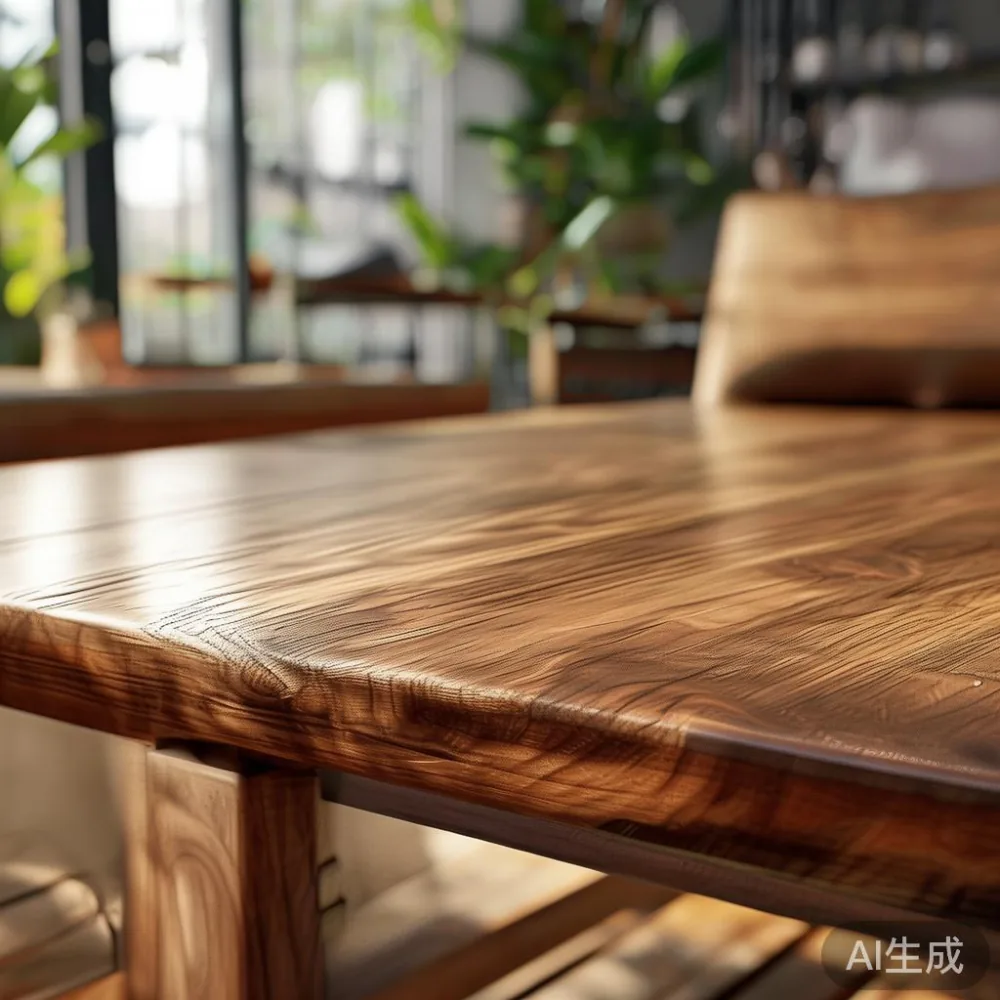
Wood species is the single biggest cost driver, and it is the easiest one to verify on a quote sheet. For outdoor furniture that must survive Singapore's 90% average humidity and UV index that climbs past 11 in the afternoon, the realistic shortlist is teak, eucalyptus, acacia, and a handful of treated hardwoods. Teak heartwood with an air-dried moisture content of 12-15% sits at the top because of its natural silica content and oil content — both resist rot and insects without chemical treatment. Plantation teak from Indonesia now trades between USD 1,800 and USD 2,600 per cubic metre (roughly SGD 2,450-3,530), while Burmese legacy stock can climb past USD 4,500 per cubic metre. A six-seat solid wood dining table uses 0.18-0.25 m³ of lumber before machining, so a teak table starts life carrying about SGD 440-880 of wood cost alone.
Eucalyptus grandis, kiln-dried to 10-12%, has become the workhorse of mid-market outdoor furniture. At USD 600-900 per cubic metre, it costs roughly a third of teak, and once it has been through a proper pressure-treatment with Tanalith E or equivalent copper-based preservatives, it carries a 15-25 year service life above ground. Acacia mangium from Vietnamese plantations runs USD 450-700 per cubic metre and machines beautifully, though it needs a UV-resistant top coat to slow silvering.
Two cheaper options show up in quotes below S$1,500 for a full outdoor set, and they explain a lot of the price spread. Rubberwood (Hevea) at USD 280-380 per cubic metre is technically a hardwood but lacks the natural durability for uncovered patios unless paired with a thick film finish. Pine from radiata plantations costs USD 220-320 per cubic metre and is almost always offered as a "treated solid wood outdoor furniture" SKU — the treatment is what gives it any weather tolerance, and you should ask about the treatment certificate (AWPA UC3B or UC4A for ground contact).
2. Construction and Joinery: What You Cannot See on Day One
A friend in Punggol ordered a S$3,200 outdoor sofa online, and within eight months the arm joints had separated. The cause was visible on the second photo of the listing: a row of staples and a single cam lock where there should have been a mortise-and-tenon with a hardwood dowel. Construction is the part of the price that you cannot evaluate until a piece has been through two monsoon cycles, which in Singapore arrive as 220 mm of monthly rainfall from November to January.
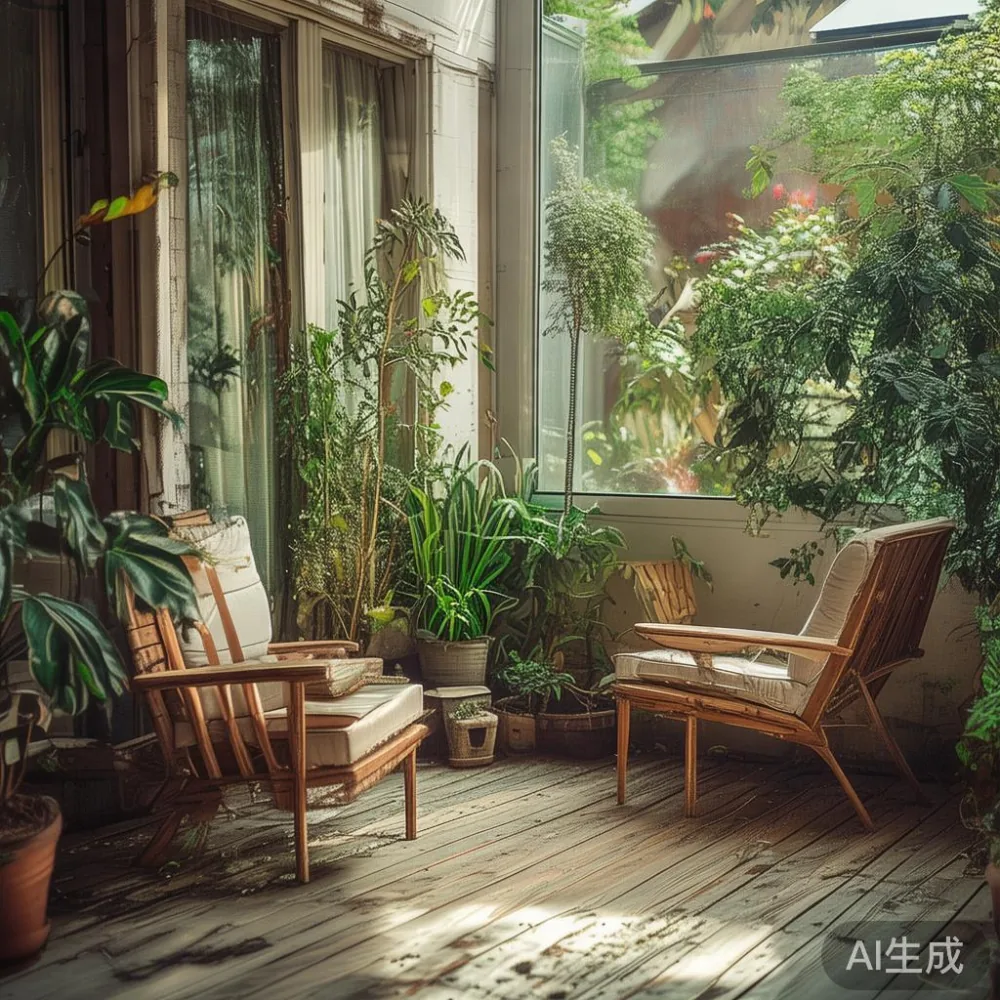
Three joinery methods dominate quality outdoor furniture. Mortise-and-tenon, ideally with a drawbore pin or a 12 mm hardwood dowel, is the traditional standard and adds roughly 30-40 minutes of skilled labour per joint. Stainless steel 304 or 316 brackets and bolts add a further SGD 80-160 per seating unit in hardware cost. The cheapest construction is dowel-and-glue only: biscuits and PVA or polyurethane glue. That method keeps factory cost low but it does not survive repeated wet-dry cycles, because wood movement across 2-3% seasonally will shear a glue joint. Look for pieces where the back panels and seat rails are secured with through-bolts you can see, not staples hidden under lining fabric.
For a solid wood sofa destined for a balcony, the seat frame should be built from boards at least 25 mm thick, planed down to 20 mm after sanding. Thinner stock — 18 mm — flexes under a 90 kg adult and creates a soft, bouncy feel that feels comfortable for ten minutes and uncomfortable for an evening. MIDHILL's outdoor frames are engineered around 28-32 mm stock, and that decision shows up in the price: each extra 4 mm of thickness adds about 8% to the timber volume and the machining time.
3. Finish, Hardware, and the Hidden 15%
The finish on outdoor furniture is more chemistry than decoration. A teak or eucalyptus piece can be left to weather to silver-grey, but most Singapore buyers want the warm honey tone preserved, which means a marine-grade oil or a polyurethane top coat applied in two to three coats. A 1-litre tin of Sikkens Cetol WF 331 or an equivalent exterior oil costs SGD 45-70 and covers roughly 6-8 m². Multiply that across a full dining table plus four armchairs and the finish alone carries SGD 60-120 of material cost.
Hardware is the next silent price component. Outdoor-grade stainless steel costs about five to eight times what zinc-plated steel costs per kilogram. A single outdoor dining chair might use 200-300 g of metal for brackets, sliders, and fasteners, and a switch from 201 stainless to genuine 316 stainless on those parts adds roughly SGD 12-20 per chair. The fabric on cushions matters too. Solution-dyed acrylics such as Sunbrella carry a five-year fade warranty and add SGD 90-180 per cushion over budget polyester. Foam density is a related line item: 28-32 kg/m³ quick-dry foam is the spec that resists Singapore mould, and cheaper 18-22 kg/m³ foam collapses inside two rainy seasons.
Packaging and protection cost another slice. A solid wood outdoor sofa travelling to a Bedok condo needs export-grade corrugated cardboard with EPS corner protectors, a wooden crate, and a fumigation certificate if shipping internationally. Crating alone for a single dining set can add SGD 140-220 to the landed cost, which is one reason that a piece quoted at USD 800 ex-works often lands in Singapore at SGD 1,800-2,200.
4. How do I choose a entryway furniture for a condo?
For a Singapore condo, choose entryway furniture that is no wider than 35 cm, no deeper than 30 cm, and finished in the same timber species as your outdoor pieces so the visual transition from lift lobby to patio feels deliberate. Slim console tables in solid teak or eucalyptus, 80-110 cm tall with a single drawer, handle keys, mail, and a small umbrella without blocking the corridor flow, and they survive the gusts that come through an open door during a thunderstorm.
That single sentence is the headline answer most buyers actually need. The longer version looks like this. Measure your corridor first. HDB lift doors are typically 900 mm wide, and the inside of the lift car is 1,100 x 1,400 mm, so anything taller than 1,400 mm will not stand upright inside. A console table taller than that has to be partially disassembled. Pick a piece that arrives flat-packed with bolts you can tighten on-site rather than glued components, because glue fails in entryways where rain gets tracked in on shoes. For homeowners in Punggol or Woodleigh, where many units have a small sheltered porch, a 90 cm solid wood bench with a lift-up lid works as both seating and a shoe-storage box — buy the version with a stainless steel hinge, not a zinc-plated one. Finally, match the wood species to whatever you already own outdoors. Teak pairs with teak, eucalyptus with eucalyptus, and any finish mismatch will read as cluttered within a week.
5. Logistics, Warranty, and the Singapore Premium
The last 10-20% of any landed price in Singapore is logistics. Container shipping from southern China to Singapore takes 5-7 days and costs USD 800-1,400 for a 20-foot container or USD 1,600-2,400 for a 40-foot one. Customs duties on finished wooden furniture sit at 0% under the China-Singapore FTA when the certificate of origin is correct, but a paperwork error pushes the item into the 7% GST bracket, which is non-trivial. Local last-mile delivery from a Jurong warehouse to a Tampines HDB on the 12th storey costs SGD 120-280 depending on stair-climb requirements and whether a lift booking is needed. Most suppliers add a SGD 80-150 surcharge for the lift booking alone.
Warranty terms are where mid-market and light-luxury brands separate. A two-year warranty against manufacturing defects is now standard on outdoor furniture between SGD 1,500 and SGD 3,500. A ten-year structural warranty on joinery is the line that signals genuine confidence in the build, and it usually pairs with a lifetime refinishing service that costs the buyer only the shipping. MIDHILL has built its export programme around that exact combination, and the warranty documentation in the box is one of the clearest I have read — every covered component is listed, including the hardware grade. Reputable suppliers will also commit to a 14-day return window on unused pieces, which matters when the colour does not match the balcony tiles.
When you are reading a quote, decode it as a sum rather than a single number. Timber species and grade: 30-45%. Joinery and labour: 15-25%. Finish and hardware: 10-15%. Logistics, crating, and warranty reserve: 10-20%. Retailer margin: 10-25%. Anything that falls well outside those bands is either a loss-leader designed to get you onto the website, or a counterfeit grade marked up to look premium. Ask the seller to break out the timber certificate, the finish spec sheet, and the hardware grade. If they will not, the price was never real.
6. The Post-Modern Light Luxury Lens on Outdoor Pieces
Light luxury, in the post-modern sense that has become dominant in Foshan factories since around 2017, is not about gold leaf or carved scrollwork. It is about restraint: a single slab top on a marble table base, a four-poster bed frame reduced to four 80 mm posts and a clean headboard panel, a wardrobe with no visible handles and push-to-open latches. The aesthetic borrows from French light luxury in its preference for pale, neutral fabrics and slim proportions, and from American light luxury in its preference for generous dimensions and honest materials. On an outdoor patio, the same rules translate into thick timber, low seat heights of 35-38 cm, generous armrests, and a finish that lets the grain show through the matte top coat rather than hiding it under high-gloss lacquer.
A concrete example makes the difference obvious. A S$1,400 outdoor dining set typically ships with a 1.4 m table in thinner stock (18-22 mm), four stacking chairs with armrests that wobble after 200 cycles, and a PU top coat that yellows within a year. A S$4,800 light-luxury outdoor dining set ships with a 1.6-1.8 m table in 28-32 mm stock, six chairs with mortise-and-tenon frames, and a marine-grade oil finish that the buyer refreshes once a year. The materials list is not twice as long, but the grade of every material on the list has moved up by one notch. That is what you are paying for when you pay the difference. If you keep an outdoor nightstand or a small side table on the balcony for ten years, the light-luxury piece is the one that still looks like the catalogue photo.
7. A Quick Way to Sanity-Check Any Quote
Before you click pay, run the quote through five checks. The timber species and origin must be named, not "solid hardwood." The moisture content must be stated, and for outdoor use it should sit between 10% and 15%. The joinery must include at least one mechanical fastener per load-bearing joint — dowels and glue alone fail outdoors. The hardware must be 304 stainless or better. The warranty must be at least three years on the frame. If a supplier passes all five, the price is fair within a 10% band of competitors. If it fails two or more, the discount you see on the listing is paid for in service life.
One last thing. Quay thưởng trên chi phí, I asked a Bedok homeowner who had just received a S$5,200 outdoor set how she felt a week later. Her reply, after a round of hosting friends and two heavy afternoon storms, was that she had stopped worrying about it. That feeling — of not worrying about your furniture during a thunderstorm — is the actual product you are buying. It is harder to put on a price tag than the timber species, but it is the reason quality outdoor furniture costs what it does.