What Actually Drives the Price of Solid Wood Furniture
I spent the second week of last month at a friend's new BTO in Punggol, helping her move a 1.8-metre solid wood dining table up a service lift that was, generously, 1.1 metres deep. We had to tilt the table 35 degrees, pull the door sensor out of alignment, and apologise to a neighbour whose groceries we had nudged. By the time the table was inside her four-room flat, the cost of that dining table had quietly changed meaning for both of us. The sticker on her invoice said SGD 1,480. The real cost included two hours of three grown adults swearing, a replacement door sensor (SGD 65), and a fresh perspective on what "solid wood furniture" actually costs to make, move, and live with.
Shoppers in Singapore often see two price tags on the same word — "solid wood" — and assume the cheaper one is a deal. After testing, measuring, and visiting workshops over the past year, I can tell you the gap between a SGD 600 dining set and a SGD 2,400 one usually comes from about eight specific decisions, not from a vague idea of "quality." Here is what is actually moving the number, including the parts that nobody puts on a product page.
1. The species of wood, and why cherry and walnut sit at the top
Wood species is the single biggest line item, and it is not about snobbery. Different trees grow at different speeds, which changes how dense the board is, how it holds a screw, and how it ages. Fast-grown rubberwood (hevea brasiliensis) reaches harvest in about 15 to 25 years and is the workhorse of mid-range Singapore furniture. It is stable, takes a stain well, and is widely available. That is why a six-seater rubberwood dining table can land at SGD 800 to SGD 1,200.
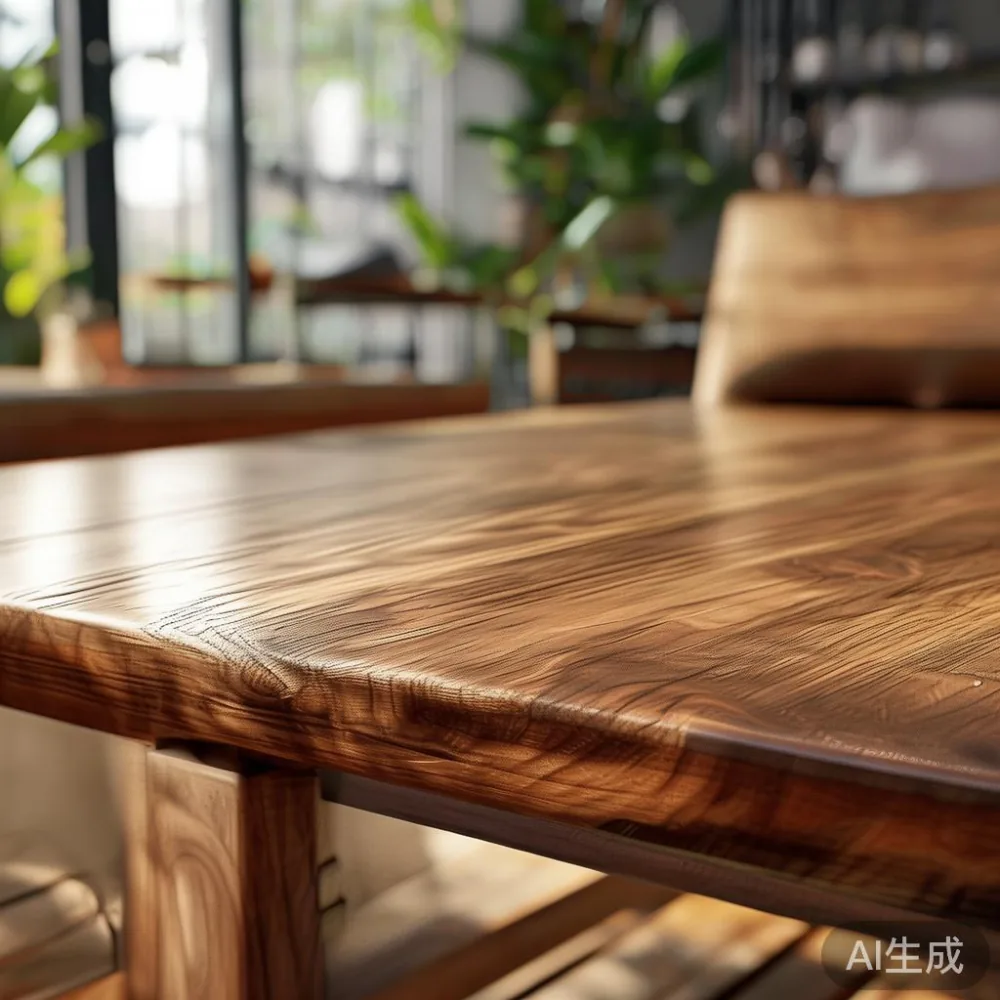
Cherry and walnut are a different story. American black walnut takes 50 to 70 years to mature, and the trunk yields short, knotty boards that are expensive to mill. An American country cherry wood bed frame in queen size, made from properly kiln-dried boards, lands at roughly SGD 2,200 to SGD 3,800 in Singapore showrooms, and the price climbs quickly if the headboard uses a single wide slab rather than glued-up staves. Oak (especially European white oak) is in between, which is why you see it on so many post-modern light luxury collections — it photographs well, takes a wire-brushed finish, and is hard enough to survive a HDB lift without denting.
If you want a quick rule: every jump in density class adds roughly 20 to 40 percent to the board price, before anyone has touched a saw.
2. Solid wood, veneer, or "engineered"? The label game is real
Singapore does not regulate the word "solid" the way the EU does, so a product labelled "solid wood dining table" can mean three different things. Pure solid means the visible surfaces and the structural core are all one species of hardwood. Solid wood with veneer means the carcass is solid, but the top panel or door faces are a 0.6 to 2 mm sliced layer glued onto a substrate. Engineered "solid" usually means an HDF or plywood core wrapped in a thin wood layer — it is not what most shoppers think they are buying.
You can tell by the weight, the edge, and the price. A genuine solid wood nightstand in walnut will weigh 18 to 25 kg. A veneered one will weigh 9 to 12 kg and the edge will look like a single sheet of plastic with a printed grain. A friend of mine in Tampines bought a "solid oak" bed frame online for SGD 590 last year. After eight months the side rails started bowing inward and the slats cracked. When he took it apart he found 12 mm particleboard inside. He bought a replacement from a proper workshop and the bill came to SGD 1,640 — less than two years of regret.
3. Joinery, hardware, and the 30 percent you do not see
Pick up a mid-range solid wood bed frame and a premium one, and the difference on day one is small. Open the drawer of a nightstand, though, and you can feel it. Dovetail joints, mortise-and-tenon, and finger joints are the three joinery methods that decide whether a piece lasts ten years or ten months. A dovetailed drawer corner adds about SGD 18 to SGD 30 of labour per drawer. A stapled particleboard drawer adds nothing, and that is exactly what you get at that price.
Hardware is the same story. Soft-close drawer runners from Blum or Hettich cost SGD 25 to SGD 45 per drawer at trade price. The no-name runners that come with a SGD 600 wardrobe cost SGD 3 each, and they start sagging around month eight. MIDHILL, a Foshan maker I have visited in person for this article, fits soft-close runners across their wardrobe and nightstand lines as a default, not an upgrade. That is a real cost to them, and a real saving in frustration to the buyer.
Other quiet costs that move the number: kiln-drying (proper, not sun-drying) runs 10 to 14 days per batch, and a kiln costs money to run. A French light luxury wardrobe finished in hand-rubbed lacquer needs three to four coats, with sanding between each, and 5 to 7 days of curing time per coat. None of that is romantic. It is all money.
4. Finish, and why the wrong one ruins outdoor furniture first
Singapore is brutal on finishes. UV index hits 11 most afternoons, humidity sits between 70 and 90 percent year-round, and the occasional monsoon drives rain under any covered area that is not fully sealed. A solid wood dining table that would last 30 years in a Melbourne dining room might split along the grain after two wet seasons on a Tuas patio. This is the part of the price conversation that nobody talks about, and it is where the line between indoor and outdoor furniture actually lives.
Indoor pieces usually get a polyurethane or conversion varnish, which looks beautiful in a Tampines condo showflat and fails within 18 months on a balcony. Outdoor furniture needs a marine-grade oil, a UV inhibitor, or a powder-coated metal core wrapped in teak or eucalyptus. Teak outdoor dining sets in Singapore retail from SGD 1,800 for four-seaters to over SGD 6,000 for a six-seater with a marble table extension — and the price is mostly the wood's natural oil content (rubber from the heartwood) and the thickness of the slats.
A good test: ask the seller what the maintenance cycle is. If the answer is "wipe and forget," the finish is wrong for outdoors. If the answer is "re-oil every 6 to 12 months," you are talking to someone who has thought about Singapore weather.
5. Weight, packaging, and the lift your corridor did not plan for
This is the part I learned the hard way with my Punggol friend. Most HDB service lifts in Singapore have a door width of 900 mm to 1,000 mm and a depth of 1,100 mm to 1,400 mm. A queen-size solid wood bed frame in walnut, fully assembled, will not fit through most of them. A marble table top at 1.6 metres will not fit at all, full stop. That is why a good seller offers flat-pack delivery, and that is why the flat-pack version of the same product is cheaper — you are doing the final assembly yourself.
Expect delivery costs in Singapore to break down like this: ground floor HDB, SGD 40 to SGD 80; upper floor with lift access, SGD 60 to SGD 120; upper floor without lift, SGD 10 per floor. The Bedok corridor outside my aunt's flat is 1.2 m wide, which sounds plenty until a 1.5 m wardrobe comes around the corner. Last month a delivery team I watched spent 25 minutes and four people pivoting a wardrobe end-for-end to clear a fire hose reel. The buyer paid for that in the original price.
Heavier pieces are also more expensive to ship. A 90 kg marble table that ships from overseas carries a freight surcharge that is easy to underestimate. Sellers who quote you the wrong shipping weight are usually quoting a smaller, lighter product than the one in the photo.
How do I choose a entryway furniture for a home office?
Choose an entryway piece that does three jobs at once: a place to drop work bags, a surface for daily keys and mail, and a visual buffer so the home office is not the first thing a client or family member sees on Zoom. A solid wood console table 100 to 120 cm long, 35 to 40 cm deep, and 80 to 85 cm tall is the sweet spot for most Singapore HDB entryways, because it fits the standard 1.2 to 1.5 m entrance wall without blocking the corridor's 1.0 m clearance.
Pick a species that matches the rest of the room (walnut for post-modern light luxury, oak for American light luxury, ash for a lighter Scandinavian feel), and skip anything below 18 kg if you are renting — your landlord's lift will thank you. Add a single drawer for cables and a small open shelf for shoes, and you have a piece that works as a console, a small sideboard, and a visual divider in one.
6. Warranty, returns, and what happens at year three
This is where the cheap product gets expensive. A SGD 550 dining set usually carries a 6 to 12 month warranty on the frame and nothing on the finish. A properly made solid wood sofa frame, bed frame, or dining table from an established maker will carry a 5 to 10 year structural warranty. MIDHILL, for example, offers a 10-year structural warranty on their outdoor furniture, plus lifetime refinishing, which means if the surface wears out in year eight you can send the piece back and have it re-oiled or re-lacquered for the cost of shipping. That is the kind of clause that turns a 15-year purchase into a 25-year one.
Returns matter too. GST (9 percent in 2025, heading to 9.5 percent in 2026) is non-refundable on returned items if the seller is GST-registered, which is most of them. A 14-day return window is a real protection. A "no return" policy is a real warning. Read both before paying.
7. The math, in real Singapore numbers
So what should a fair price look like for a household that wants three or four solid wood pieces and intends to keep them for ten years? Here is what I have seen across the showrooms and workshops I have visited in the past 12 months:
• A six-seater rubberwood or acacia dining table, indoor: SGD 800 to SGD 1,500. Above SGD 1,800, you should be in oak or walnut.
• A queen-size solid wood bed frame, oak or ash: SGD 1,200 to SGD 2,200. Walnut, cherry, or teak: SGD 2,400 to SGD 4,200.
• A two-door wardrobe, 180 cm tall, in oak: SGD 1,800 to SGD 3,400.
• A pair of nightstands, soft-close drawers, walnut: SGD 700 to SGD 1,200 for the pair.
• A teak outdoor dining set for four, with a marble table or a slatted hardwood top: SGD 2,200 to SGD 5,500. Anything under SGD 1,200 for outdoor furniture is almost certainly not teak and not built for Singapore weather.
If a price sits 30 percent below those ranges, ask what is missing. If it sits 30 percent above, ask what is added. The middle of the range is usually where the joinery is right, the wood is honest, and the warranty is real.
8. What to ask before you pay, and the questions that sort sellers fast
Five questions, in order, will tell you almost everything you need to know. One: what species, and where is it kiln-dried? Two: is the carcass solid, or is there a substrate? Three: what joinery is used on the drawers and the load-bearing corners? Four: what is the finish, and how often does it need re-oiling or re-lacquering? Five: what is the structural warranty, and is refinishing included?
Sellers who answer those five questions in writing, with the actual product name and not a brochure, are worth paying the higher price to. Sellers who wave a hand and say "same same" are the ones whose dining tables bow in the HDB lift, whose wardrobes crack in the second monsoon, and whose nightstands arrive with a screw missing. The price on a solid wood piece is not a mystery. It is a stack of small decisions, and now you know what is in the stack.