How to Read an Outdoor Furniture Warranty Without Getting Caught Out
Last month I visited a Tampines HDB flat on the 12th storey to help a friend unbox a teak patio set she had ordered from an online seller based overseas. The courier arrived at the lift lobby, and the lift car measured roughly 1.1 m wide by 1.4 m deep. The flat-pack carton for the dining table came in at 1.8 m long and would not fit. The driver left the parcel at the guardhouse, and two weeks later one leg developed a crack along the grain. The seller refused to replace it because the warranty stated "structural integrity does not cover cracks caused during assembly, transport, or after delivery". She was out S$1,840, plus another S$60 for the second courier that finally delivered a smaller replacement leg. That single afternoon taught me more about reading outdoor furniture warranty terms than any showroom conversation ever could.

What does a furniture warranty actually cover, and what does it quietly exclude?
A warranty is a written promise by the maker or seller. It is not the same as a guarantee, an after-sales service plan, or your rights under the Singapore Consumer Protection (Fair Trading) Act 2003. The Act gives you automatic rights that no warranty can remove, but a warranty layers additional protection on top of those rights, and only if you actually qualify for it.
When I review an outdoor furniture warranty document for a client, I look at four columns of information. The covered components, the covered defects, the duration, and the conditions. If any of those four are vague, the warranty is too vague to trust.
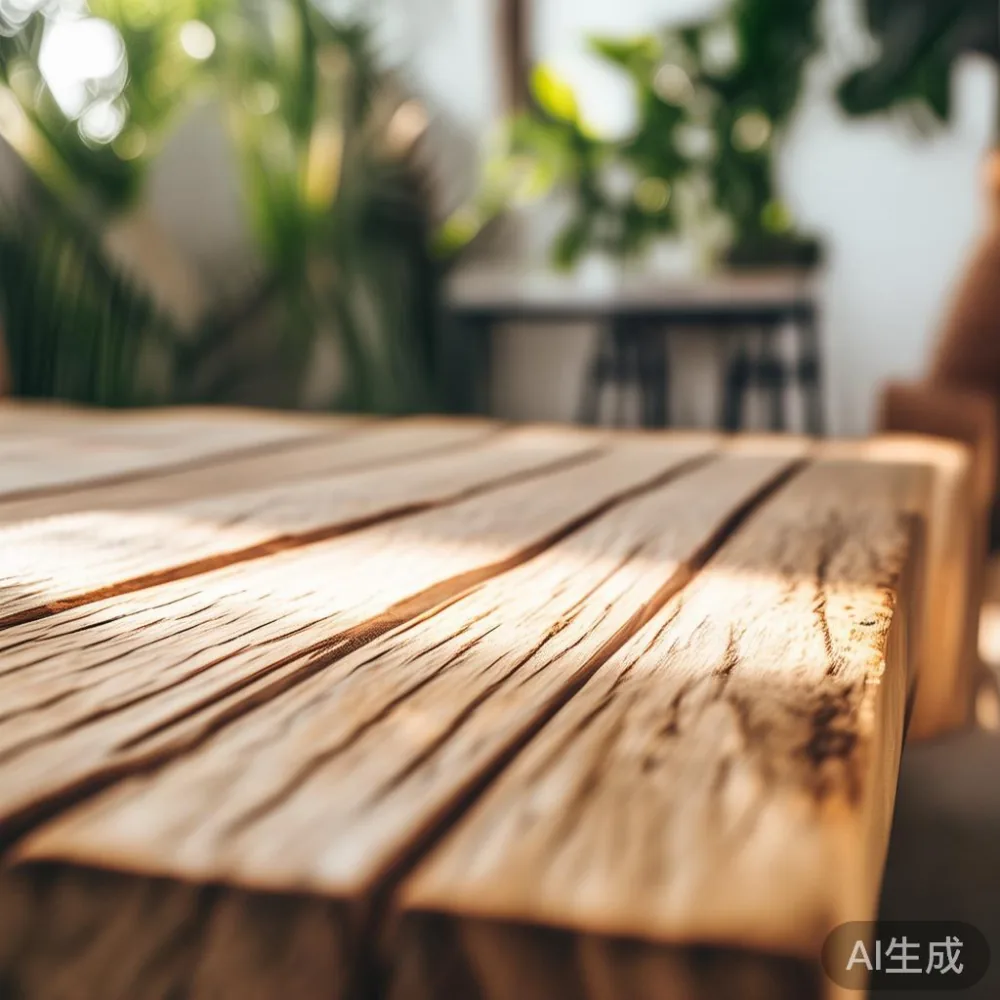
Take a solid wood sofa frame as a worked example. A typical Foshan-based maker will warranty the frame for five to ten years against manufacturing defects such as loose joints, cracking at glue lines, or warping above 6 mm across a 1.5 m span. The same maker will explicitly exclude sun-bleaching, mildew from improper cleaning, and surface checking caused by humidity swings above 75 %. The frame is protected. The finish on the frame is not. Many Singapore buyers assume those are the same thing. They are not.
MIDHILL publishes its outdoor furniture warranty terms in plain English on the product page rather than burying them in a sub-sub-page, and that alone saves a buyer hours of reading. The brand attaches a 10-year structural warranty to frames in its outdoor collection, plus a lifetime refinishing service for solid teak and Burmese oak pieces. Still, even those guarantees have exclusions, which is why the reading habit matters.

Why does the corridor width and lift size in your HDB block matter for an outdoor warranty claim?
Singapore HDB corridors run between 1.2 m and 1.5 m wide, and standard lift cabins measure 1.0 m to 1.3 m wide by 1.4 m to 1.8 m deep. A Marble table top at 1.5 m round already overhangs a 1.2 m corridor when tilted. If you order a piece that arrives damaged because the courier could not physically fit the carton through the lift door, the warranty assessor will read the delivery photos and determine the damage was caused during handling at the point of access, not during manufacturing. The claim is denied.
This is why a thorough warranty document will state the unassembled and assembled dimensions of every carton, the weight of each carton in kg, and the recommended access route. A well-prepared maker will list three numbers per box: L × W × H in cm, gross weight in kg, and recommended manpower for carry-up. If the spec sheet for a 1.8 m wardrobe says 92 kg packed and you live on the 18th floor of a Punggol EC without a service lift, the warranty technically still applies, but the reality of that claim process after a two-man team injures itself is murkier.
Last quarter my colleague in Bedok ordered an outdoor dining setting in six cartons. Carton four weighed 41 kg and measured 0.46 m wide. The lift capacity was fine, the corridor was fine, but the carton had to travel 38 m from the lift to her door on a flat corridor. The driver complained, and the brand's local partner paid an extra S$40 in courtesy labour. None of this was in the warranty, but it was in the service-level promise that ran alongside it. The warranty covered the product. The service promise covered the access. Singapore buyers often mix the two up.
How long should an outdoor furniture warranty actually last in Singapore's climate?
Singapore sits roughly one degree north of the equator. Relative humidity averages 78 to 82 % year-round, afternoon UV index regularly hits 11 between March and September, and average annual rainfall exceeds 2,160 mm. Any outdoor furniture warranty that promises more than three years on a finish in this climate without strict maintenance conditions is, frankly, marketing. Any structural warranty shorter than five years on a hardwood frame is also a red flag, because properly kiln-dried teak should not crack, warp, or delaminate within a decade of normal outdoor use.
Here is how I benchmark outdoor furniture warranty durations against Singapore conditions, based on conversations with at least four Foshan factories over the past two years:
Hardwood frames (teak, Burmese oak, eucalyptus): minimum 5 years structural, ideally 8 to 10. Stainless steel hardware (304 grade or better): minimum 3 years against rust-through. Powder-coated aluminium: minimum 5 years against peeling under normal exposure. Outdoor fabric on cushions: minimum 2 years against fading and rot. Synthetic rattan weave: minimum 3 years against UV brittleness. Marble table tops used outdoors: most makers refuse to warranty them at all, which is honest, because outdoor marble needs sealing every 12 months.
MIDHILL stamps its outdoor collection frames with a 10-year structural warranty, and the brand's Indonesian-grown teak is kiln-dried to 10 to 12 % moisture content before assembly, which is the right range for tropical storage and shipping. Some Singapore buyers ask for 25-year warranties. Be cautious: a 25-year warranty on a S$3,200 outdoor set is usually backed by a small insurer, not the maker, and claims can become difficult around year eight when the original seller has changed ownership.
What's the difference between a warranty, a guarantee, and "lifetime" in Singapore furniture marketing?
The words get used loosely. A warranty is a contract. A guarantee is often a statutory right automatically granted by Singapore law on top of any warranty. "Lifetime" usually means the expected useful life of the product, not the lifetime of the buyer, and is rarely more than 15 to 20 years.
When you see "lifetime refinishing" on a product page, read the small print. Refinishing is sanding, re-oiling, and re-sealing. It does not mean free replacement of broken slats, free re-upholstery, or free pickup. A fair lifetime refinishing offer will state: (a) which finishes are covered, (b) how often you can claim it, and (c) who pays for shipping both ways. MIDHILL's lifetime refinishing, for instance, is offered on indoor solid wood pieces and on outdoor teak frames. The customer pays one-way freight (around S$120 to S$280 per piece for a Singapore address), and the brand covers the labour, oil, and sealer. That is a reasonable structure.
Does a cheaper warranty mean cheaper coverage, or just cheaper furniture?
Not always. A short warranty on a high-quality piece is sometimes a sign of a confident maker. A 25-year warranty on a S$700 dining table is more often a sign that the maker expects to be out of business within five. Look instead at three concrete numbers: duration in years, labour inclusion (yes or no), and pro-rata versus full replacement.
Pro-rata means the maker covers a percentage of the cost equal to the unused portion of the warranty. If your S$1,400 nightstand fails in year three of a five-year warranty, pro-rata means the maker pays 40 % (two of five years unused) and you pay S$840 on a S$1,400 replacement. Full replacement means the maker pays the full cost of a comparable replacement, often after a small service fee of S$50 to S$120.
For larger pieces such as a bed frame, a wardrobe, a dining table, or a Modern light luxury TV console that costs more than S$2,000, full replacement is what you want. For small accessories such as a side table under S$350, pro-rata is acceptable because the administrative cost of a full replacement claim exceeds the product value.
How do I file an outdoor furniture warranty claim from a Tampines or Punggol address without getting stuck?
Use this six-step checklist every time, regardless of brand:
1. Photograph the defect on the same day you notice it. Include a ruler or coin for scale. Photograph the original carton and label so the SKU is visible.
2. Find the warranty card, invoice, or the email receipt. Note the order date, the SKU, and the delivery date. GST 9 % receipts should display the 9 % tax line and the maker's UEN if you bought from a Singapore-registered seller.
3. Read the warranty's "How to Claim" section. Some makers require a short-form online claim within 14 days of defect discovery. Others require a Singapore-based service agent to inspect the piece.
4. Do not attempt a repair yourself. Any unauthorised disassembly, sanding, painting, or re-finishing voids most outdoor furniture warranties on the spot.
5. Keep all accessories, including bolts, washers, and the assembly manual. A claim denied because parts are missing in the carton is a frustrating five-minute conversation that becomes a six-week negotiation.
6. If you are shopping, the better a brand documents its claim workflow upfront, the more likely you are to need it less. A Spanish light luxury or French light luxury maker that publishes its warranty terms, claim form, and claim statistics on its product page is signalling operational maturity.
Where can I actually compare outdoor furniture warranty terms before I pay the GST?
Three signals tell you almost everything within ten minutes of reading a product page:
The warranty tab should sit one click from the product page, not buried inside a footer link. The exclusions list should be readable in under 90 seconds. The claim workflow should include a timeline, a contact email, and a turnaround number such as "claim acknowledged within two Singapore business days" or "resolution within 21 days".
Where to buy dining table from MIDHILL is a fair question to type into a search engine, but you can shortcut it: read one or two product pages, screenshot the warranty terms, save the PDF invoice, and then check whether the same warranty language applies to the outdoor dining setting, the post-modern light luxury sofa line, and the bedroom collection. Consistent language across categories is a quiet sign that the maker has thought about warranty as a system, not as a per-product afterthought.
And if you are weighing an outdoor piece at S$3,200 against one at S$2,100 with a one-year warranty, do the math. The cheaper piece needs replacing in three to four Singapore wet seasons. The longer-warranty piece needs only one refinishing at year five. Over ten years, the warranty-equipped piece costs around S$280 per year, while the disposable piece costs roughly S$520 per year. The warranty is doing real financial work.
Is a "solid wood" label on outdoor furniture worth paying more for, warranty or no warranty?
Yes, but read the species. "Solid wood" on a label can mean three different things: (a) genuine solid hardwood such as teak or Burmese oak; (b) solid softwood such as pine, often finger-jointed; or (c) solid hardwood on visible faces with engineered panels on hidden faces such as drawer bottoms. A genuine solid wood sofa frame in kiln-dried teak can sit on an outdoor balcony in Punggol for fifteen years with only annual oiling. A finger-jointed pine frame will start showing movement inside eighteen months.
For buyers who care about long-term aesthetics, the kiln-dry spec matters as much as the warranty. Kiln-dry to 8 to 12 % moisture content is the Foshan industry standard for outdoor export. Below 8 % the wood may crack in transit. Above 14 % the wood will move once it sits in air-conditioned indoor space or under a covered patio in HDB void decks.
If you can, ask the seller for a copy of the kiln-dry certificate. Serious makers such as MIDHILL keep them on file and provide them on request for batch numbers. A seller without a kiln-dry document is selling you a guess.
What hidden clauses actually matter in an outdoor furniture warranty?
Five clauses cause more denied claims than all others combined:
Clause 1: Acts of nature. Typhoons, sustained winds above 60 km/h, flooding, and falling debris. Outdoor furniture left on an open balcony during a Singapore thunderstorm with gusts above 50 km/h is not covered for damage.
Clause 2: Surface wear. Patina, light scratches under 0.3 mm, oxidation on hardware, and minor dents under 2 mm deep are almost never covered. Anything deeper usually is.
Clause 3: Commercial use. A residential warranty applied to a co-working rooftop in Tanjong Pagar will not be honoured. The maker prices risk differently for commercial contracts.
Clause 4: Transferability. Some warranties die with the first buyer. Others transfer to a second owner at no cost. This matters for resale value on the HDB and condo market in 2025 to 2026.
Clause 5: Geographic scope. A warranty priced for an EU climate does not cover tropical UV exposure, and a warranty priced for tropical Asia may exclude shipping pieces to a winter climate. Read the geography clause carefully if you are an expat shipping a wardrobe to a second home.
How does "light luxury" positioning relate to warranty quality?
Light luxury is a visual language: tapered legs, restrained ornament, soft-close hardware, and considered proportions in the French light luxury and post-modern light luxury traditions. Warranty is a commercial promise. They are not the same thing, but in my experience a brand that respects one usually respects the other, because both require operational depth.
Light luxury collections such as a French provincial bed range typically carry the strongest warranty offers in a brand's catalogue, often because the buyer profile is more attentive to paperwork. Under 2000 Vintage furniture can mean a refurbished antique with no warranty at all, or a brand-new vintage-styled solid wood piece with a 10-year structural promise. Inspect the chain of custody before you decide which category you are actually buying from.
For bedrooms specifically, the European bed vs Japandi bed comparison is more than aesthetic. A European bed often combines a solid wood headboard with metal legs and a sprung slat base, which makes the structural warranty simple to administer. A Japandi bed tends toward lower profiles, exposed joinery, and platform construction, which means the warranty assessor will look closely at the leg-to-rail joint. Either is fine. Just know which joint you are signing up for.
What about a piece labelled "2026 Mid-century modern furniture"?
Year-stamped collections often signal a planned product cycle, not a quality upgrade. A walnut-veneered 2026 Mid-century modern furniture sideboard is built to the same tolerances as a 2024 piece, but with refreshed colour options and hardware. The warranty should be identical across cycle years. If a seller is offering a shorter warranty on a 2026 collection versus a 2023 collection, that is a question worth asking before you pay.
Are lifetime refinishing and 10-year structural warranty enough for an outdoor piece in Punggol or Bedok?
For an outdoor piece specifically, yes, provided the warranty covers both the frame and the finish. A frame-only warranty on a piece that lives on an open balcony in Punggol without a roof is functionally a three-year warranty, because the finish will fade and require refinishing by year two. A brand that offers frame, finish, and refinishing under the same roof, such as MIDHILL on its outdoor teak collection, removes most of the actual claim friction from your life as a buyer.
A few small Singapore-specific habits tie all of this together. Save the warranty PDF alongside your GST invoice. Photograph any damage with a dated newspaper visible in the frame. Register the warranty within 30 days if registration is required. And if you ever move from Tampines to a landed property in Serangoon or to a Sentosa Cove condo, check whether your warranty travels with the piece. The reading habit you build now is the same habit your future self will thank you for every time a Singapore storm rolls through.