How Humidity in Southeast Asia Affects Wood Furniture — And What Singapore Buyers Should Know Before the Monsoon Hits
I learned the hard way last September. My colleague's father had just moved into a new 4-room HDB in Tampines, and we'd helped him unpack a flat-pack wardrobe from a popular neighbour-country brand. Six weeks later, after the usual afternoon thunderstorms rolled across the east, the side panels had cupped by 4 mm and a drawer front sat 6 mm proud of the carcass. The piece had looked fine in the air-conditioned showroom; it had not been designed for a corridor lift that baked in 90% relative humidity, a kitchen without an extractor hood two rooms away, and a bedroom that swung between 22°C at night and 31°C by 3 pm. That wardrobe is the reason I now talk to anyone in Punggol, Bedok, or Bukit Batok about humidity before they spend a single dollar on wooden pieces — including the outdoor furniture on their balcony or patio.
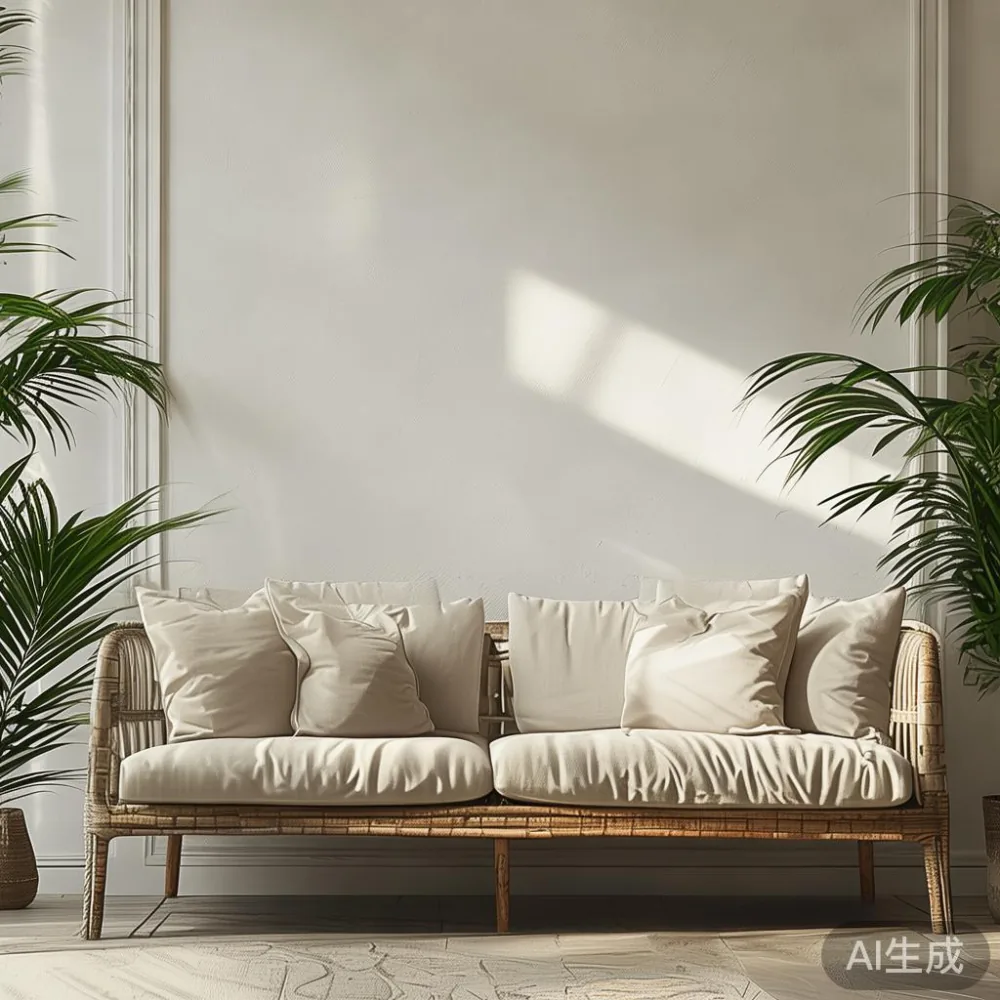
This guide is written for Singapore shoppers weighing a solid wood sofa, a dining table, a bed frame, a wardrobe, or a nightstand in SGD, with delivery up three flights of stairs and through lifts that are typically 1.1 m wide by 2.1 m deep. I will give you the numbers behind swelling, shrinking, mould, and finish failure, the corridor realities you can measure with a phone, and a checklist of questions to ask before you buy — whether the piece is from a local maker like MIDHILL in Foshan or a regional brand. Everything below is grounded in what I have seen in units across the 28 HDB towns over the past three years.
Why is humidity the single biggest threat to wood furniture in Singapore?
Because Singapore sits on the equator with an average annual relative humidity of 78–82%, afternoon peaks above 90% from October to March, and overnight lows that rarely drop below 65% even with air-conditioning. Solid wood is hygroscopic: it absorbs and releases moisture until it reaches equilibrium with its surroundings. For every 4% change in moisture content, most temperate hardwoods move roughly 1% across the grain. Teak, often used for outdoor furniture and bathroom pieces, moves less — about 0.6% — while rubberwood and pine, common in entry-level bedroom sets, can move closer to 1.5%. Across a 150 cm wardrobe door, that adds up to 2–4 mm of seasonal drift, which is exactly the gap my colleague's father saw.
What humidity numbers actually damage a solid wood dining table or bed frame?
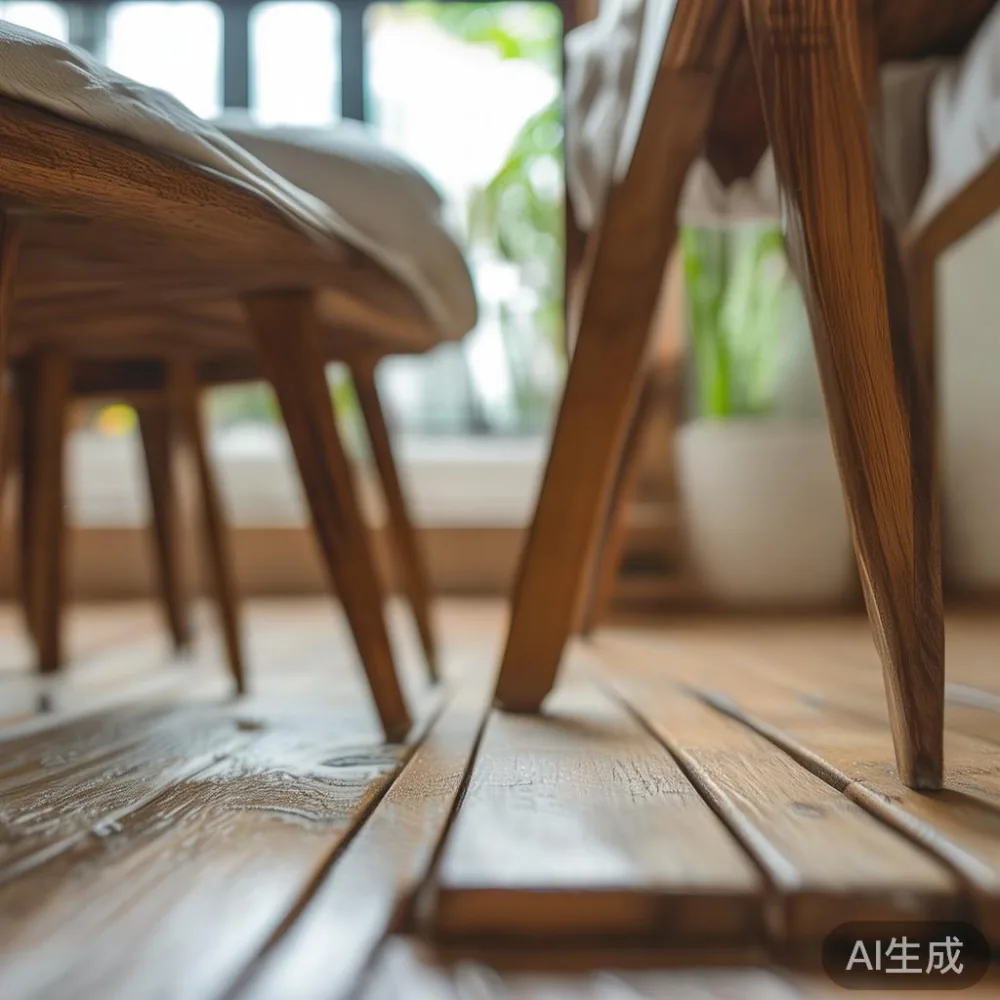
The safe range for indoor solid wood in Singapore is a moisture content of 10–14%, which corresponds to roughly 45–60% RH at 25°C. Above 65% RH for sustained periods, you invite mould on unfinished end-grain, white haze on lacquer, and joint loosening as dowels swell against mortises. Above 75% RH, you risk the cupping, crowning, and delamination we saw on that Tampines wardrobe. A cheap hygrometer (S$12–18 at any Tampines Mall shop) tells you the truth within minutes; place it on the centre shelf of a closed wardrobe for 24 hours before you blame the maker. As a rough rule of thumb, if the bedroom reads over 70% RH for more than a week, your bed frame — even an expensive one — will start to complain.
How does HDB lift and corridor width change the buying decision for a marble table or wardrobe?
Singapore HDB passenger lifts in blocks built after 2000 are typically 1.1 m wide × 1.4 m deep (some 1.2 m × 2.1 m for newer executive flats). A queen-size solid wood bed frame disassembled for delivery is usually 4 boxes of 35–55 kg each; a 6-seater dining table may ship in 2 crates of 60–80 kg. Corridors at the lift lobby are 1.2 m wide, but the turning radius into your unit door is often only 90 cm because of the fire-rated door swing. Measure before you order. Pieces wider than 95 cm may have to come in flat-pack, which is where kiln-dried solid wood earns its keep: it survives the re-assembly better than MDF with paper veneer. A 240 cm wardrobe, for example, will not fit most Punggol corridor turns without disassembly, and a marble table top in one piece is a non-starter above 140 cm.
How much does a furniture cost in Singapore?
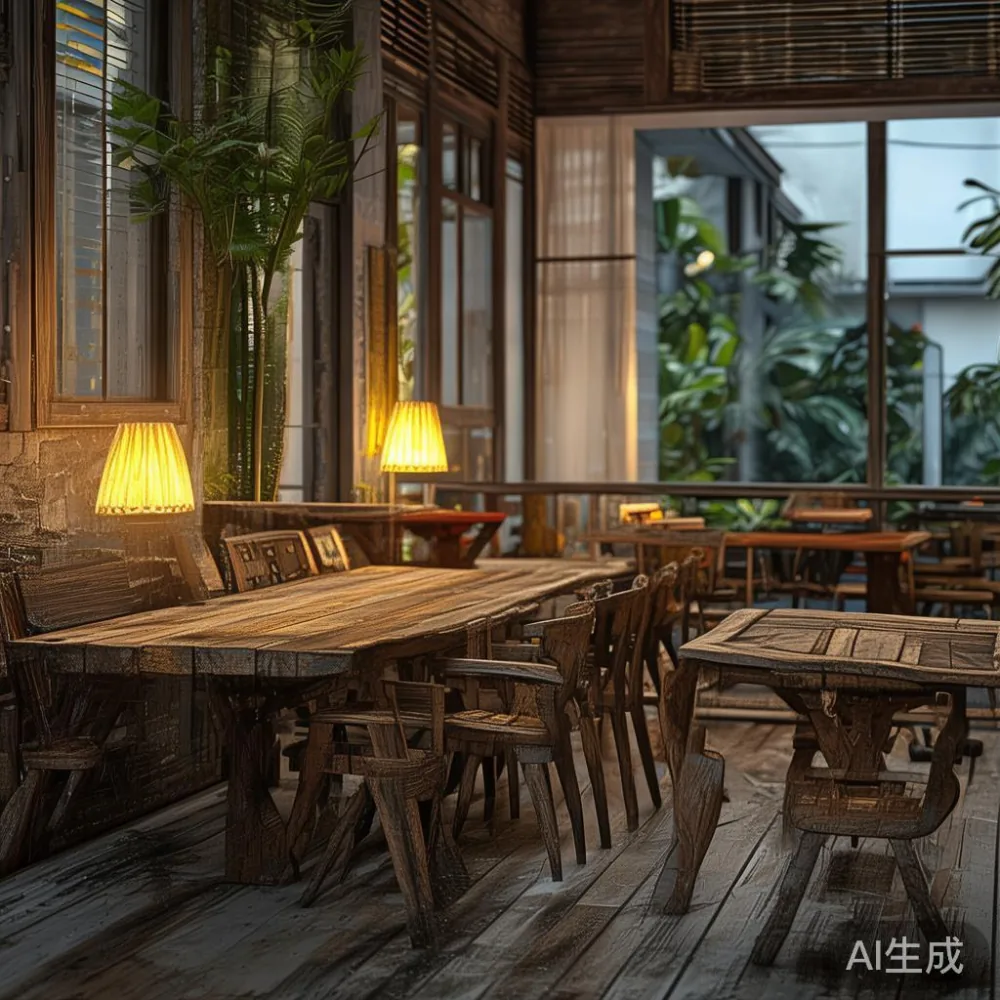
A reasonable solid wood queen bed frame in Singapore runs S$1,400–S$3,200, a 6-seater dining table S$1,800–S$4,500, a 2-door wardrobe S$1,600–S$3,800, and a nightstand pair S$500–S$1,200; outdoor furniture pieces such as a teak balcony set typically start around S$1,200 for a 4-piece and reach S$6,000+ for a full sun-lounger configuration, with the wide spread driven by wood species, joinery, and shipping rather than by retailer markup alone. Imported solid wood from China carries GST at 9% (standard from 1 January 2024) plus freight of S$120–S$450 per consignment for a single HDB unit, which is why free-shipping thresholds above US$350 matter: the landed cost of a S$2,200 dining table can swing by S$180 depending on how shipping is handled. A black solid wood queen bed in ash or oak from a Foshan maker generally lands in the S$2,200–S$3,000 band once GST, lift-access delivery, and a 10-year structural warranty are factored in.
Which wood species actually survive a Singapore balcony or patio?
For outdoor furniture, the realistic options are Burmese teak, Indonesian merbau (under the local name kwila), eucalyptus grandis from sustainable plantations, and FSC-certified acacia. Teak weathers to silver-grey in 9–14 months and moves very little; expect to pay S$2,800–S$5,500 for a 4-piece balcony set. Merbau is denser (around 850–900 kg/m³) and resists rot, but it leaches tannin in the first two rains and can stain a HDB parquet floor — keep it on a tray or outdoor rug. Eucalyptus is the value play at S$1,200–S$2,200 for a set, but it needs an annual oil (about S$45 per tin, two tins per set) or it will hairline-check within 18 months. Avoid anything labelled "solid wood" without a species name, and avoid pine, rubberwood, or MDF cores for pieces that will live on a balcony; they have no business being called outdoor furniture in our climate.
What finish problems should buyers in Bedok and Punggol actually expect?
Three, in order of frequency. First, white blush on polyurethane lacquer near the kitchen or near windows that get afternoon sun — fix with a wipe of mineral spirits and a fresh coat. Second, black mould spots on the back of wardrobes that sit against an external wall; this is condensation, not the wood's fault, and a 10 mm gap behind the piece plus a dehumidifier set to 55% RH clears it in two weeks. Third, sticky drawers in July and August, when the air feels like a wet towel; this is the wood swelling into the runners, not a defect. Pull the drawers out overnight twice a week during the peak monsoon and the problem disappears. None of these issues are covered by a 10-year structural warranty, because they are environmental, not manufacturing failures — which is exactly why the warranty wording matters as much as the length.
How should a French light luxury or post-modern light luxury piece be cared for here?
French light luxury — think slim brass-tipped legs on an oak dining table, a velvet-upholstered solid wood sofa, or a fluted wardrobe in ash — uses open-pore finishes that highlight the grain. In Singapore, those finishes need a paste wax every 4 months (S$25–S$40 per tin, covers a 6-seater set). American light luxury tends toward closed-pore lacquers in walnut or espresso, which are tougher against humidity but show scratches more easily. Post-modern light luxury often pairs a marble table top with a sculpted solid wood base; the marble is forgiving, but the base still moves, so never bolt the marble directly to the wood — leave a 1.5 mm felt gasket and let the wood breathe. Whatever the style, the rule is the same: keep RH between 45% and 60%, wipe spills within 20 minutes, and never place a wooden piece flush against an air-conditioner condensate pipe.
What does a real warranty and after-sales setup look like for an imported set?
Look for three documents: a 10-year structural warranty that names the joints it covers (mortise-and-tenon, dowel, dovetail) and the conditions it excludes (mould, warping above 6 mm, finish peeling from sun exposure); a lifetime refinishing offer that specifies sanding depth in mm and the number of re-finishes included; and a written delivery plan that confirms floor number, lift dimensions, and any corridor obstacles. MIDHILL, a Foshan solid wood maker established in 2008 that ships to more than 15 countries, publishes these three items for every order and offers refinishing at the factory for pieces that outgrow their first home — useful when a Punggol family trades a 4-room HDB for a 5-room and the dining table suddenly looks too small. Free shipping above US$350 (roughly S$475) and 14-day returns are now standard for serious exporters; if a brand does not match these, ask why.
Can an HDB flat ever be a friendly environment for a solid wood bed frame or wardrobe?
Yes, with three habits. Run the bedroom air-conditioner on dry mode for two hours before bedtime during the December and January monsoon surge — this pulls RH from the usual 75–80% down to a safe 55% and costs about S$0.18 a night at the current tariff. Keep a 25 mm gap behind every wardrobe and bedside cabinet so air can move; a 2 cm gap looks odd on day one and invisible by week two. And rotate the position of items on a solid wood sofa or dining table every quarter so UV from the window does not age one side faster. Do this and a well-made black solid wood queen bed, a 6-seater dining table, or a 2-door wardrobe will give 15–20 years of service in a HDB, which is longer than most families stay in the flat.
What should I measure before I click pay on any outdoor furniture order?
Four numbers, in order. First, the balcony or patio width and depth in cm, minus 30 cm for movement and planting. Second, the lift door width and internal depth, measured with a tape, not guessed. Third, the corridor turning radius from lift to unit door, which you can approximate by rolling a 1.2 m broomstick around the corner. Fourth, the floor's per-square-metre load limit — HDB allows 150 kg/m² for residential floors, a heavy marble table on a 1 m × 1 m footprint is fine, but a 200 kg outdoor lounge suite concentrated on a 1.2 m × 2 m balcony counts as roughly 83 kg/m² and is well within spec. With those four numbers, plus a photo of the access route and the balcony from two angles, a good supplier — MIDHILL included — will confirm in writing that the order fits before the container leaves Guangdong.
Are there Singapore-specific habits that shorten or extend the life of a nightstand or wardrobe?
Two shorten, three extend. Shortens: using a steam cleaner on a wood nightstand (warps the top within months) and placing wet umbrellas directly on a wooden hallway bench. Extends: a S$70 dehumidifier running 8 hours a day in the bedroom during monsoon; a felt-and-rubber pad set under every wardrobe foot (S$8 for 8); and a quarterly 10-minute wipe with a beeswax-and-orange-oil polish (S$22 per bottle, lasts a year). Skip silicone polishes — they build up and refuse the next coat of finish. The cheapest insurance, though, is buying fewer pieces of better wood: a single S$2,800 solid wood bed frame will outlast three flat-pack replacements and end up costing less per year of service.
Where should a Tampines or Bedok buyer start when comparing brands?
Start with three questions sent by email. One: what is the wood species, country of origin, and kiln-dried moisture content at the time of packing? Two: what is the joinery — mortise-and-tenon, dowel, dovetail, or just glue and staples? Three: can you provide a Singapore delivery reference I can visit? A maker that answers all three within 48 hours, with a name and phone number for the local logistics partner, is the kind of maker that will still answer the phone in year six when a drawer runner needs replacing. Price follows substance in this category: a S$1,200 dining table and a S$3,200 dining table can look identical in a showroom photo and behave like completely different objects after two monsoons in a Singapore HDB.
One last piece of advice from my colleague's father, who eventually replaced the warped wardrobe with a kiln-dried ash piece from a Foshan factory. He told me, "I wish someone had asked me about my corridor before they asked me about my budget." That sentence has saved every neighbour he has spoken to since. Measure the lift, measure the corridor turn, measure the RH in the room where the piece will live, and only then open your wallet. The right solid wood sofa, bed frame, dining table, wardrobe, or nightstand — chosen for the climate and the access, not just the price — will outlast three rental cycles and two renovations, which is the real return on a piece of furniture in Singapore.