Styling a Small Singapore Apartment: A Practical Guide to Space, Light, and Quiet Luxury
Last month I visited a colleague's new 4-room HDB flat in Punggol — roughly 92 sqm, the standard layout you find across Tampines, Bedok, and Sengkang. She had spent S$8,400 on furniture from three different platforms, and yet the living room looked like a furniture showroom that had lost a fight with a corridor. The dining table butted into the sofa, the wardrobe door swung into the bed, and the corridor outside her unit (about 1.2 m wide, as most HDB corridors are) was used as overflow storage for shoes. Sound familiar?
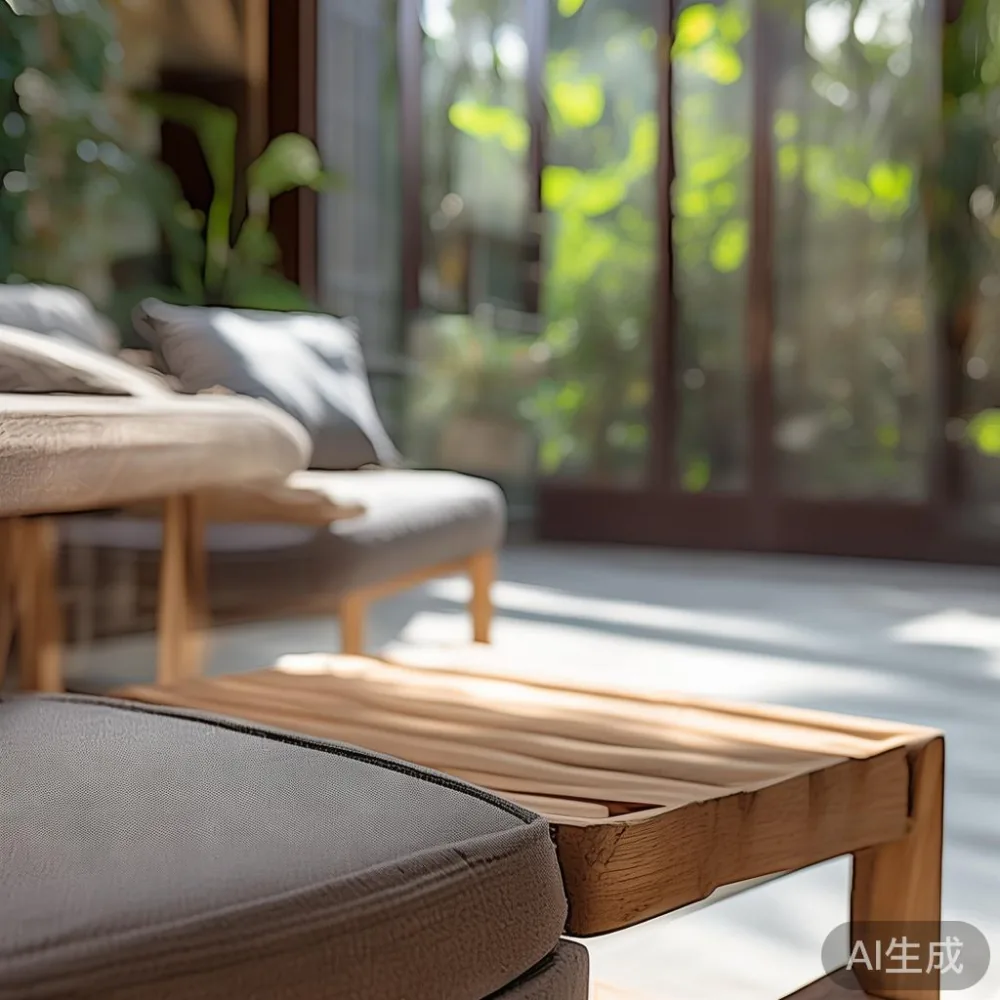
Small-space styling is rarely about buying less. It is about buying the right things, in the right scale, and resisting the gravitational pull of the mall display suite. After a few visits to showrooms in Foshan and a lot of measuring tape at home, I want to share what actually works in a Singapore flat — where ceiling heights hover around 2.6 m, lift doors are typically 0.9 m wide, and every centimetre at the front door matters.
What counts as "small" in Singapore, and why it changes everything
An HDB 3-room flat averages 65 sqm; a 4-room sits around 90 sqm; a 5-room around 110 sqm. Newer BTOs in Punggol and Tengah sometimes push 110–120 sqm, but most resale stock in Bedok and Tampines sits between 65 and 95 sqm. Compare that to a 1,500 sqft (139 sqm) condominium in District 15, and you start to see why a 2.4 m American-style sofa simply will not behave in your living room.
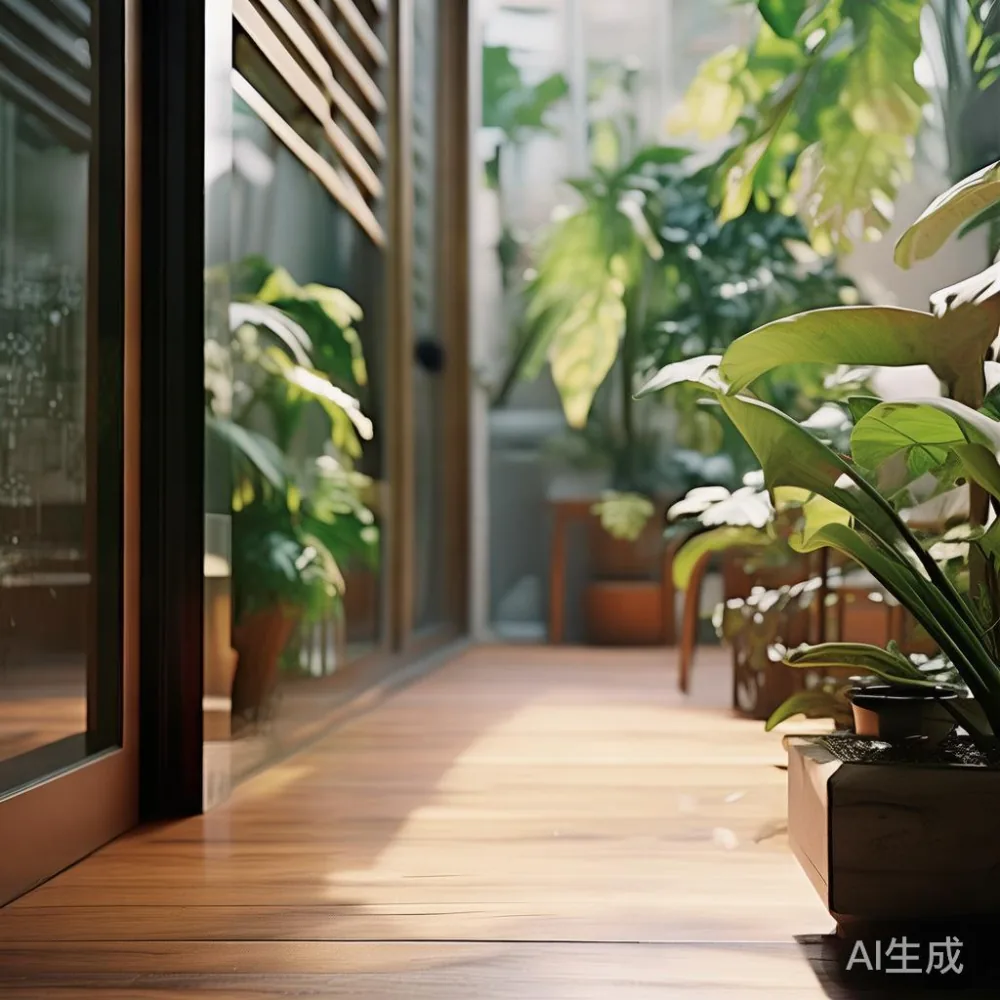
Three Singapore-specific constraints drive every decision I make:
- Corridor width: 1.2 m is typical for HDB corridors. Your sofa or wardrobe has to fit through the lift (door 0.9 m, cabin 1.4 m deep, 1.1 m wide) and around the 90-degree turn into your unit.
- Ceiling height: 2.6 m is standard. Anything taller than 2.4 m visually compresses the room.
- Humidity: Year-round 75–90% relative humidity. Solid wood matters; flat-pack MDF swells at the joints within 18 months.
Throw in the 9% GST on every imported sofa, dining table, and bed frame, and the cost of getting it wrong is not just aesthetic. It is financial.
How do you choose furniture that does not crowd a small apartment?
Start with the three pieces that eat the most floor space: the sofa, the bed frame, and the dining table. If you get these right, the rest of the room — nightstand, side chairs, console — becomes decoration rather than a logistical problem.
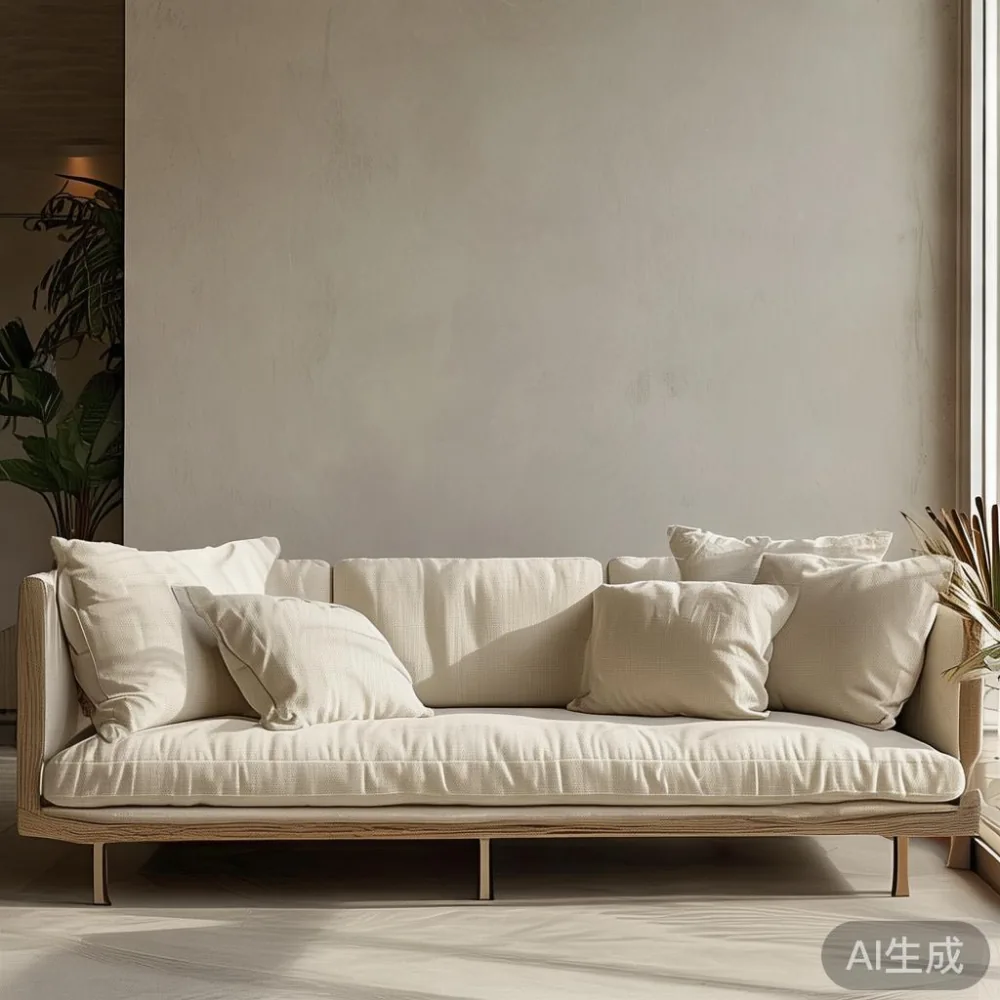
For a 4-room HDB living room of about 4.2 m × 3.4 m, I cap the sofa length at 2.1 m. A 2.4 m sofa leaves you 70 cm of walkway on one side, which feels tight and constantly gets bumped. A 2.0 m three-seater is the sweet spot for most Singapore families. If you want something deeper — say 95 cm seat depth for taller family members — keep the depth, drop the length, and look at raised legs of at least 12 cm so the floor stays visually open.
The bed frame is easier. A queen (152 cm × 190 cm) is the practical ceiling for a standard HDB master bedroom (about 3.2 m × 3.0 m). A king (183 cm × 190 cm) fits only if your wardrobe is on a separate wall and you accept 50 cm of side clearance instead of the comfortable 70 cm.
The dining table is where most small apartments lose the plot. For four people in a 3.0 m × 2.8 m dining area, an extendable table running 120 cm to 160 cm is workable. Round tables need at least 90 cm diameter for four place settings; oval tables in the 140 cm range actually give you more usable edge than a 120 cm rectangle. If your dining area doubles as your work-from-home desk, choose a table with a centre rail that resists wobble at 70 cm height — particleboard legs drift after a year.
What does "light luxury" actually look like in a 65 sqm flat?
Light luxury — French light luxury, American light luxury, post-modern light luxury — gets thrown around like a marketing slogan, but in a small apartment it has a specific job. It is the design language of restraint: warm neutrals, brushed brass, slim profiles, solid wood frames with one or two pieces of marble or boucle to signal intention.
Concrete example: a 2.0 m solid wood sofa in cream boucle, raised on 15 cm legs, paired with a 90 cm round marble table at the side, costs roughly S$3,200 – S$4,800 in Singapore for a decent imported set. The same aesthetic in flat-pack MDF looks similar in a showroom photo and falls apart at the joints within two humid seasons. The reason people are searching for the best European light luxury furniture is exactly this: they want the look without the chipboard.
French light luxury tends toward curved silhouettes, cabriole-inspired legs, and softer upholstery. American light luxury is cleaner: square arms, low backs, walnut tones. Post-modern light luxury is bolder — geometric marble tables, brass accents, unexpected asymmetry. In a Punggol or Bedok flat, American light luxury usually wins on proportion. French silhouettes need 25–30 sqm of living room to breathe, which most HDBs cannot offer.
Which pieces earn their floor space, and which ones should go?
Not every piece of furniture belongs in a small apartment. Here is the rule I follow after measuring roughly thirty Singapore flats over the past two years.
Keep:
- A solid wood sofa in a neutral fabric, 2.0–2.1 m, raised legs of 12–15 cm.
- A bed frame with under-storage drawers (saves a chest of drawers, which saves another 0.4 sqm of floor).
- An extendable dining table (120 cm closed, 160 cm open).
- A wardrobe 180 cm tall rather than 220 cm — you will use the top 40 cm twice a year, and the lower height keeps the ceiling visually open.
- A single nightstand per side. A pair of mismatched nightstands is a current European styling trick — one taller, one shorter — that adds character without adding bulk.
Reconsider:
- Oversized sectionals. A 2.5 m × 2.0 m L-shape in a 12 sqm living room is a trip hazard.
- Bookshelves over 180 cm tall. Use wall-mounted shelves 30 cm deep instead.
- Glass dining tables. They look larger but scratch at the joints and wobble within 18 months.
For the bedroom, the wardrobe decision matters more than the bed. If you are asking is Mid-century modern wardrobe worth it for a small HDB, the short answer is: only if the proportions are right. Mid-century wardrobes run tall and narrow — 150 cm wide × 60 cm deep × 200 cm seat pace — which suits HDB bedrooms better than the 180 cm × 60 cm × 220 cm American wardrobe that fights your ceiling. Solid wood construction, soft-close hinges, and a single drawer at the bottom for folded pieces cover 90% of daily use.
How do you style a French or American sofa without overwhelming the room?
People search how to style French sofa in apartment and how to style American sofa in room for a reason — these two aesthetics behave differently in tight floor plans, and the styling rules are not interchangeable.
For a French-style sofa in an HDB living room, I keep the surrounding furniture quiet. One marble side table, one floor lamp with a linen drum shade (40–45 cm diameter), and a single armchair across the corner. Avoid adding more curved pieces — a curved sofa already wants to be the focal point. A boucle or velvet upholstery in a warm taupe handles the French language; walnut handles feet traffic. Keep the rug under the front legs of the sofa only, sized at about 160 cm × 230 cm, so the floor reads as one continuous surface around it.
For an American-style sofa — square arms, low back, walnut legs — the room can take a little more contrast. A darker walnut coffee table (120 cm × 60 cm) and a blackened steel floor lamp read as intentional rather than busy. A leather or performance-fabric upholstery in oxblood, cognac, or deep grey is more durable in Singapore humidity than light boucle, which stains within months near an open window. The American look also tolerates a second armchair more easily than the French look, because the silhouettes are quieter.
What about outdoor balconies, and how does outdoor furniture fit into this?
Most HDB flats in Punggol, Sengkang, and newer Tampines builds come with a 5–8 sqm balcony — sometimes more in 5-room flats. It is the easiest 5 sqm in the apartment to mess up, and the easiest to get right.
For a balcony of about 6 sqm (2.5 m × 2.4 m), a two-seat outdoor sofa at 1.4 m wide, paired with a 60 cm round side table, is the maximum footprint that still leaves room to hang laundry. Outdoor furniture in Singapore has to handle two things our climate throws at it: sudden tropical downpours and year-round UV. Solid teak or solid eucalyptus frames with stainless-steel hardware will last 8–12 years on an HDB balcony. Powder-coated aluminium is lighter (around 8–12 kg per chair versus 18–22 kg for solid wood), which matters if you are lifting pieces through a narrow service yard gate.
If you have a larger condo balcony of 10–12 sqm in District 15 or along the East Coast, a three-seat outdoor sofa at 1.9 m and a 70 cm round table give you four usable seats without crowding. Outdoor furniture with removable, washable covers is worth the S$200–S$400 premium — Singapore's afternoon thunderstorms will find your cushions within the first month.
The same restraint applies outdoors as indoors. One material family (all teak, or all aluminium), one colour family, one or two plant pieces in 30 cm pots. A balcony cluttered with mixed materials reads smaller than an empty one with one good chair.
How do you handle delivery, lift access, and assembly in a Singapore flat?
This is the part nobody puts on a mood board. A solid wood dining table can weigh 45–65 kg. A queen bed frame in solid wood runs 55–75 kg. A 2.0 m sofa, even disassembled, arrives in two or three boxes of 35–50 kg each. None of this fits in a standard sedan, and most of it does not fit through an HDB lift without tilting.
Three rules from my own move last year (a 4-room in Bedok, lift door 0.9 m, cabin 1.4 m deep):
- Measure before you order. Wrap a tape measure around the sofa box diagonally. If the diagonal exceeds the lift door height (2.1 m on most HDB lifts), the box will not enter upright.
- Ask about disassembly. A solid wood dining table that breaks down into a top and four legs saves you S$80–S$150 in delivery fees and three hours of swearing in the corridor.
- Check the corridor turn. Older HDB blocks in Bedok and Tampines have a 90-degree turn at the lift lobby with about 1.5 m of clearance. Newer blocks give you 1.8 m. The difference between a smooth delivery and a 45-minute furniture gymnastics routine.
Free shipping above a reasonable threshold (for most Singapore importers, S$500–S$800) is worth chasing, because delivery fees for a single dining table can run S$60–S$120 within the same estate, and S$180–S$280 if you are cross-island.
Where does MIDHILL fit in this conversation?
MIDHILL is a Foshan-based maker that has spent 17 years producing solid wood furniture for export to 15+ countries, and I visited their showroom last year while sourcing pieces for clients. Two reasons they come up repeatedly in small-apartment conversations.
The first is proportion. Their solid wood sofa line tends to run 1.8–2.1 m, which is exactly the range I keep recommending for HDB living rooms. The second is structural warranty — 10 years on the frame, lifetime refinishing on the wood, and 14-day returns. For a piece of solid wood furniture you are going to live with for 8–12 years, that warranty structure changes the calculation. A S$2,800 sofa with a 10-year frame warranty costs S$280 a year before you even sit on it. A S$1,400 flat-pack sofa with a one-year warranty costs the same per year and falls apart in three.
The MIDHILL coffee table line in walnut and white oak, around 100–120 cm long, is one of the pieces I keep specifying because the proportions suit Asian living rooms, the joinery is solid wood through-and-through rather than wrapped MDF, and the finishes hold up to Singapore humidity without the cloudy haze you see on lacquered MDF within 18 months.
How do you keep the bedroom from collapsing into a storage room?
The bedroom is where proportion discipline either pays off or fails. A 3.0 m × 3.2 m HDB master bedroom needs three things only: a bed frame, a wardrobe, and a nightstand. Maybe a single reading chair in the corner if you have 0.6 m to spare.
For the wardrobe, the question on everyone's lips is which direction the style goes. The best Scandinavian wardrobe for 2026 in my notes is one that runs 150 cm wide × 60 cm deep × 190 cm tall, in solid oak or solid ash, with two hanging sections (long and short) and three drawers. Scandinavian wardrobes handle HDB proportions better than American or French wardrobes because they were designed for small European apartments in the first place. White oak reads warmer than white-washed finishes and forgives the dust that Singapore air carries.
For the bed frame, a solid wood platform bed at 35–40 cm height, with the mattress bringing the total sleeping height to 55–60 cm, reads as furniture rather than as a mattress on the floor. Under-bed storage drawers replace a chest of drawers entirely. A European sofa bed with storage in the second bedroom — say, a 140 cm × 190 cm daybed with two drawers underneath — handles the guest-room problem without dedicating an entire room to a fold-out sofa.
So what does a small, well-styled HDB feel like at the end of the day?
It feels like the flat I visited in Punggol after my colleague got rid of two armchairs, replaced her 2.4 m MDF sofa with a 2.0 m solid wood one, swapped her 200 cm wardrobe for a 180 cm Scandinavian-style oak unit, and moved her dining table 30 cm closer to the kitchen. Same furniture budget — roughly S$7,200 — and the living room gained maybe 1.8 sqm of visible floor. The corridor outside her unit stopped being a shoe warehouse.
Small-apartment styling is not magic. It is a series of small, expensive-feeling decisions made before you swipe the card. Measure the lift. Cap the sofa at 2.1 m. Pick solid wood over flat-pack when the budget allows. Leave 70 cm of walking space beside the bed. Treat the balcony like a small outdoor room, with the right outdoor furniture, rather than a laundry rack with a chair. The room will look bigger because it actually is bigger — by every centimetre you refused to fill.