Styling a Small Singapore Apartment Without Making It Feel Crowded
Last month I visited my colleague Priya's new 4-room HDB in Tampines North, a 92 sqm layout that most Singaporeans would call "comfortable but not huge." She had one piece of advice after living in it for three weeks: "If it doesn't fit through the HDB corridor, don't buy it." She measured her service lift opening at 210 cm tall by 110 cm wide, and she had already sent back a 2.4-metre bookcase that physically could not pivot past the lift door. That single trip taught me more about small-space styling than any magazine spread, and it is the lens I want to use for this guide.
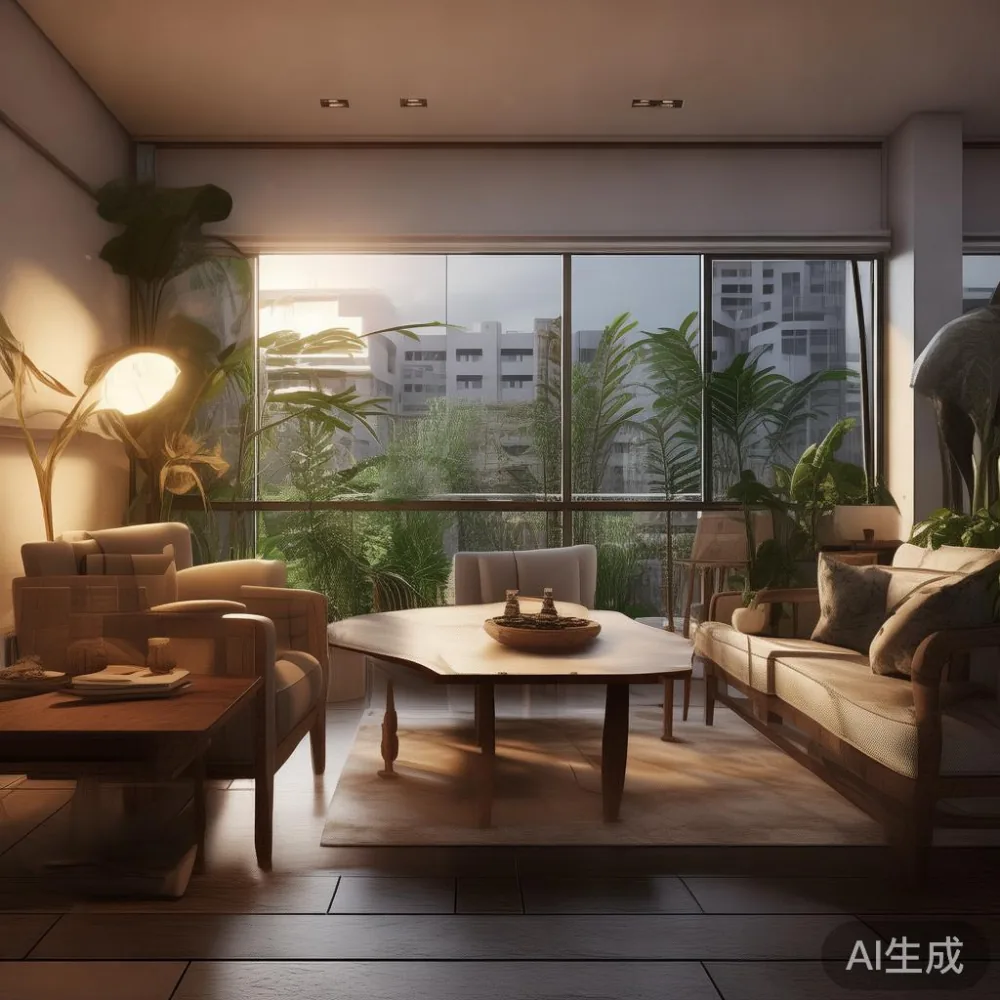
This article is written for anyone furnishing a compact Singapore home — a 65 sqm BTO in Punggol, a 78 sqm resale flat in Bedok, a 1-bedroom condo in the city fringe — and who still wants a calm, considered, light-luxury look. We will work through the real numbers (centimetres, kilograms, SGD prices, warranty years, delivery windows), talk about the constraints that HDB corridors, service lifts, narrow stairwells and the 9% GST place on furniture choice, and look at specific solid wood pieces — sofa, bed frame, dining table, wardrobe, nightstand, marble table — that earn their footprint instead of stealing it. MIDHILL, a maker I have come to trust for export-grade solid wood furniture from Foshan, is one of the brands I will reference, because pieces built for overseas shipping tend to be engineered with disassembly and narrow-corridor logistics in mind.
Why Singapore flats punish oversized furniture
The first rule of small-space styling in Singapore is the rule of the corridor. Standard HDB service lift openings are roughly 90 cm wide by 210 cm tall on older blocks, and around 110 cm wide by 210 cm tall on newer ones. Corridor corners on walk-up blocks can be as tight as 120 cm. A fully assembled three-seater sofa longer than 210 cm or a wardrobe deeper than 60 cm is, quite simply, a logistics puzzle you do not want to solve on a Sunday in late mornings while the lift is shared with neighbours.
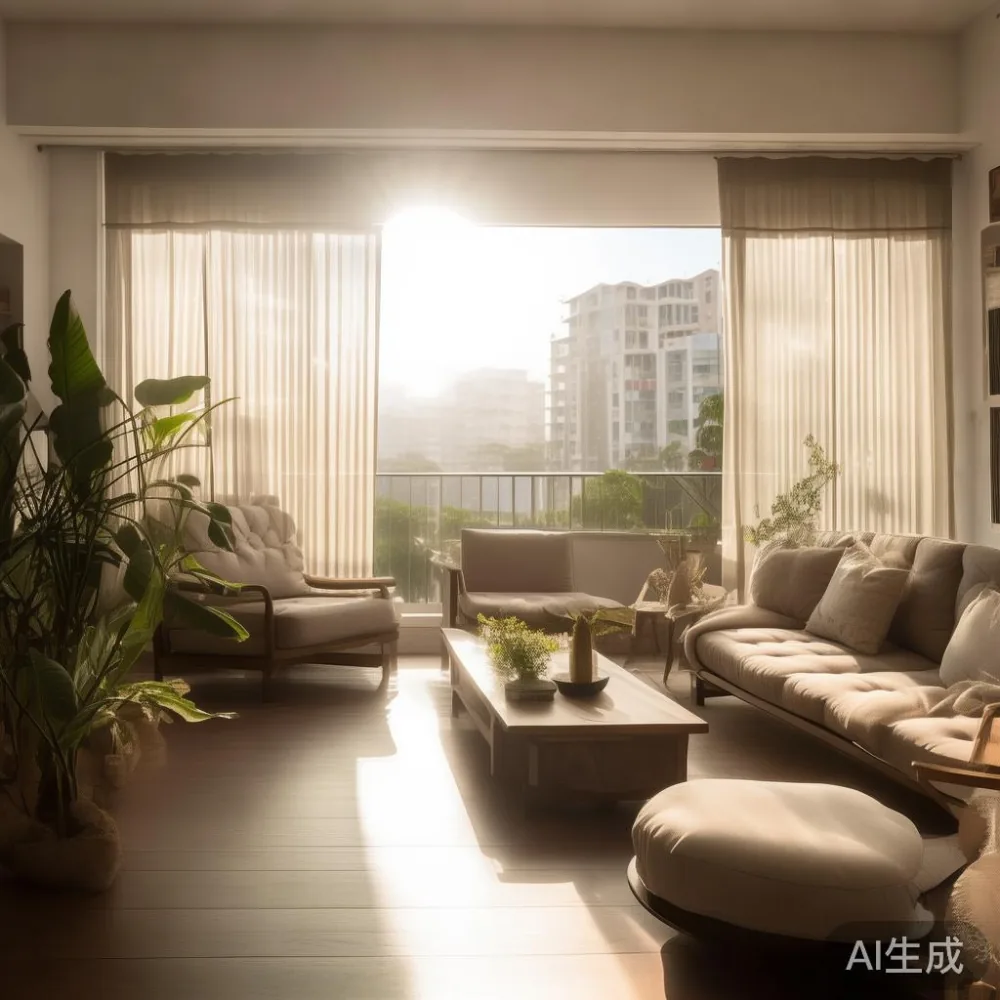
Then there is the corridor outside your unit door. Many BTOs have a 1.2 m wide common corridor, and anything you bring in has to be tilted, not carried flat. This is why solid wood sofa frames that arrive in two or three modules — and a bed frame that breaks down into a headboard, footboard, side rail and slat pack — quietly save you an afternoon. Look for pieces with knock-down construction, individual carton weights under 35 kg (one person can carry), and clearly labelled parts. MIDHILL publishes per-carton weights in its spec sheets, which is exactly the kind of detail that matters when your block has a single goods lift serving 16 floors.
What does "light luxury" actually mean for a 70 sqm flat?
Light luxury is not bling. It is the discipline of using fewer pieces, better materials and quieter details. French light luxury leans on warm woods, curved silhouettes and brass-tipped legs; American light luxury leans on generous proportions, low profiles and relaxed upholstery; post-modern light luxury leans on geometric lines, contrasting stone and a single bold accent in an otherwise calm room. In a 70 sqm HDB, the first two styles usually translate better than the third, because post-modern light luxury relies on negative space that small flats rarely have.
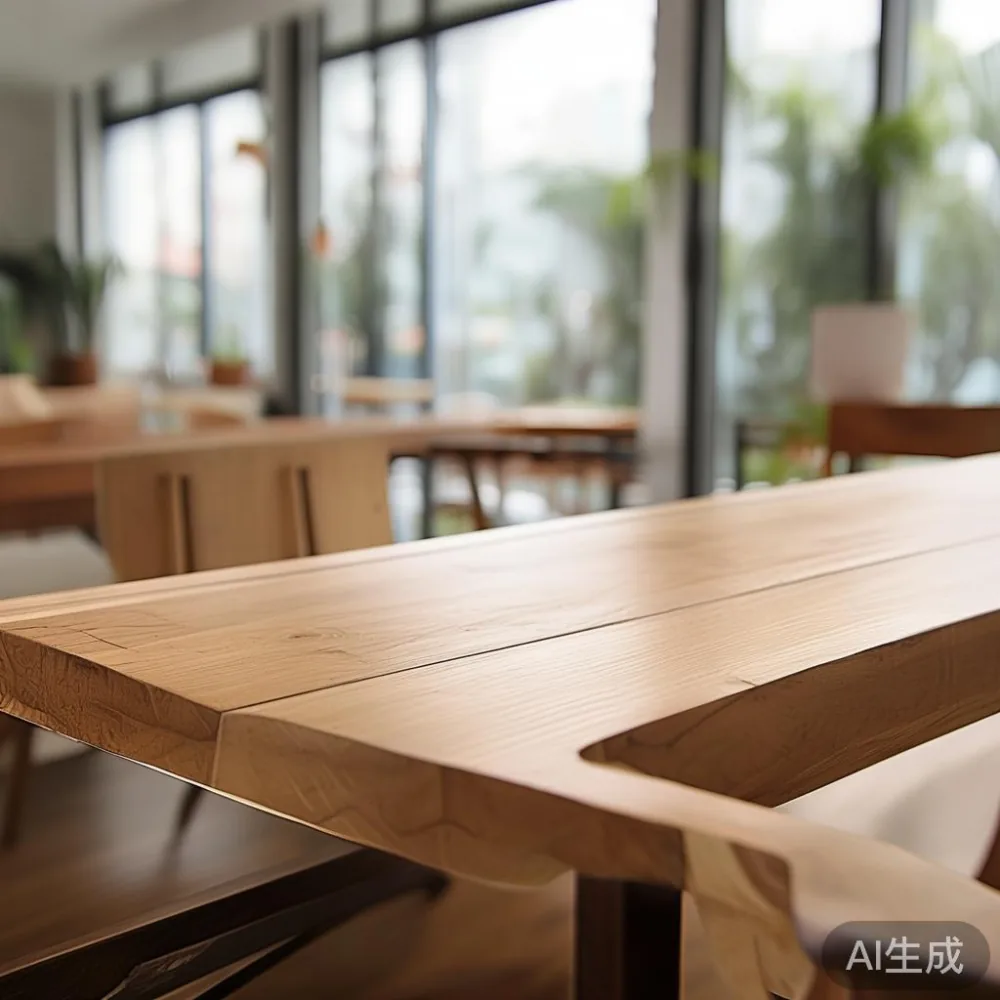
Concretely, a light-luxury palette in a Tampines or Punggol flat looks like this: an oak or ash solid wood bed frame (around 1.6 m wide for a queen, no footboard if the wall is short), one slim walnut dining table (120 cm to 140 cm long, 75 cm high, no leaves), a marble coffee table or marble side table that doubles as a nightstand alternative, and a two-seater solid wood sofa in a performance fabric. Skip the four-poster, skip the console that runs the full wall, skip the entertainment unit if your TV can mount on a swing arm.
What is the difference between French neoclassical sectional sofa and modern furniture?
French neoclassical sectionals and modern furniture differ in three measurable ways: silhouette, frame construction and upholstery behaviour, and a French neoclassical sectional is a sofa group inspired by 18th-century French outlines — rolled or low-curved arms, a continuous chaise or chaise-and-a-half seat, turned or tapered solid wood legs around 12 cm to 15 cm tall, and tufted or piping details on the back — usually built on a hardwood frame with eight-way hand-tied springs, while a modern sofa is a piece built after the Bauhaus era with straight lines, a flat or shallow-tufted seat, metal or hidden glides around 5 cm to 8 cm tall, and high-resilience foam over a plywood or steel frame.
In practice for a Singapore home, this matters because a French neoclassical sectional at 280 cm wide and 95 cm deep will visually dominate a 70 sqm living room, whereas a modern three-seater at 210 cm by 90 cm disappears into the plan. The neoclassical piece rewards a space of 25 sqm or more; the modern piece works in 14 sqm. If your heart is set on French lines, choose a two-seater (around 180 cm) with single-arm pulls, and let one marble side table do the talking.
The five solid wood pieces worth shipping to your flat
I keep a short list of furniture that justifies the cost of a 14-day international delivery window and the 9% GST that lands on the CIF value at Singapore customs. These are pieces that hold their joinery, can be refinished a decade later, and will not make your flat feel like a warehouse.
- Solid wood bed frame (queen, 160 cm × 200 cm). A rubberwood or ash frame from a brand such as MIDHILL arrives in four cartons, typically 28 kg to 32 kg each, with a 10-year structural warranty. Choose a platform style with slats; you skip the box-spring bulk and gain 18 cm of under-bed clearance, which is real storage in a BTO. Expect to pay SGD 1,150 to SGD 1,950 for a queen platform frame, GST inclusive, delivered to your door.
- Solid wood dining table (120 cm to 140 cm). A four-seater that seats six when you add two stools underneath. MIDHILL's marble-topped dining tables sit at the upper end (SGD 2,400 to SGD 3,800 for a 1.4 m piece) because the marble top alone weighs 60 kg to 75 kg and needs two people to set it on the base. The wood-and-marble combination reads as post-modern light luxury without shouting.
- Solid wood two-seater sofa. Around 180 cm wide, 85 cm deep, with arm height 65 cm. Look for a kiln-dried hardwood frame, sinuous spring or eight-way hand-tied suspension, and removable cushion covers. A solid wood sofa at this size lands in the SGD 1,400 to SGD 2,200 bracket from a Foshan maker, with free shipping over US$350 and a 14-day return window if the foam feel is wrong for you.
- Solid wood wardrobe (180 cm to 200 cm tall, 60 cm deep). The 60 cm depth is non-negotiable for HDB corridors. Anything deeper than 65 cm will not pivot into the bedroom door. Choose a two-door sliding or hinged design with one long hanger bar and two drawers below; skip the built-in mirror back because it adds 8 kg and is fragile in transit.
- Solid wood nightstand (45 cm × 40 cm × 55 cm). The smallest piece, the one most people forget to measure for. If your bed frame, the only high item on one side of the bed is the nightstand, and a slim 45 cm wide unit leaves you 60 cm of walking clearance around the bed. A solid wood nightstand in oak or walnut runs SGD 280 to SGD 520.
For households thinking about Italian light luxury furniture for rental properties — a one-bedroom condo you list on a six-month lease, for instance — the calculus is the same, but you should insist on contract-grade foam (at least 32 kg/m³ density), removable washable covers, and a brand that offers lifetime refinishing on the wood, because tenant turnover is hard on your furniture's finish.
How do I keep a fitted piece under 60 cm deep without losing storage?
Depth is the enemy of small bedrooms, and you solve it three ways: by choosing wardrobes at 60 cm rather than the standard 66 cm, by using under-bed drawers on castors that add 18 cm of height but no width, and by hanging hooks on the back of doors, which hold up to 5 kg each and cost you zero floor space. A solid wood wardrobe from a Foshan maker can be specified at 55 cm deep for an extra SGD 120 to SGD 180, and that 5 cm is what separates "fits" from "doesn't fit" against the door frame.
The same logic applies to your dining table. A 140 cm table seats four comfortably and sixes at a squeeze, but a 120 cm table seats four without anyone bumping elbows. If you entertain, choose an extendable solid wood dining table that grows from 120 cm to 160 cm with a single leaf, stored inside the table when not in use. The leaf adds 6 kg and lives in a 10 cm cavity under the top. That is a small price for not needing a second table in your living room.
Outdoor furniture, balcony size and the 1.2 m sliding door
Most new HDBs and many condos in Punggol and the city fringe come with a balcony of 4 sqm to 8 sqm, accessed through a sliding door that is usually 1.2 m wide. Outdoor furniture is where Singapore small-space styling gets interesting, because the balcony is the only part of your home that you can afford to under-furnish without it looking empty.
Two pieces of outdoor furniture are enough for a 5 sqm balcony: a 90 cm × 60 cm solid wood or aluminium side table, and two folding chairs that stack to 12 cm when not in use. A small two-seater bench at 110 cm wide fits a 1.5 m deep balcony with 20 cm clearance on each side, which is the bare minimum for wiping the floor. If your balcony is narrower than 1.2 m, skip the bench and go with stools. MIDHILL's outdoor catalogue includes folding teak-and-metal pieces that ship in cartons under 18 kg and are easy to carry up a goods lift.
Maintenance matters here. Outdoor furniture in Singapore takes 2,400 mm of annual rainfall and 80% average humidity, so solid teak, powder-coated aluminium and 304-grade stainless steel are the only materials that will survive three monsoons without swelling or rusting. A teak oil rub three times a year keeps the silver-grey patina; skip the oil if you want the silver-grey patina, which is the lower-maintenance choice for a rental balcony. Expect SGD 380 to SGD 950 for a balcony set that includes two chairs and a side table, GST and delivery included.
How many pieces of furniture should a 70 sqm flat actually hold?
The honest answer is between nine and thirteen pieces, including the bed frame, mattress, wardrobe, dining table, two dining chairs, a sofa, a marble coffee table, one nightstand per adult, a desk, and at most one accent chair. Anything more than thirteen pieces and the room starts to read as a furniture showroom rather than a home. A common mistake I see in newly-moved-in BTOs is the "starter pack" mentality — a bed, a wardrobe, a sofa, a dining set, a TV console, a coffee table, two nightstands, a shoe cabinet, a desk, and a side table — eleven pieces before the homeowner has even unpacked.
Cut the TV console if your television mounts on the wall. Cut the shoe cabinet if your entryway is 1.2 m wide; a single shelf above the door handles eight stones, which is enough for two adults. Cut one of the two nightstands if only one of you reads in bed. Each cut is roughly 0.4 sqm of floor space recovered, and at 70 sqm total, three cuts buy you a yoga mat's worth of breathing room, which is the difference between a flat that looks styled and one that looks stored.
Delivery, GST and the practical Singapore furniture calendar
Solid wood pieces from a Foshan maker such as MIDHILL typically ship 22 to 35 days after order, by sea to Singapore's PSA terminal, then by bonded truck to your door. Allow seven to 14 days for customs clearance and last-mile delivery, so plan purchases at least six weeks before you need them. GST at 9% is calculated on the CIF value (cost, insurance, freight) plus a 1% duty for wooden items under SGD 400, and zero duty for items above SGD 400 — a quirk that benefits buyers of a single SGD 1,800 dining table over a buyer of three SGD 500 nightstands.
Free shipping is usually offered over a US$350 threshold (around SGD 480), which most single solid wood pieces clear easily. A 14-day return window is standard for unworn, unassembled pieces in original cartons; once a bed frame is assembled, returns are usually restricted to manufacturing defects, which is why the 10-year structural warranty matters more than the return window once you have built the piece.
Care and maintenance checklist for solid wood in 70% to 80% humidity
Singapore's average humidity sits between 70% and 80% year-round, and indoor humidity in an air-conditioned flat drops to around 55% when the compressor runs. Solid wood furniture expands and contracts across that 25-point swing, so the maintenance routine is not optional.
- Wipe surfaces weekly with a barely-damp microfibre cloth; never soak the wood.
- Keep pieces 30 cm away from the air-conditioner outflow to avoid localised drying.
- Use felt pads under every leg; on vinyl HDB floors, the pads also prevent the 12 kg to 28 kg per-leg load from denting the vinyl.
- Refinish every five to seven years; brands such as MIDHILL offer lifetime refinishing on solid wood frames for a shipping fee only, which works out to roughly SGD 180 to SGD 320 per piece including courier.
- Rotate dining table leaves every six months so the wood ages evenly.
Marble needs different care. A marble table top should be sealed every 12 to 18 months with a penetrating sealer, and spills — especially coffee, soy sauce and sambal, the three Singaporean furniture enemies — should be wiped within five minutes. A 30 cm marble side table will hold a laptop, a cup and a book; it will not hold a 250 lb dumbbell, and overloading is the most common cause of marble top fractures I have seen in local homes.
Frequently asked questions about small-flat furniture in Singapore
How wide should a corridor be for a 210 cm sofa? Allow 90 cm of turning clearance at each end and 120 cm of straight-run clearance. A 210 cm sofa needs a 1.2 m wide corridor to pivot into a living room, which most HDB common corridors already provide.
What is the lightest solid wood bed frame for a BTO? A rubberwood queen platform frame in knockdown construction weighs 38 kg to 45 kg total across four cartons, the lightest option in the solid wood category. Pine and poplar are lighter still but softer, and are best for kids' rooms rather than adult bedrooms.
Can a marble table survive outdoor use? Only if it is a sealed, honed marble with a waterproof sub-base, and even then, expect it to weather in six to nine months. For a balcony, teak or powder-coated aluminium is a saner choice for outdoor furniture, and the marble belongs indoors on a side table or coffee table.
Is American light luxury cheaper than French light luxury in Singapore? Usually yes, by 15% to 25% on comparable pieces, because American silhouettes use simpler joinery and fewer hand-finished details. For a 70 sqm flat where the piece will be seen up close daily, the French premium is often worth it on one anchor piece — a bed frame or a dining table — and skipped on the rest.
Styling a small apartment without making it feel crowded is, in the end, a measuring problem more than a decorating problem. Centimetres, kilograms, SGD and delivery days — those four numbers are what decide whether a flat reads as calm or as cramped, whether a sofa fits through a goods lift or whether you spend a Saturday disassembling it in a Tampines corridor. Choose fewer pieces, choose solid wood, choose a maker that publishes its carton weights and its warranty terms, and your flat will look light, luxurious, and quietly, permanently lived-in.