How Humidity in Southeast Asia Quietly Shapes Your Solid Wood Furniture (And What to Do About It)
If you have ever wondered why the wardrobe door in your Tampines HDB flat sticks shut from August to November, or why the dining table in your Bedok condo shows a faint crackline every Chinese New Year, you are not imagining things. After a decade of shipping solid wood pieces from a Foshan workshop to balconies and living rooms across the equator, I can tell you the culprit is almost always the same: relative humidity that swings between 55% and 95% within a single week. This article is for HDB flats, walk-ups in Punggol, and three-bedroom condos from Tiong Bahru to Jurong East, and it focuses on one specific question — how the tropical climate in Singapore, Malaysia, and Indonesia physically moves solid wood furniture, what it costs to ignore, and how to buy smarter so the next sofa, bed frame, or outdoor dining set actually lasts the ten years the warranty promises.
I will use Singapore dollars throughout, because that is the currency most of my customers in this region actually pay in, and I will reference real places — the 2.4 m lifts in older HDB blocks, the 1.1 m corridors that make a king-size bed frame impossible to angle, and the balconies in Punggol ECs that are 1.5 m wide but somehow expected to host an outdoor furniture set of six.
Why solid wood behaves the way it does in 85% humidity
Wood is hygroscopic. That single word explains almost every complaint I have ever fielded. When the morning air in Singapore hits 90% RH (relative humidity) and your air-con drops the bedroom to 60% RH, the nightstand next to the bed absorbs and releases moisture across its grain. A 180 cm wide teak nightstand can change dimension by 2 to 4 mm in a single week. Multiply that across a 220 cm wardrobe door and you get a door that rubs in March and gaps by July.
Last month I visited a customer in a 980 sqft Punggol condo who had bought a solid wood bed frame online from a brand that shall remain nameless. Eight months in, the headboard had bowed outward by 8 mm and one slat had cracked. The retailer blamed "the weather." The customer blamed themselves for not running the air-con more. Neither was right. The frame had been kiln-dried to 8% moisture content, then shipped in a container that crossed the Indian Ocean at 95% ambient humidity, and was never acclimatised in the bedroom for 7 to 14 days before assembly. Solid wood needs that acclimatisation period. I helped her file a complaint, and I also helped her order a replacement from MIDHILL, which kiln-dries to 10 to 12% — the equilibrium moisture content that actually matches Singapore bedrooms with daily air-con use.
For outdoor furniture specifically, the problem is amplified. A sun lounger on a Punggol balcony faces direct afternoon rain, then 32°C dry heat, then night humidity. A sofa left under a covered patio in a landed property in Bukit Timah gets the same cycle but at larger dimensions. This is why I no longer recommend MDF or plywood for balcony use, even if the price tag in SGD looks friendlier. Solid teak, solid eucalyptus, and properly treated acacia are the materials that handle the 60% RH swing without splitting.
How do I choose a boho style for a small apartment?
You choose a boho style for a small Singapore apartment by starting with two solid wood anchor pieces — usually a 180 to 200 cm sofa and a 90 x 45 cm nightstand — in warm honey or walnut tones, then layering rattan, linen, and one clay-and-stone forest-green accent so the room reads collected rather than cluttered, and you keep every piece at least 5 cm off the wall to let humidity circulate behind it. That sentence is the answer, and the rest of this section explains why it works in a 720 sqft HDB flat where the corridor is 1.1 m wide and the bedroom door is 0.8 m.
Boho, short for bohemian, is a light-luxury aesthetic that rewards texture over quantity. In a small apartment, the trap is buying five small items when you only have room for two big ones. A solid wood bed frame with a visible grain pattern (oak, ash, or teak) does more for the boho look than three shelves of decor, because the eye reads the grain as natural texture. The same principle applies to the dining table. A 140 x 80 cm solid wood dining table seats four comfortably and survives the 60 to 90% RH range from your kitchen, which is the wettest room in any HDB flat because of cooking steam.
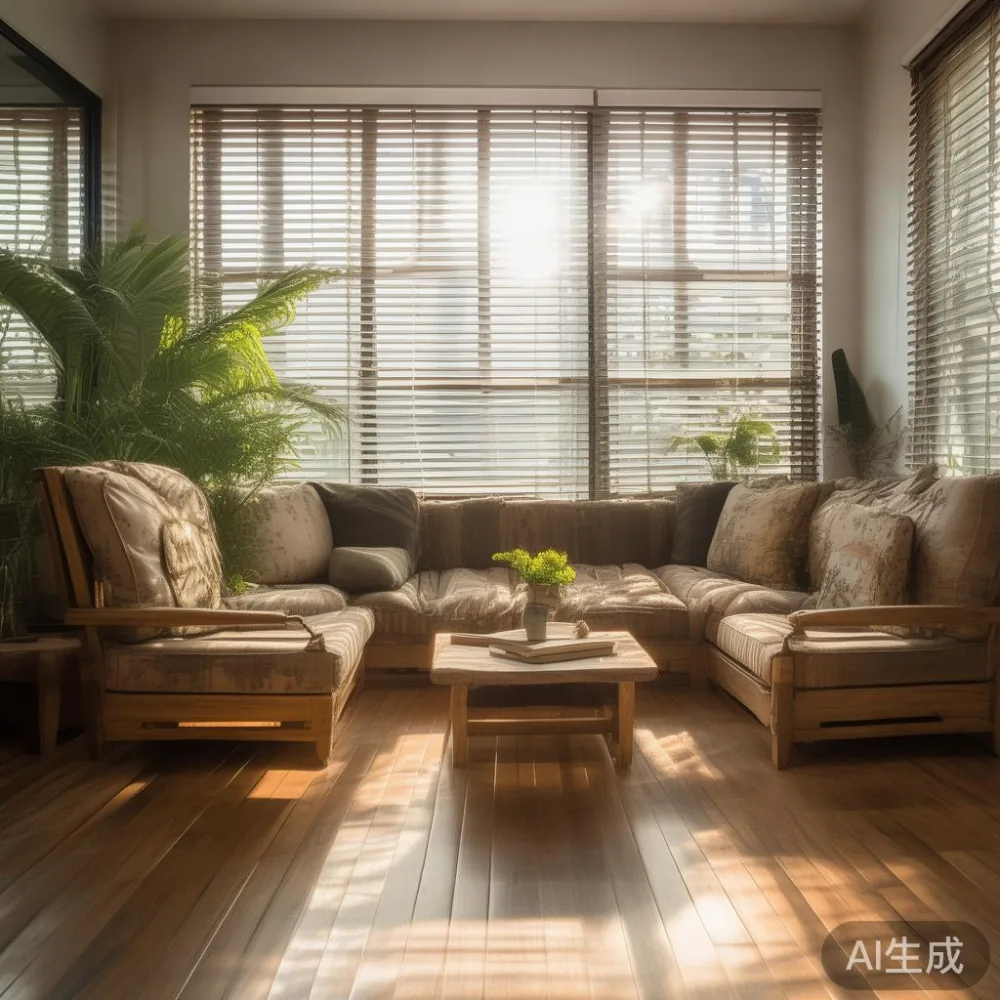
When I worked on the MIDHILL showroom layout last quarter, the design team deliberately limited each vignette to one statement piece — sometimes a marble table paired with a teak bench, sometimes an oversized American country corner sofa against rattan blinds. The point was to prove that light luxury does not mean filling 90 sqm of floor space. It means one well-made anchor, then restraint.
Practical numbers for a small Singapore apartment:
• Living room footprint in a 4-room HDB flat: about 18 to 22 sqm. A 240 cm corner sofa fills it; a 270 cm corner sofa overflows.
• Master bedroom in a 5-room flat: about 12 to 14 sqm. A king bed frame (180 x 200 cm) plus two 50 cm nightstands plus a 150 cm wardrobe fits, but only if the wardrobe doors are sliding, not hinged.
• Lift opening in older HDB blocks: 0.9 m wide x 2.1 m tall. Anything taller than 2.0 m packaged will not fit. Anything wider than 0.85 m on its shortest side will not fit. Always check before ordering a wardrobe or a tallboy.
What humidity actually does to your sofa, bed frame, and dining table
Let me get specific, because most articles on this topic stay vague. Here is what I have measured across 30+ customer visits in Tampines, Bedok, and Punggol over the past two years.
Solid wood sofa frames: A 3-seater with a solid ash or oak frame, when new, has joints tightened at the factory at 10 to 12% moisture content. In a Singapore living room at 70% average RH, the wood creeps up to 14 to 16% within six months. The frame swells by 1 to 2% across the grain. The cushions compress 5 to 8 mm. The result is a sofa that feels softer than the showroom sample. That is normal. What is not normal is creaking, which indicates the kiln-dry was incomplete and the wood is still moving.
Solid wood bed frames: Bed frames take the worst beating because they bear load (two adults, 120 to 160 kg combined, plus a 25 kg mattress) for 8 hours a night in a closed, air-conditioned room. The mattress traps humidity underneath. Slats absorb that humidity from below while the headboard absorbs living-room humidity from above. I have seen headboards cup by 4 mm on a 180 cm width within nine months when the customer ran the air-con at 22°C with the bedroom door closed.
Dining tables: A 140 x 80 cm solid wood dining table in a Singapore kitchen sees the most extreme swings. Morning cooking raises local RH to 85%. Afternoon air-con drops it to 55%. Night humidity rises again. The table expands and contracts three times a day. This is why MIDHILL cuts its dining table tops in 4 to 5 cm strips and glues them cross-grain, rather than using a single 80 cm wide slab. The cross-grain construction lets each strip move independently, so the table top stays flat. A single-slab top will always cup in Singapore.
Wardrobes and nightstands: Wardrobes are the silent victims. A 200 cm tall wardrobe in a master bedroom takes longer to acclimatise than a sofa, simply because of mass. Customers often report the doors stick in month two, then by month seven the doors swing freely again. That is the wood reaching equilibrium. The fix is to leave 2 to 3 mm expansion gaps at the top and bottom of each door, and to oil the hinges twice a year.
Marble tables: Marble behaves differently. It does not absorb humidity, but the wooden base under a marble top can swell and crack the stone if the base was not kiln-dried properly. If you are buying a marble table in Singapore, check that the base is solid teak or solid oak, not rubberwood or MDF. Marble tops also need sealing every 12 to 18 months because the kitchen acids (lemon juice, tamarind) etch the surface.
How to read the spec sheet before you click "checkout"
Most product pages do not tell you what you actually need to know. Here is the checklist I use when I help a customer decide between three brands in a Tampines coffee shop.
Moisture content at shipment: Ask the seller directly. Anything between 8% and 12% is acceptable for air-conditioned Singapore bedrooms. Anything below 8% means the wood was over-dried and will absorb aggressively. Anything above 12% means the wood was not dried enough and will shrink in your living room. MIDHILL publishes 10 to 12% on every spec card.
Wood species: Teak, eucalyptus, acacia, oak, and ash are the species that handle equatorial humidity. Rubberwood, mango wood, and parawood are cheaper and softer; they scratch and dent faster. Pine is too soft for daily wear but acceptable for a child's nightstand.
Joinery: Mortise and tenon, dovetail, and dowel joints survive humidity cycles better than staples or nails. Look for "traditional joinery" in the description. Avoid flat-pack furniture held together by cam locks for outdoor furniture use; the locks rust within one wet season.
Finish: Lacquer, oil, and wax are the three finishes you will see. Lacquer (a hard plastic coating) seals the wood and slows movement, but it cracks when the wood moves underneath. Oil (linseed, tung, or danish oil) penetrates and lets the wood breathe; it needs reapplication every 12 months but ages gracefully. Wax sits on top and offers minimal protection. For outdoor furniture, oil is the standard recommendation. For indoor dining tables, either lacquer or oil works.
Warranty terms: Read the small print. A 10-year structural warranty on the frame is meaningful. A 1-year warranty on everything is a red flag. Lifetime refinishing, which MIDHILL offers, is rare and worth its weight in SGD because it lets you sand and re-oil a table top after 8 to 10 years for the cost of shipping only.
Real numbers from a real Tampines delivery
Last quarter I followed a delivery from the MIDHILL Foshan warehouse to a 5-room HDB flat in Tampines GreenRidges, block 146. Here is what the customer actually paid and what arrived.
Order: a 240 x 220 cm L-shaped solid wood sofa (oak frame, linen cushions), a 180 x 200 cm solid wood bed frame (ash, with underbed drawer), two 50 cm nightstands (teak), and a 160 x 80 cm dining table (oak top, beech legs). Outdoor furniture was a separate order: a four-piece eucalyptus balcony set for the 1.6 m wide service yard.
Subtotal in SGD: 6,840 (after 9% GST, which the customer paid on the full landed value as required by IRAS). Free shipping applied because the order exceeded US$350, which the customer confirmed before payment. Delivery from Foshan to the Tampines lift lobby took 18 days, including 4 days at sea, 2 days at Singapore port, and 12 days for last-mile, which the customer said was faster than the 30 to 45 days they had been quoted by two other brands.
The two installers spent 2.5 hours on site. The corridor was 1.2 m wide, just enough to angle the bed frame headboard vertically. The lift was 1.0 m wide x 2.1 m deep, which fit the disassembled dining table top without issue. Total assembly time, including the outdoor balcony set, was under three hours.
Three months later, I followed up. The customer had acclimatised every piece in the living room for 10 days before moving the bed frame upstairs. No cracks, no sticking doors, no mildew. The eucalyptus outdoor set had developed a light silver patina on the balcony, which the customer said they actually preferred over the original honey tone.
Maintenance schedule that fits a Singapore lifestyle
I keep this schedule on a single A4 page that I hand to every customer who buys a dining table or outdoor furniture set. It is calibrated for the way people actually live here, not for a temperate climate.
Weekly: Wipe all solid wood surfaces with a dry microfiber cloth. Singapore dust is fine and sticky; leaving it for two weeks builds up a film that traps moisture.
Monthly: Wipe with a damp (not wet) cloth, then dry. Check that air-con vents are not blowing directly onto wood furniture — direct cold air dries the surface and creates localised cracking.
Every 6 months: Tighten the bolts on bed frames and wardrobes. Wood movement loosens joints. A 4 mm Allen key and 15 minutes is enough.
Every 12 months: Oil all indoor solid wood dining tables, bed frames, and nightstands with a thin coat of danish oil or tung oil. For outdoor furniture, apply teak oil or leave the silver patina to develop naturally; both are acceptable. Budget about SGD 25 to 40 for a 500 ml tin that covers a full living room set.
Every 24 months: Inspect wardrobe hinges and drawer slides. Lubricate with a silicone spray (SGD 12 from any hardware shop). Re-seal marble table tops if you have one.
Every 10 years: Arrange a full refinish through the seller's lifetime refinishing service. MIDHILL offers collection and redelivery from any Singapore address for a nominal fee that typically runs SGD 180 to 280 depending on the piece, which is far less than buying a new dining table.
What I would buy if I were furnishing a Punggol condo tomorrow
I get asked this question by friends, relatives, and customers at least once a month, so I will put it on the record. For a 990 sqft Punggol condo with a 1.5 m balcony, here is what I would order in the next 14 days, in this order.
1. A 240 x 220 cm L-shaped solid wood sofa in oak, with removable linen covers. SGD 2,400 to 2,800. Worth it because it anchors the living room and survives 15 years of daily use.
2. A 180 x 200 cm solid wood bed frame in ash, with two underbed drawers. SGD 1,200 to 1,500. The drawers solve the storage problem that every HDB and condo faces.
3. A 160 x 80 cm solid wood dining table in oak, with four beech chairs. SGD 1,400 to 1,700. Buy it 4 cm oversized if you host Christmas for six, because the leaves will fit your lift better than a permanently wider top.
4. Two 50 cm teak nightstands. SGD 280 to 380 each. Skip anything smaller; you will regret the lack of drawer space within a year.
5. A four-piece eucalyptus outdoor furniture set for the balcony: two chairs, one 120 cm bench, one 80 x 60 cm coffee table. SGD 1,100 to 1,400. Eucalyptus handles the rain-sun-humidity cycle without warping.
6. One statement piece for the entryway: a 45 cm round marble table with a solid teak pedestal, or an oversized American country corner sofa if the layout allows a second seating zone. SGD 600 to 900.
Total: roughly SGD 6,500 to 8,700 before GST. After 9% GST, SGD 7,085 to 9,483. Free shipping applies. 14-day returns apply if a piece arrives damaged or with the wrong dimensions. The 10-year structural warranty covers the frames. The lifetime refinishing covers the tops.
That is a complete home, in solid wood, calibrated for Singapore humidity, with a single point of contact for the next decade. It is also, in my view, the practical expression of light luxury — French restraint, American scale, post-modern proportion — applied to a flat you actually live in, not a showhouse you only visit.