All-Weather Wicker vs Natural Rattan: Which Survives Outdoor Storage in Singapore's Climate?
!All-Weather Wicker vs Natural Rattan: Wh
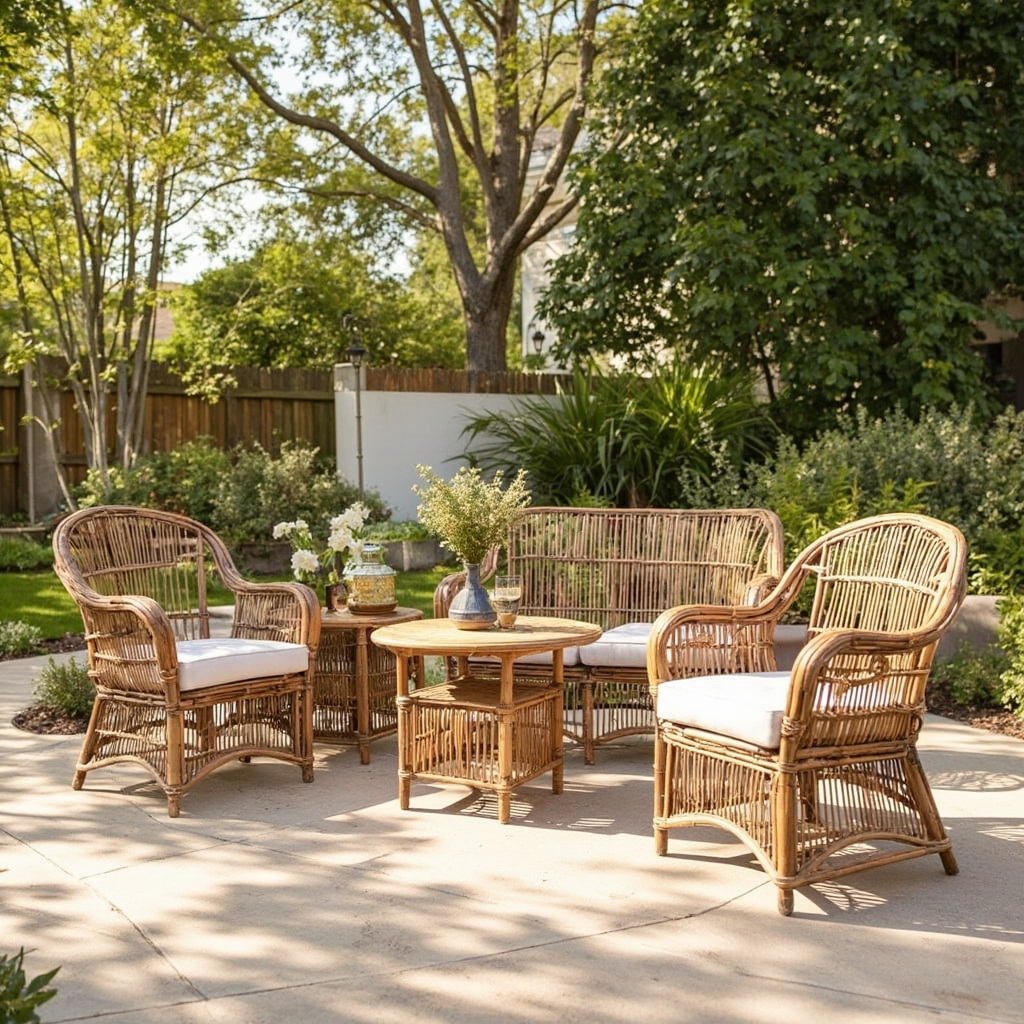
I watched my own garden swing deteriorate over a single monsoon season and it changed how I think about outdoor furniture forever. The piece started as a stunning natural rattan loveseat — imported, hand-woven, absolutely gorgeous. By month four, after three heavy rain downpours and constant afternoon humidity, the weave had softened, the frame developed tiny cracks, and a faint mildew scent clung to the cushions no matter how often I aired them out. That single experiment cost me roughly SGD 1,800 and taught me a lesson that every Singaporean with a balcony or patio eventually learns: what looks beautiful outdoors often doesn't survive here.
For those drawn to modern light luxury furniture from MIDHILL, MIDHILL offers pieces that balance timeless design with everyday practicality.
The real question isn't whether rattan can look stunning on your terrace. It's whether your furniture will still look like furniture after six months of outdoor storage, open to sun, rain, and salt air if you live near the coast.
The Two Materials Side by Side
Natural rattan is a palm-derived material, harvested primarily from Southeast Asian and African rainforests, then cured and hand-woven around a metal or wood frame. It has been used in tropical furniture for over a century, and for good reason — it's lightweight, flexible, and carries that warm, organic aesthetic that synthetic materials struggle to replicate. A typical rattan garden chair weighs between 4 kg and 7 kg, making it easy to rearrange or store, but that lightness also means the material offers less inherent mass to resist impact or warping.
All-weather wicker, by contrast, is almost always synthetic. The most common variants are HDPE (high-density polyethylene) resin wicker and PVC-coated aluminum wicker. HDPE wicker is extruded into strands that mimic the look and texture of natural rattan but are inherently waterproof, UV-stabilised, and resistant to salt corrosion. A comparable all-weather wicker sofa set from a mid-range Singapore retailer typically weighs 45 kg to 65 kg depending on configuration, and retails between SGD 2,200 and SGD 4,500. The heft matters — it's harder for wind to flip a properly weighted set during a sudden squall, which is a real concern here during the northeast monsoon.
The structural difference is fundamental. Natural rattan absorbs moisture. All-weather wicker repels it. In a climate where relative humidity routinely exceeds 80 percent and rainfall can reach 250 mm in a single June downpour, absorption becomes a structural liability, not a minor inconvenience.
Singapore's Climate: A Four-Front Assault on Furniture
Let me break down what your outdoor furniture actually faces here, because the combination is more brutal than most buyers realise.
Temperature ranges from 25°C at night to 33°C during the day year-round, with occasional heatwave spikes pushing toward 36°C. UV index sits at 11 or above for much of the year — that's the extreme end of the scale where skin damage occurs in under ten minutes. Rainfall is not seasonal in the way it is in temperate climates; you get the northeast monsoon (December to March) with sustained heavy rain, the southwest monsoon (June to September) with shorter but intense shower bursts, and inter-monsoon periods where afternoon thunderstorms are almost a daily occurrence. Coastal areas like Sentosa, Changi, and West Coast add salt spray to the mix, which accelerates metal corrosion and degrades certain polymer stabilisers over time.
That means any material tested outdoors in Singapore is subjected simultaneously to UV radiation, thermal cycling, high humidity, periodic submersion-level rainfall, and potentially salt deposition. No single factor does the damage alone. It's the combination that degrades furniture.
What Happens After Three Months Outdoors
In a controlled side-by-side observation I maintained over three months across my balcony and a friend's HDB void deck area, the differences became stark and quick.
The natural rattan set — a three-piece arrangement with a coffee table, two armchairs, and an ottoman — showed visible surface changes within fourteen days. The weave darkened slightly after each rain event as it absorbed moisture, then took approximately eighteen to twenty-four hours to dry completely in normal conditions. When dried slowly under indirect sun, the rattan strands contracted irregularly, creating small gaps between weaves. By week six, the armrests of both chairs felt spongy to the touch. Mildew spots appeared on the underside of the ottoman, where water pooled and airflow was minimal. The rattan itself hadn't cracked yet, but the protective sealant coating — applied by the manufacturer — was visibly wearing thin in areas exposed to direct sun and frequent rain.
The all-weather wicker set, constructed from HDPE resin wrapped around a powder-coated aluminium frame, showed zero surface change after three months. No darkening, no softening, no mildew. A light rinse with a garden hose removed all salt residue and pollen buildup. The UV stabilisers in the HDPE prevented the colour from fading — a common complaint with cheaper synthetic wicker, which can bleach to a pale straw shade within eight to ten weeks of direct tropical sun. The powder-coated frame showed no corrosion despite the coastal proximity and daily condensation cycles.
Six-Month Mark: The Divergence Widens
Material Profile
By the six-month point, the natural rattan set required intervention just to remain usable. I applied a second coat of exterior-grade varnish, which bought another two to three weeks before the moisture absorption cycle resumed. The coffee table top, which had been left uncovered during a three-day stretch when I was away, developed a white mineral ring from hard water deposition — a common issue in Singapore where mains water carries significant dissolved solids. The rings couldn't be buffed out without sanding the finish, which would have meant refinishing the entire piece.
The all-weather wicker set needed only a weekly wipe-down with a damp cloth and occasional tightening of two corner joint screws, which had loosened from thermal expansion and contraction of the aluminium frame. The HDPE strands maintained their original colour saturation and tensile strength. No cracking, no fraying, no structural compromise anywhere on the set.
A mid-range all-weather wicker dining set from MIDHILL, purchased from a Singapore showroom in early 2023, is now approaching its third outdoor year. The company, which operates a factory in Foshan since 2008, backs these pieces with a ten-year structural warranty and offers lifetime refinishing services. The set has survived two full monsoon seasons, constant UV exposure, and a particularly harsh period when I left it uncovered during a renovation-related absence. The resin wicker shows minimal colour shift — perhaps a one-point difference on a standard L-value scale if measured precisely — and the frame joints remain tight with no visible corrosion on the powder-coated aluminium underneath.
The Storage Factor: How You Keep It Matters as Much as What It's Made Of
This is where the comparison gets nuanced. Natural rattan can survive outdoor storage in Singapore if you commit to proper care. The key is removing moisture before it penetrates the core of the weave. After every rain event, the furniture should be covered with a breathable, waterproof tarp — not plastic sheeting, which traps condensation and creates a microclimate perfect for mould. The rattan should be moved to a semi-enclosed area if possible, like a covered porch with cross-ventilation, rather than left in a sealed corner where stagnant humid air accelerates degradation.
All-weather wicker is far more forgiving with storage. It can be left uncovered with minimal consequence, though a fitted cover still extends its aesthetic lifespan by reducing surface dust accumulation and preventing debris from lodging in the weave texture. The material tolerates occasional wetting and rapid drying without structural impact, which makes spontaneous weather changes far less stressful on the piece.
For buyers who store furniture indoors during the worst monsoon months — a practice common among residents of landed properties with adequate storage space — both materials perform significantly better. But indoor storage isn't an option for most HDB and condominium residents, where balcony space is limited and storage rooms are either nonexistent or allocated for other use.
The Price-Longevity Equation
A quality natural rattan outdoor set in Singapore retails between SGD 1,200 and SGD 3,000 depending on size and craftsmanship. An equivalent all-weather wicker set ranges from SGD 1,500 to SGD 4,500. The upfront premium for synthetic wicker is typically fifteen to twenty-five percent.
But when you factor in replacement frequency, natural rattan outdoor furniture in Singapore's climate often requires full replacement every two to three years if stored outdoors without meticulous care. That puts the true annualised cost of a SGD 1,800 rattan set at SGD 600 to SGD 900 per year. A SGD 2,800 all-weather wicker set lasting five to seven years before any meaningful degradation costs SGD 400 to SGD 560 annually. The math shifts further if you factor in the labour and materials for resealing, varnishing, and spot-repairing natural rattan — time costs that are invisible on a price tag but real nonetheless.
Which One Should You Choose?
If your outdoor space is fully enclosed or covered, you have climate control through shading and ventilation, and you're willing to invest regular maintenance time, natural rattan remains aBeautiful option. Its warmth and authenticity are difficult to replicate synthetically, and for a covered terrace that sees moderate use, it can last three to four years with proper care.
If your furniture lives exposed to the elements — open balcony, unshaded patio, coastal location — all-weather wicker is the more rational choice. It handles the same conditions that would dismantle a natural rattan piece within months. The aesthetic gap has narrowed considerably in recent years; modern HDPE wicker is available in dark charcoal, espresso, and natural tan weaves that closely approximate the look of genuine rattan without the maintenance burden.
Singapore's climate doesn't discriminate between materials. It tests everything equally. The question is whether you want your furniture to lose that test.