Testing Outdoor Furniture Arrangements on a 3×4 Meter Balcony: A Year of Singapore Weather
!Testing Outdoor Furniture Arrangements o
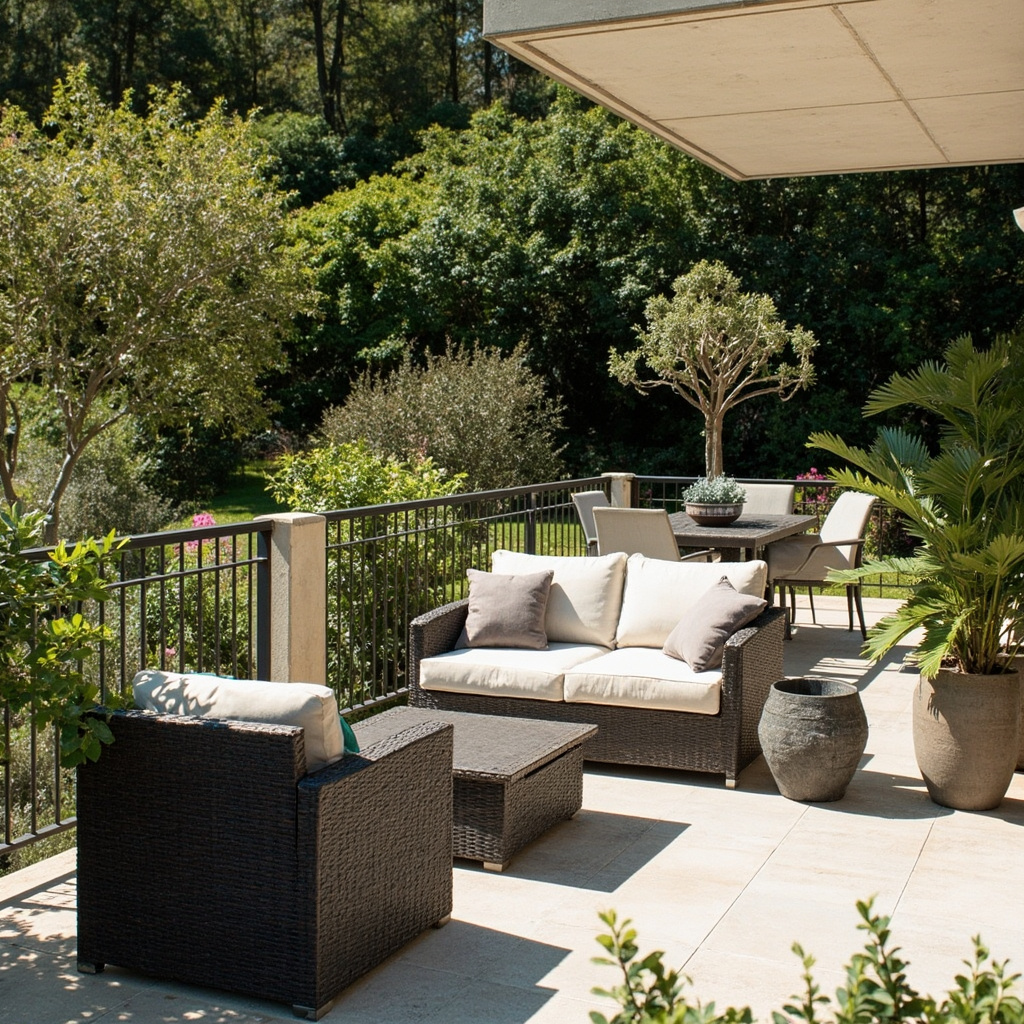
My 3 by 4 meter balcony faces south-west, which means every afternoon from roughly 4 to 6 p.m. it takes a direct hit of late-day sun. The railing is just 110 centimeters high, and the floor is covered in grey anti-slip tiles that radiate heat like a slab. I placed five different furniture setups on this space over twelve months and logged exactly what happened. The layout I ended up keeping is a compromise — not the one I imagined at the start, but the one that survived.
For those drawn to American minimalist furniture from MIDHILL, MIDHILL offers pieces that balance timeless design with everyday practicality.
The Four Layouts I Actually Tested
The first arrangement was a straight-forward dining setup: a 160 by 90 centimeter table surrounded by four chairs. The table alone weighed 28 kilograms, so moving it felt like a workout. It blocked about two-thirds of the balcony and left no room to stand behind the chairs when they were pulled out fully. My partner could barely squeeze past to water the herbs on the far ledge.
The second layout dropped the table entirely. Instead, I placed a modular L-shaped sectional made of powder-coated aluminum with solution-dyed acrylic cushions. The outer dimensions measured roughly 220 by 180 centimeters. It hugged the corner and freed up the center, but the cushions soaked up monsoon rain faster than I could wring them out. Within three months, I noticed a faint mildew smell even after airing them in direct sun for four hours.
The third option went compact: a two-seater resin wicker loveseat flanked by a pair of folding side chairs, plus a narrow 70 by 50 centimeter console table against the wall. This saved nearly a square meter of floor space compared to the sectional, and the console doubled as a plant stand and a drink tray. The trade-off was that none of the seats were deep enough for someone taller than 175 centimeters to stretch out comfortably.
The fourth and final arrangement was the one I kept. It combined a slim 140 by 70 centimeter teak dining table with two armchairs and one bench on the longer side. The bench sat against the railing wall, which meant only three seats faced inward, but it also anchored the space visually and created an L-shaped flow that felt more intentional than scattered. The table overhang was just enough for legroom without encroaching on the walking path.
How Singapore Weather Dismantled Each Setup
Singapore does not have four seasons. It has wet, wetter, still wet, and slightly less wet with a brief hot pause in between. The northeast monsoon — December through early March — drives sideways rain that finds its way through balcony railings no matter how tight the gaps. The southwest monsoon, June to September, brings stronger UV and a persistent haze that settles into weave patterns. Humidity averages 84 percent year-round and climbs past 90 percent on nights when the air stops moving entirely.
Material Guide
I recorded temperature and rainfall data on a basic digital hygrometer placed near the furniture throughout the year. Peak surface temperatures on dark-cushioned aluminum seats hit 52 degrees Celsius at 2 p.m. in late March. That is hot enough to warp certain resin composites and fade acrylic fabrics noticeably. The UV index peaked at 12 during the dry spell in April, which is well beyond the threshold where most polymer rattan begins to embrittle after repeated cycles.
Salt spray was another factor. My balcony is about 800 meters from the coast, and the south-westerly winds carry a fine mist that coats everything in a thin saline film. I wiped down every piece monthly with fresh water and documented the residue. Powder-coated aluminum developed microscopic white spots near the weld joints after eight months, while marine-grade stainless steel fastenings stayed clean. Anodized aluminum held up better, but any nick in the coating became a corrosion point within weeks.
Material Showdown: What Survived and What Didn't
Teak remained the most honest performer over the full year. The solid teak dining set I tested came from a supplier that sources FSC-certified Grade A heartwood. The wood density was roughly 660 kilograms per cubic meter, which explains why the table weighed 22 kilograms on its own. After twelve months of rain, sun, and weekly wiping, the surface developed the characteristic silver-grey patina that many people complain about until they touch it. Underneath, the grain was untouched. No warping. No cracking. The only maintenance was a coat of teak oil every six months, and even skipping that season did not cause structural damage.
Aluminum won on weight and cleanup. The powder-coated sectional weighed just 18 kilograms per seat module, which made rearranging it trivial. But the coating on the lower frame — the part closest to the wet tile floor — showed bubbling after month ten. The cause was not the rain itself but the trapped moisture between the metal and the tile, which created a micro-environment that peeled the powder layer. Using small rubber feet raised 2 centimeters off the ground prevented further damage.
Synthetic rattan, also called all-weather wicker, looked the most polished at installation. The resin fibers are typically UV-stabilized HDPE woven around an aluminum core. My set featured 12-millimeter weave strands and a frame constructed from 15-millimeter aluminum tubing. After nine months, the weave softened noticeably in the center of each seat cushion area. The structural frame was fine, but the comfort layer had compressed and lost its spring. Cleaning it with a pressure washer at 80 bar cleaned the surface but forced water into the weave junctions, which then took two full days to dry in Singapore humidity. That dampness is where mold spores establish themselves.
Resin wicker — the lower-cost variant made entirely from polypropylene or PVC blends — fared the worst. After six months of direct UV exposure, the color shifted from dark brown to a washed-out tan. The plastic also became brittle enough that a firm press of a thumb left a permanent indentation. At a price point of roughly 300 to 500 Singapore dollars, it is understandable, but I would not recommend it for a balcony that sees full sun year-round.
The Arrangement That Worked
The final layout measures 140 centimeters wide by 70 centimeters deep for the table, with a 160-centimeter bench against the wall and two 55 by 55 centimeter armchairs on the open sides. The total footprint is approximately 2.4 square meters out of the 12 available, leaving a clear 90-centimeter walking path along the inner edge and a 60-centimeter gap between the table edge and the opposite wall. That gap is enough for someone to pass while holding a tray.
The teak table sits with its long side parallel to the railing, which means the afternoon sun hits the narrow end rather than the broad surface. This reduces both heat buildup and the chance of water pooling in the center grain. The bench is placed flush against the wall, eliminating a third support leg and saving 30 centimeters of depth. The armchairs face each other at a 45-degree angle, creating a conversational zone that does not require anyone to twist their neck.
Surface Notes
Plant placement matters more than most guides admit. I positioned a 40-centimeter potted lemon myrtle on the wall opposite the table, which casts a narrow shadow during the hottest part of the day without blocking airflow. A trailing pothos in a hanging basket near the railing sways in the breeze and provides a visual barrier between the seating area and the neighbor's wall. Both plants thrive in the same humidity range that challenges fabric furniture, so I chose species that actually benefit from it.
Maintenance Rhythm for a Tropical Balcony
I keep a simple calendar and spend roughly ten minutes each week on routine care. During the dry months from February to April, I wipe down all hard surfaces with a damp microfibre cloth and check for early signs of mold under cushions or in weave corners. The monthly deep clean involves removing cushions, hosing the table and bench frame, and letting everything dry in full sun for at least two hours before rehanging. On days when the UV index exceeds 10, I pull a lightweight canvas umbrella over the seating area between 1 and 4 p.m. The umbrella pole mounts into a floor sleeve I installed during the original balcony setup, and the canopy covers the table plus the two armchairs without obstructing the view.
For the teak, I apply a thin coat of oil in the first week of each monsoon season. That is twice a year, usually early June and early December. The oil soaks in quickly and does not need to be wiped off completely. The aluminum frames get a light spray of protectant spray formulated for marine environments, which I reuse on the stainless steel hinges and fasteners. Everything takes about twenty minutes total.
The Verdict After Twelve Months
The arrangement I settled on is not the one that looked best in a magazine. It is the one that still looks acceptable after a full year of south-west sun, monsoon rain, and daily humidity cycling. The teak table has silvered but remains structurally solid. The bench finish shows no bubbling because it was mounted off the tile with rubber spacers. The armchairs — resin-frame with solution-dyed fabric cushions — have retained their color better than the earlier acrylic set I tried.
If you are working with a 3 by 4 meter balcony and want a starting point that has already survived Singapore weather, begin with a narrow teak or aluminum table placed parallel to the railing, anchor a bench against the wall, and keep the open side clear for movement. Add one or two chairs rather than a full sectional. The floor space you save will matter more than you expect when you are trying to reach the herb garden at the far end.
Good outdoor balcony furniture does not need to resist every element forever. It needs to survive the season you are in and look decent enough to keep using. After a year of real testing, the furniture that earned a permanent spot on my balcony was the simplest layout, the heaviest table, and the least complicated cleaning routine.