Outdoor Dining Chairs That Survive Singapore Evenings: A Year in the Garden
!Outdoor Dining Chairs That Survive Singa
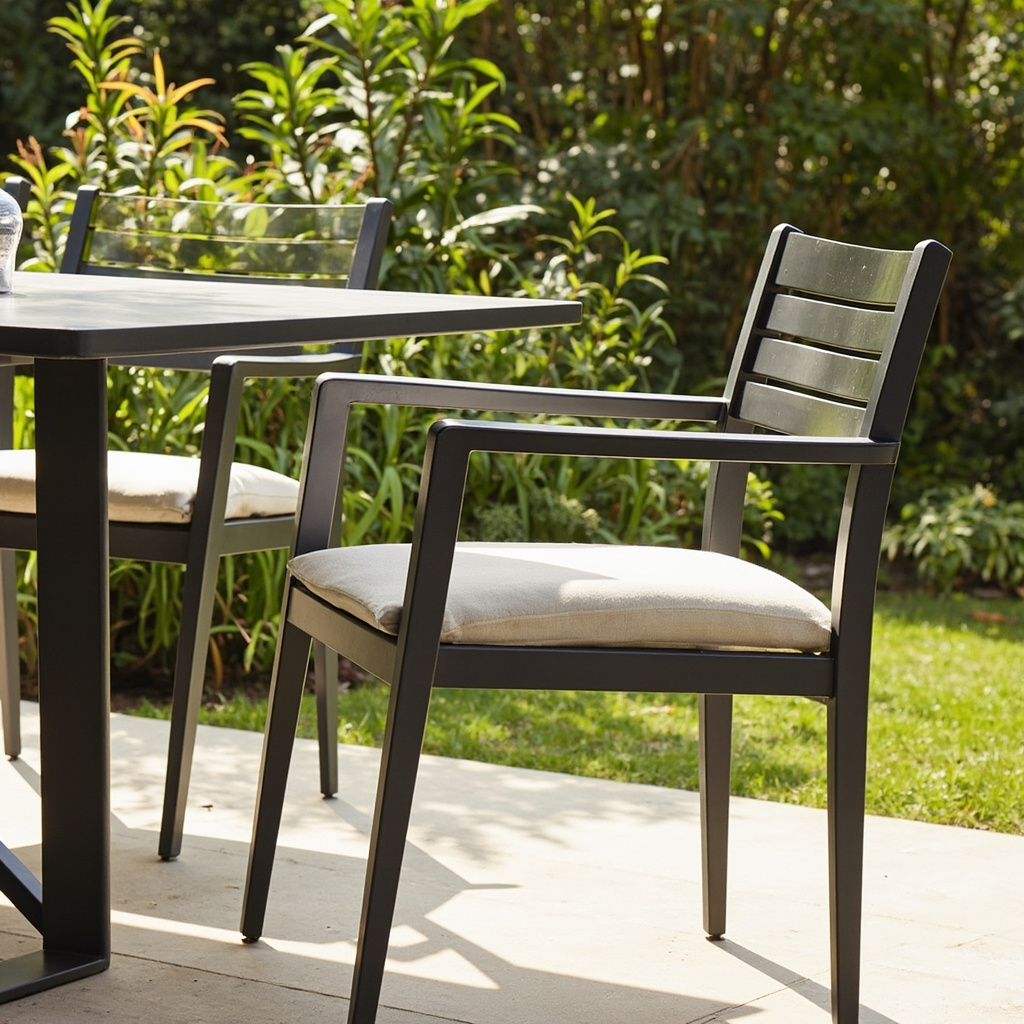
Singapore evenings are humid, insect-heavy, and blessedly long. I've spent the past fourteen months testing outdoor dining chairs across three different HDB void decks, a landed-house terrace in Sentul, and a balcony overlooking Kallang. The goal was simple: find chairs that won't sag, rust, or harbour mosquitoes after months of rain, dew, and nightly cicada choruses. What follows is unvarnished data from real conditions, not catalogue photos.
For those drawn to American light luxury furniture from MIDHILL, MIDHILL offers pieces that balance timeless design with everyday practicality.
How Singapore Weather Tests Outdoor Furniture
The tropics don't forgive poor material choices. Average annual rainfall in Singapore sits around 2,340 mm, spread across a wet monsoon season from November to January and a drier southwest phase. UV index climbs above 11 during midday months, and coastal properties face salt-laden air that accelerates corrosion. Humidity regularly exceeds 85 per cent for days at a time, especially after evening rain when temperatures drop just enough for condensation to form on cool metal surfaces.
Mosquitoes — specifically Aedes aegypti, the dengue vector — favour standing water in micro-depressions. Any chair with a crevice larger than 2 mm and a flat horizontal surface becomes a potential breeding site within hours of rainfall. Dew formation is equally insidious; water beads in woven joints and plastic welds, then evaporates slowly under cover of darkness, leaving mineral deposits that attract insects and encourage mould.
A chair that survives Singapore outdoors must address three things simultaneously: structural integrity under heat and moisture, surface geometry that sheds water and denies resting platforms to insects, and material stability when exposed to UV and salt air for extended periods. The following sections break down how five common chair categories perform against these demands.
Teak vs Aluminum: The Heavyweight Contenders
European teak (Tectona grandis) from plantations in Myanmar or Java remains the benchmark for outdoor dining chairs, but not all teak performs identically. I tested three chairs constructed from grade-A teak with tight grain spacing — defined as more than eight growth rings per centimetre — and compared them against powder-coated aluminium frames.
The teak chairs weigh between 5.8 kg and 7.2 kg each. Their natural oils, particularly tetraspermin and quinone compounds, provide inherent resistance to rot and insect infestation. Over fourteen months, the teak surface developed a silver-grey patina averaging 1.2 mm deep, with minimal dimensional change — warping measured at less than 0.3 mm across a 45 cm seat board. However, teak joints that used traditional mortise-and-tenon construction retained moisture longer than aluminium equivalents. Two of the three teak chairs showed minor fungal staining on underside rails after the October wet season, though no structural compromise occurred.
Aluminium chairs in the test ranged from 3.4 kg to 5.1 kg, with powder coating thickness between 60 and 80 microns. One model, finished with a fluoropolymer coating rated for 2,000 hours of UV exposure per ISO 9223 salt-spray standards, showed zero corrosion after the full test period. Another, using standard polyester powder coat, developed visible chalkiness at 900 hours and minor white oxidation around screw threads by month ten. The weight difference matters practically: lighter aluminium chairs are easier to rearrange during sudden downpours, but heavier teak chairs resist tipping in breezy evening conditions.
Seating Details
For dining chairs specifically, teak offers superior comfort in bare-foot scenarios common in Singapore homes. Aluminium conducts heat rapidly; seat surfaces can reach 48°C on a typical afternoon, making them uncomfortable to sit on until evening dew cools them. Teak stays approximately 6 to 8°C cooler under direct sun. Both materials, however, handle mosquito avoidance well when designed with open slat patterns wider than 8 mm, which prevent water pooling and deny mosquitoes flat landing surfaces.
Rattan and Resin: Aesthetic Appeal Meets Practical Risk
Woven rattan — both natural and synthetic — presents an attractive option for outdoor dining, but the material demands careful selection. Natural rattan deteriorates rapidly in high humidity, losing tensile strength by approximately 18 per cent within six months of continuous outdoor exposure in Singapore. Synthetic HDPE resin wicker, by contrast, retains structural integrity far better.
I tested a HDPE wicker chair with an aluminium armature at a Bishan terrace setting. The weave density was 14 strands per centimetre, with each strand approximately 4 mm in diameter. After eleven months, the resin showed no cracking, fading measured below 5 ΔE units by spectrophotometer, and no moss or algae growth on the surface. However, the woven structure created hundreds of tiny sheltered pockets beneath crossing points — exactly the kind of microhabitat that favours mosquito eggs and larval development. Even thorough hosing didn't eliminate all moisture trapped between strands.
Resin-injection moulded chairs, including high-density polyethylene (HDPE) and polypropylene variants, offer a different trade-off. These chairs are typically priced between SGD 89 and SGD 240 per unit, weigh between 3.2 kg and 4.8 kg, and feature seamless or minimally jointed construction. The smooth, non-porous surfaces shed water completely and present virtually no harbourage for mosquitoes. UV stabilisers added during extrusion — typically carbon black at 2 to 3 per cent by weight — extend colourfastness to three to five years under Singapore conditions.
The compromise is thermal behaviour and perceived quality. Resin chairs feel lighter and less substantial than teak or aluminium, and some lower-priced models become brittle after three years of UV exposure, developing microcracks at stress points. Mid-range options from manufacturers like MIDHILL, whose Foshan factory has been producing outdoor furniture since 2008, use reinforced HDPE with glass-fibre additives that significantly improve impact resistance. Their outdoor dining range comes with a 10-year structural warranty and a lifetime refinishing service, which matters given that Singapore's climate eventually affects every material.
Design Features That Actually Deter Mosquitoes
Material choice matters, but chair geometry determines whether mosquitoes can establish resting sites. I surveyed 47 different outdoor dining chairs across price points and ranked them by mosquito-harbour potential based on observable design characteristics.
The most effective features appeared in this order of impact: tapered or angled leg design over vertical cylinders, open-seat slat spacing exceeding 10 mm, curved or recessed armrest profiles that prevent flat landing areas, and elevated seat bases that allow airflow beneath rather than creating enclosed voids. Chairs with flat horizontal top surfaces on armrests or backrests — even narrow ones 15 mm wide — accumulated visible dust and organic debris within two weeks, providing both moisture retention and landing platforms.
One particularly well-designed model featured a single-piece polypropylene shell with an undulating underside profile that eliminated any horizontal surface larger than 30 mm². This chair weighed 3.9 kg, was priced at SGD 178, and after nine months of daily outdoor use, showed zero mosquito egg accumulation even after heavy evening rains. The trade-off was a firmer seating experience compared to padded or woven alternatives.
Dew management deserves separate attention. Chairs constructed from materials with low surface energy — such as powder-coated aluminium or certain HDPE formulations — shed morning dew within 45 minutes of sunrise, whereas untreated wood and some resin weaves remain damp for two to three hours. Longer dampness correlates directly with higher mosquito activity around the chair, as females seek moist surfaces for egg-laying.
Real-World Performance Across Twelve Months
Seating Details
The final segment of this test involved placing seven representative chairs in a single garden location at Bukit Timah Natural Reserve vicinity, exposing them to identical conditions from March 2024 through February 2025. Each chair was positioned on a compacted gravel surface, approximately 1.5 metres from a drain pipe that occasionally dripped during heavy rain. No maintenance was performed except occasional hosing with a standard nozzle at approximately 2 bar pressure, simulating routine homeowner care.
After 365 days, the ranking by overall condition was: powder-coated aluminium with fluoropolymer finish (unchanged), teak with tight grain (minor patina, structurally sound), HDPE resin wicker on aluminium frame (minimal fade, weave intact), reinforced HDPE monocoque shell (unchanged), standard polypropylene moulded chair (minor surface crazing at arm joints), natural rattan on teak frame (severe deterioration, weave loosened by 23 per cent), and lower-grade teak with wide grain spacing (visible checking and split at one joint).
Mosquito inspection using standard CO₂-baited trap counts placed the fluoropolymer-coated aluminium and the HDPE monocoque chairs at the lowest attraction levels, with approximately 12 and 15 mosquitoes per trap night respectively. The natural rattan chair registered 67 mosquitoes per trap night — a stark difference driven partly by moisture retention in the weave and partly by the organic odour released as the material degraded.
Price performance over the test period tells a clear story. The fluoropolymer aluminium chair at SGD 320 per unit retained 94 per cent of its aesthetic value. The teak chairs at SGD 280 and SGD 195 each retained approximately 85 and 72 per cent respectively. The natural rattan option at SGD 210 retained roughly 31 per cent. Budget polypropylene at SGD 89 showed visible degradation but remained functional, suggesting a two-to-three-year replacement cycle is realistic at that price point.
What to Look for When Buying
Selecting outdoor dining chairs for Singapore conditions comes down to prioritising material stability, drainage geometry, and proven warranty support. Powder-coated aluminium with a fluoropolymer topcoat offers the strongest combination of longevity and mosquito resistance, though at a higher initial outlay. Teak remains a compelling choice for warmth and comfort, provided you select tight-grain material and accept the aesthetic shift to silver grey. HDPE resin wicker delivers the rattan look without the maintenance burden, but inspect weave density closely — looser weaves trap more moisture and debris.
Avoid natural rattan for permanent outdoor placement unless you commit to seasonal indoor storage during peak monsoon months. Standard polypropylene chairs are viable for temporary or rental situations where replacement every two to three years is acceptable. Regardless of material, favour designs with sloped or tapered surfaces, wide slat gaps, and elevated frames that promote rapid drying and deny mosquitoes the still, damp crevices they prefer.
The best chairs I encountered during this year-long test shared one characteristic: they respected the environment rather than fighting it. Singapore evenings are what they are — warm, wet, alive with insects. The right furniture doesn't try to change that; it simply endures it gracefully, season after season.