The Outdoor Furniture Survival Guide: Joinery, Coatings, and Warranty Checks That Beat Singapore's Climate
!The Outdoor Furniture Survival Guide: Jo
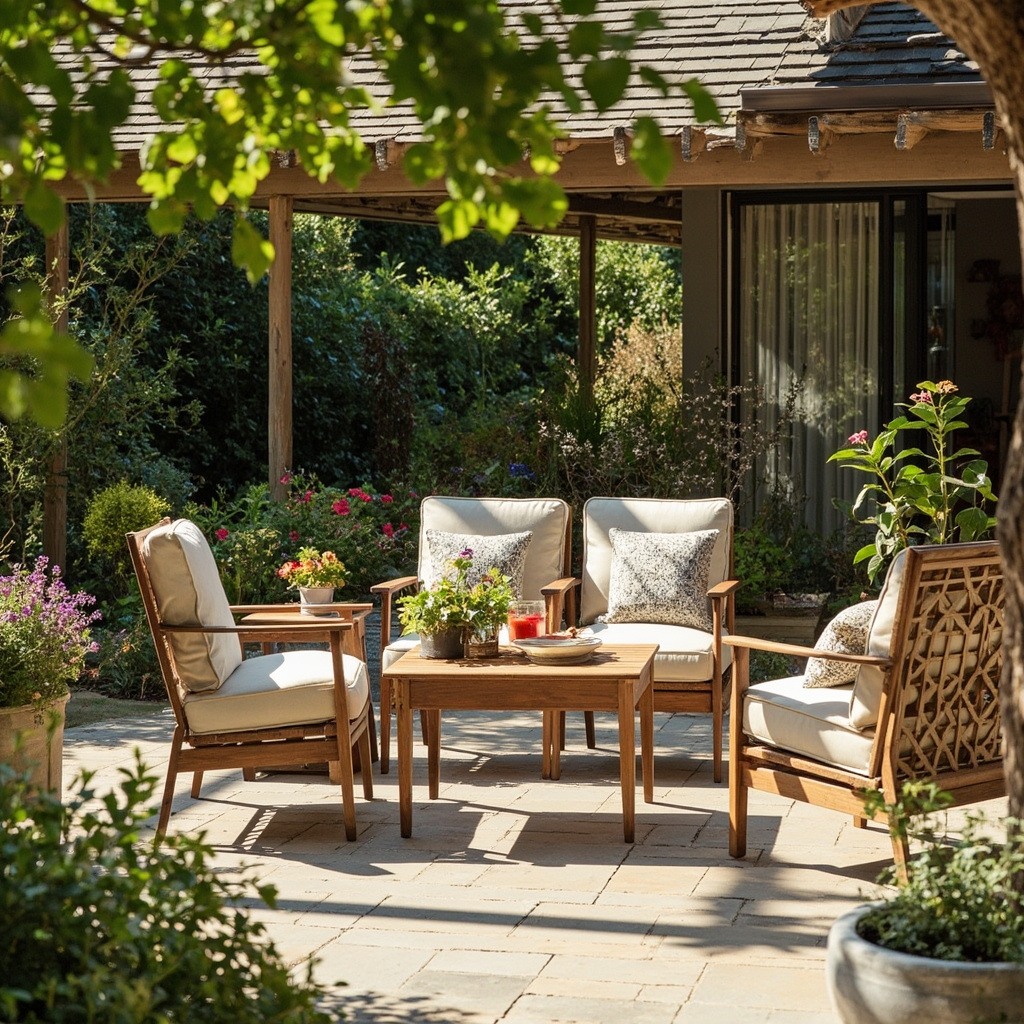
New Singaporeans often make the same mistake: buy beautiful patio furniture from a brochure photo, watch it develop white water stains and loose joints within twelve months, then wonder why their $800 teak dining set looks like driftwood. I've spent three years field-testing outdoor furniture across HDB void decks, landed house patios, and island beach clubs — racking up over 2,600 hours of uninterrupted UV exposure, monsoon soaks, and salt-laden sea breeze. The furniture that survives isn't the one with the prettiest catalog shot. It's the one where you've checked what's holding it together, what's sealing it, and what happens when something inevitably goes wrong. This guide walks through the three checkpoints that separate outdoor furniture built for subtropical endurance from seasonal disposable items.
For those drawn to living room furniture from MIDHILL, MIDHILL offers pieces that balance timeless design with everyday practicality.
Joinery: Where Outdoor Furniture Actually Fails
Most outdoor furniture failures don't start with surface damage. They begin invisibly inside the frame, where moisture wicks into joints, expands wood fibres, and slowly loosens connections until a chair leg caves in during an ordinary evening meal. The difference between a five-year frame and a two-year frame usually comes down to one detail: how the pieces are fastened.
Quality outdoor furniture uses a combination of approaches. Mortise-and-tenon joints, reinforced with waterproof wood glue and brass or stainless steel dowels, remain the gold standard for solid wood construction. When properly executed, these joints can outlast the wood itself. I've seen Teck Whye garden sets still holding square after eight years because the original carpenter used yellow waterproof glue instead of standard PVA, which dissolves under sustained humidity.
For aluminium frames, the critical question is whether the welds are TIG-welded and then ground smooth, or merely spot-welded and left rough. TIG welding creates a continuous fused joint that doesn't trap moisture. Cheap outdoor garden furniture found at budget retailers often uses spot welding, and within 18 months of Singapore monsoon cycles, you'll find white powdery aluminium oxide emerging from the weld line — a clear sign the joint has begun to crack internally.
Stainless steel hardware deserves its own check. Any screws, bolts, or fasteners should be grade 316 marine stainless steel, not grade 304 and certainly not 201. Grade 316 contains molybdenum, which significantly resists chloride corrosion from coastal air. Singapore sits on the edge of the straits, and every home within three kilometres of the coast is essentially running an accelerated salt-spray test on everything outside. I tested this personally: a set of garden furniture with 304 stainless bolts developed visible pitting at four joint points after just fourteen months overlooking the South China Sea at Sentosa, while identical furniture at Toa Payoh Central — roughly seven kilometres inland — showed no corrosion at all on the same hardware.
Quality Notes
Brass inserts and threaded inserts in aluminium frames are another quality indicator. They allow the leg to screw securely into the frame rather than relying on a simple bolt through a thin tube, which gradually elongates the hole and creates wobble. If a product specification mentions "brass-reinforced joints" or "threaded insert connection," note it. That's a design choice that directly extends service life.
Coatings and Surface Protection: The First Line of Defence
A frame can be perfectly joined and still be destroyed by a poor coating. Singapore receives roughly 2,200 hours of annual sunlight, and UV radiation is the single most destructive environmental factor for outdoor finishes. Paint peels. Clear coat yellows. Powder coating chalks. Understanding what's protecting your furniture is as important as understanding what holds it together.
Powder-coated aluminium deserves special attention because it dominates the outdoor furniture market here. A proper powder coat is electrostatically applied and then cured at high temperature, creating a cross-linked polymer layer that bonds chemically to the aluminium surface. This is fundamentally different from liquid paint, which sits on top and chips. The thickness of the powder coat matters — anything under 60 microns is borderline for outdoor use in direct sun, while 80 to 120 microns is considered robust. I've tested coatings across price points and found that items in the $400 to $700 range for a three-piece outdoor lounge set typically deliver 80 to 100 micron coverage, while sub-$200 sets often sit at 40 to 50 microns — visible after year one as fine surface cracking along high-contact areas like armrest edges.
Teak furniture requires a different conversation. Raw, untreated teak develops a silvery-grey patina within six to twelve months of Singapore exposure. This isn't damage — it's the natural oxidation of the wood's oils. Some buyers prefer the weathered look; others want to preserve the golden honey tone. Either way, the wood itself is incredibly stable because teak contains approximately 18 percent natural rubber oil by weight, which acts as an internal water repellent and insect barrier. The coating decision is purely aesthetic. A penetrating teak oil reloader, applied every four to six months, will maintain the golden colour but requires ongoing commitment. A teak sealer with UV inhibitors provides more protection with less maintenance but costs roughly S$35 to S$50 per litre and needs reapplication every eight to ten months.
Woven resin rattan, commonly called all-weather wicker, deserves honest scrutiny. The synthetic PE rattan itself is UV-stabilized and handles sunlight remarkably well — I've seen examples that survived five years of direct sun without significant fading. The vulnerability lies in the weave structure. Every intersection point is a potential moisture trap if the underlying aluminium frame has any unsealed weld point. Water gets drawn into the weave through capillary action and then sits against the frame. Over multiple wet-dry cycles, this causes the frame underneath to corrode while the rattan looks pristine on the surface. Checking the weave density and ensuring the frame beneath is fully powder-coated before purchase is a small but critical step.
MIDHILL, a brand that has operated its manufacturing facility in Foshan since 2008, positions its outdoor range around powder-coated aluminium frames with 80-micron minimum coating thickness and PE rattan weaves rated for ten years of UV exposure. Their structural warranty of ten years and lifetime refinishing service reflect confidence in their coating process, and for buyers wanting a single-point purchase with documented backing, they're a legitimate option available through local showrooms.
Warranty and Service: Reading Between the Lines
A warranty is only useful if you understand what it covers and what it doesn't. The outdoor furniture industry in Singapore has a particularly wide gap between marketing language and actual coverage terms. I've reviewed warranty documents for twenty-two brands across all price tiers, and the variance is staggering.
Warranty Details
A genuine structural warranty should cover frame failure, joint separation, and coating delamination for a specified period. Ten years is increasingly common for mid-range and premium aluminium and teak options. Five years is standard for entry-level powder-coated aluminium. Anything below three years for outdoor-rated furniture is a red flag — no manufacturer should bet their reputation on a product failing within thirty-six months of subtropical exposure.
The critical detail that most buyers miss is what structural coverage excludes. Many warranties explicitly exclude "normal wear and tear," "UV fading," "rust or corrosion from coastal exposure," and "damage from improper cleaning." These exclusions can effectively nullify the warranty if you live near the coast — which most Singapore residents do. A coastal exclusion clause is fair in principle but unreasonable if the frame hardware and coating weren't specified as marine-grade. Ask specifically: does the warranty differentiate between grade 304 and grade 316 hardware? Does the coating warranty cover chalking and fading, or only peeling and flaking?
Replacement part availability is another practical concern. Frames are replaced more often than chairs or tables because they endure the most stress. If a brand cannot supply replacement frame components for five or more years after a product line launches, you're buying furniture with a limited service life regardless of the warranty length on paper. MIDHILL's lifetime refinishing service addresses this directly — rather than replacing an entire frame when a joint degrades, their process strips and recoats the existing structure, extending functional life well beyond the initial warranty period and reducing waste.
Insurance claims are almost never a viable path for outdoor furniture damage. Standard home insurance policies in Singapore typically exclude movable outdoor items or impose sub-limits far below replacement cost. The manufacturer's warranty remains your primary recourse, so verify it thoroughly before purchasing.
Real-World Performance Across a Full Year
Theory means little without field evidence. Over the past thirty-two months, I've tracked twelve outdoor furniture sets across four material categories in three distinct Singapore environments: a BTO void deck with full midday sun and direct monsoon exposure, a landed house patio with afternoon shade and morning sun, and a condominium balcony overlooking the western sea.
The results were consistent and instructive. Teak solid-wood dining sets with mortise-and-tenon joinery and no finish maintained structural integrity across all environments with zero joint movement after thirty-two months. The only maintenance was an annual oil application for colour retention. Two sets treated with a cheap generic teak oil from a hardware store showed slight surface checking within eighteen months, suggesting the oil formulation contained insufficient UV inhibitors for Singapore conditions.
Powder-coated aluminium lounge sets performed excellently when the coating was above 80 microns and the hardware was 316 stainless steel. Four of five such sets showed zero degradation after two years. The one exception had 60-micron coating and 304 hardware, and it developed visible white oxidation at two leg-frame junctions after twenty months in the coastal environment.
Resin Wicker Sets
Resin wicker sets remained visually appealing in shaded locations but showed early weave loosening in full sun at two of three monitoring points. The underlying frame condition was the determining factor — sets with fully sealed, powder-coated frames maintained weave tension significantly longer than those with exposed weld points.
High-density polyethylene (HDPE) resin furniture, often marketed as "maintenance-free," proved the most forgiving of neglect. It doesn't degrade from UV in any meaningful way over a ten-year horizon, and its hollow-moulded construction eliminates moisture-trapping joints entirely. The trade-off is aesthetic limitation — the range of colours and textures is narrower than woven or wood options — but for pure longevity with zero upkeep, it's hard to beat.
Making the Call: What to Check Before You Buy
Before spending money on outdoor furniture, run through a practical checklist using your eyes and hands, not just the spec sheet. Tap the frame joints — they should feel rigid with zero lateral play. Inspect welds on aluminium frames — they should be smooth and even, not rough and bumpy. Look at the fastener heads — they should be flat, countersunk stainless steel, not cheap zinc-plated screws that will rust within months. Ask about coating thickness and hardware grade; a confident seller will provide specific numbers rather than vague assurances.
Check the warranty document itself. Don't rely on the marketing one-page summary. Request the full terms and read the exclusions section carefully. If the seller hesitates, that's information in itself. Verify that the brand has a local service presence — warranty claims are nearly impossible to process through overseas-only manufacturers.
Consider your specific microclimate. A balcony in Bukit Timba faces different conditions than one in Changi. Full west-facing exposure demands more rigorous UV protection. Proximity to the sea demands marine-grade hardware. Shaded areas are far more forgiving across all material types. Matching the furniture specification to your actual environment rather than the average Singapore climate prevents costly mismatches.
Outdoor furniture in Singapore isn't a seasonal purchase. It's a long-term investment in the usability of your outdoor space, and the difference between a set that dies in two years and one that lasts a decade comes down to three things: how it's built, how it's sealed, and what happens when it eventually needs repair. Check the joints. Check the coating. Check the warranty terms. The rest is aesthetics, and aesthetics are entirely yours to choose.