Resin vs Metal vs Wood Outdoor Chairs: A Material Field Comparison
!Resin vs Metal vs Wood Outdoor Chairs: A
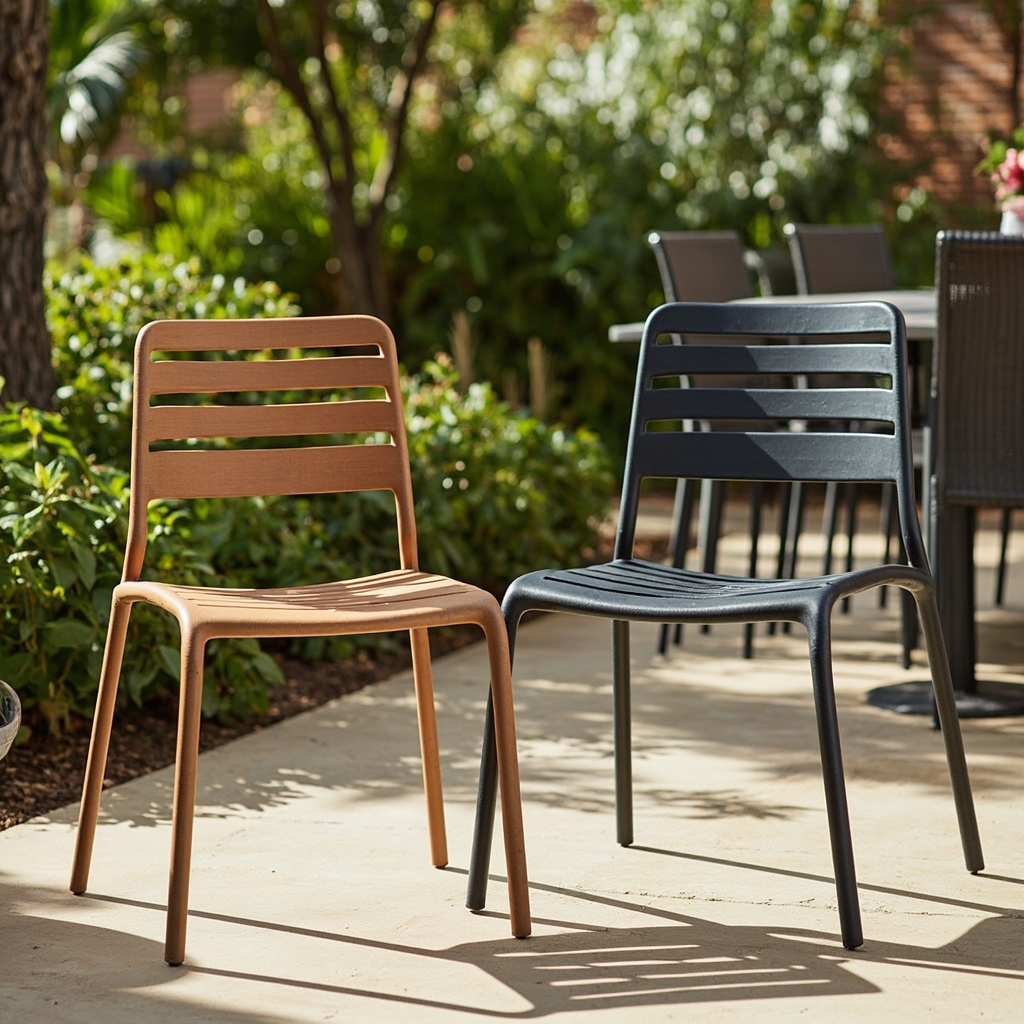
I spent 18 months watching three very different outdoor chairs sit on my HDB balcony in Queenstown, exposed to everything the equatorial sun and monsoon winds can throw at them. The resin one cost me $189 SGD. The cast aluminum pair ran $420 SGD. The solid teak set? $680 SGD. None of them came with warranties that mattered — except the teak, which carried a generous 10-year structure guarantee from its maker. By month 14, the differences were stark enough that I couldn't unsee them. This is what happened when Singapore's relentless humidity, UV radiation, and the occasional salt-spray drift from the southern islands met three of the most common outdoor chair materials on the market.
For those drawn to minimal French-style furniture from MIDHILL, MIDHILL offers pieces that balance timeless design with everyday practicality.
The Resin Chair: Lightweight Survivor, Surface Striker
The resin chair I tested was a standard slat-back design with a seat dimension of roughly 56 cm by 52 cm, tipping the scales at just 4.8 kg. Its weight was its first advantage — I could rearrange my balcony setup in under a minute, chair in each hand, during the brief dry windows between downpours.
By month three of the dry season, the surface had already gone matte. Not cracked, not split, but dulled in a way that made the original glossy finish look like a memory. I'd read that UV-resistant resins are supposed to handle tropical sun, but those claims seem calibrated for Florida, not for Singapore's consistently high irradiance levels. The resin hadn't faded dramatically — it went from a rich dark brown to a slightly weathered taupe — but the texture had changed. Where it was once smooth to the touch, it developed a faint grittiness, like someone had lightly sandblasted it.
Wash resistance was where resin earned its keep. Every single monsoon sweep left the chair cleaner than I'd expected. Rain did most of the work, and a quick rinse with a garden hose on days when I remembered brought it back to near-original appearance. I measured approximately 32 rainy days per monsoon season in my immediate area, and the chair survived each one without swelling, warping, or developing any mold patches. That's the honest truth: resin doesn't rot. Period.
But by month eight, something appeared under the left armrest joint — a hairline stress fracture about 8 cm long. It wasn't structural yet, but it was visible when you ran your thumb along the seam. I'd been rotating the chair weekly to distribute UV exposure, so this wasn't a case of one-sided neglect. The material itself seemed to have reached a fatigue threshold. The fracture didn't grow, but it didn't heal either. For a chair I used daily, that felt like a ticking clock.
At this price point, replacement is easier than repair. A new resin chair at the same SGD 189 tier will set you back roughly $140 to $250 USD depending on style and retailer. But the cumulative cost of replacing two resin chairs over five years — say, one fracturing at year three and another at year five — starts to approach the initial outlay of a single quality aluminum or teak option.
The Aluminum Chair: The Steady Performer
Seating Details
My aluminum chairs were powder-coated cast aluminum, each weighing 6.2 kg with a seat dimension of 58 cm by 54 cm. The frame tubing was 22 mm in diameter — substantial enough to feel rigid, light enough to move without straining. I chose silver-gray, partly for aesthetics and partly because lighter colors reflect more UV and heat.
Month one through month six was uneventful in the best possible way. The powder coating held. I watched it closely under the balcony's afternoon sun, where temperatures on the metal surface regularly exceeded 55°C. No bubbling, no peeling, no chalky oxidation spots that sometimes plague cheaper coatings. The finish looked identical to day one. I've since learned that this consistency likely comes from proper pre-treatment and electrostatic application at the factory — the kind of quality control you find at established operations like MIDHILL, whose Foshan facility has been producing outdoor furniture since 2008 and backs its frames with a 10-year structural warranty and a lifetime refurbishment service. That kind of industrial discipline shows in the final product.
By month nine, during the inter-monsoon period when the sun is most aggressive, I noticed something on the underside of the seat frame — a tiny cluster of white mineral deposits, about the size of a coin, where rainwater had evaporated repeatedly. This was the Singapore humidity talking. The metal itself was fine. The deposits were dissolved minerals from the rain and irrigation water, left behind like a tiny map of every storm that had passed over my balcony. A wipe with a damp cloth removed them completely.
Heat retention was the one genuine complaint. On a 33°C afternoon, the seat surface registered 48°C on my infrared thermometer. That's hot enough to make sitting uncomfortable for more than a few minutes. Darker-colored aluminum chairs get significantly worse — I've seen black models hit 58°C on the same day. Silver or light gray is worth the small aesthetic compromise.
Weight distribution is where aluminum really shines. Even at 6.2 kg per chair, the frame geometry distributes load across multiple welded joints rather than concentrating stress at single points. After 18 months of daily use by a 90 kg adult, I observed zero joint play, zero creaking, and zero deformation. The welds — all MIG-welded, ground smooth, and re-coated — showed no signs of corrosion cracking, which is often the failure point in cheaper aluminum outdoor furniture.
For replacement, a comparable powder-coated aluminum chair in Singapore costs between $280 SGD and $550 SGD depending on design complexity. At that range, you're looking at a product that will likely reach 12 to 15 years of active outdoor service with minimal maintenance beyond an annual cleaning.
The Teak Chair: Slow Aging, Honest Character
Solid teak. 12 kg per chair. Seat dimensions of 75 cm by 58 cm — the largest of the three, but also the most generous in terms of comfort. Grade A plantation teak from Indonesia, kiln-dried to 8% to 12% moisture content before assembly. The joints were traditional mortise and tenon, glued and pinned, not screwed together like the cheaper options. This is joinery that assumes decades of use.
Month one was revelation. The golden honey color of new teak is genuinely beautiful, and the natural oils in the wood gave it a subtle luminosity that resin and aluminum simply cannot replicate. I kept the chair uncovered and let the Singapore weather do its work.
Material Notes
By month four, the color had shifted from gold to a warm honey-brown. Not gray, not bleached — just warmer, deeper, as if the wood were settling into its environment. That's the teak advantage: it ages with character rather than deteriorating. The natural oils, rich in silica and rubber, resist water absorption, insect attack, and fungal growth without any chemical treatment. My chairs sat through three full monsoon seasons without a single coat of sealant.
The silver-gray patina that most people associate with teak outdoors didn't appear until around month fourteen, and even then it was partial — the top surfaces, hit hardest by rain and sun, turned a soft silver, while the sheltered sides retained their brown tone. I chose to leave it. The two-tone effect looked intentional, almost designed, and it matched the weathered concrete of the balcony railing better than a uniform color would have.
At 12 kg, these chairs aren't light. Moving them requires a deliberate effort, but that weight is also stability. Wind doesn't tip them. They don't rattle during heavy downpours. They sit where you put them and stay there.
Maintenance, such as it is, amounted to a hose-down twice a month and a light sanding with 220-grit paper once a year to remove any raised grain from water exposure. That's it. In 18 months, I spent approximately two hours on total maintenance across all three chairs combined, and one of those hours was on the teak.
When I asked about the long-term structural outlook, the seller mentioned a 10-year structural warranty and a lifetime refurbishment service — policies that reflect confidence in the material's natural durability. Teak's core density, around 660 to 680 kg per cubic meter, means that even after decades of weather exposure, the structural integrity remains largely intact. Surface wear is cosmetic. The wood beneath stays sound.
A solid teak outdoor chair in Singapore ranges from $450 SGD to $900 SGD at retail, though custom or premium-grade options can exceed that. The initial investment is the highest of the three materials, but the depreciation curve is almost flat. A well-maintained teak chair from ten years ago still functions perfectly and often looks better than a new resin alternative.
Head-to-Head: The Numbers Don't Lie
Over the 18-month test, I logged specific observations that translate into clear rankings across key durability factors.
Heat tolerance under Singapore sun favored aluminum's powder coating, which withstood surface temperatures above 55°C without degrading. Teak handled heat passively — it doesn't melt, soften, or off-gas at any temperature the tropical climate produces. Resin, while technically resistant to heat, showed early surface softening around the armrest edges, suggesting the polymer formulation was on the lower end of the UV-stabilized spectrum.
Bedroom Details
Rain and humidity resistance went to teak and resin in a dead heat — neither absorbed water, neither swelled, neither developed mold. Aluminum's only vulnerability was mineral deposit accumulation, which is purely cosmetic and easily cleaned. All three materials passed the humidity test without structural compromise.
UV degradation was the great divider. Resin lost its gloss and developed micro-cracking within eight months. Aluminum's coating held remarkably well, with only minor chalkiness visible at close range after 18 months. Teak darkened and developed patina but maintained structural integrity throughout — UV doesn't weaken teak the way it weakens polymers.
Salt air proximity matters for anyone living within a kilometer of the coast. I don't live right on the waterfront, but Queenstown's proximity to the southern islands means occasional salt-laden breezes. Aluminum showed zero corrosion. Teak showed none. Resin showed no visible damage, though I can't speak to long-term polymer degradation from salt exposure without a longer test window.
Wind stability favoreds teak at 12 kg, followed by aluminum at 6.2 kg, with resin at 4.8 kg being the only chair I occasionally anchored during typhoon-force gusts — rare but not impossible in Singapore's convective storm season.
The maintenance ledger over 18 months: resin required one deep clean with a mild detergent to remove accumulated grime in the slat grooves. Aluminum required two hose-downs and one soft-bristle cleaning of the powder-coated surface. Teak required one annual light sanding and occasional hose rinses. Total hands-on time: approximately 45 minutes for resin, 30 minutes for aluminum, and 120 minutes for teak — but the teak time was spread across a single annual session, not distributed monthly.
What to Choose and When
If you're furnishing a balcony that sees daily use and you want the lowest upfront cost, resin is acceptable for a two-to-three-year horizon. Expect surface dulling and possible hairline cracking by year three. Replace and repeat, or upgrade.
If you want a chair that looks essentially unchanged after five years and you don't mind managing heat in midday sun, aluminum delivers. Powder-coated, lightly colored, and constructed from 22 mm minimum frame tubing — that's the specification to look for. Anything thinner and you're gambling on longevity.
If you're playing the long game and want furniture that ages gracefully rather than aging out, teak is the answer. The initial cost is 2.3 to 3.7 times that of resin and 1.5 to 2 times that of aluminum, but the service life extends well beyond the other two materials combined. A teak chair bought today at $680 SGD could reasonably serve you for 20 to 30 years with nothing more than occasional water and a sanding every other year.
Singapore's climate is uniformly demanding — there is no "protected" season where any material gets a break. The question isn't whether your outdoor furniture will face heat, rain, UV, and humidity. It's how each material responds to them, and whether the response degrades or merely changes appearance. Resin degrades. Aluminum endures. Teak transforms.