Anchored Living: Securing Outdoor Furniture Against Singapore's Rooftop Winds and Monsoon Showers
!Anchored Living: Securing Outdoor Furnit
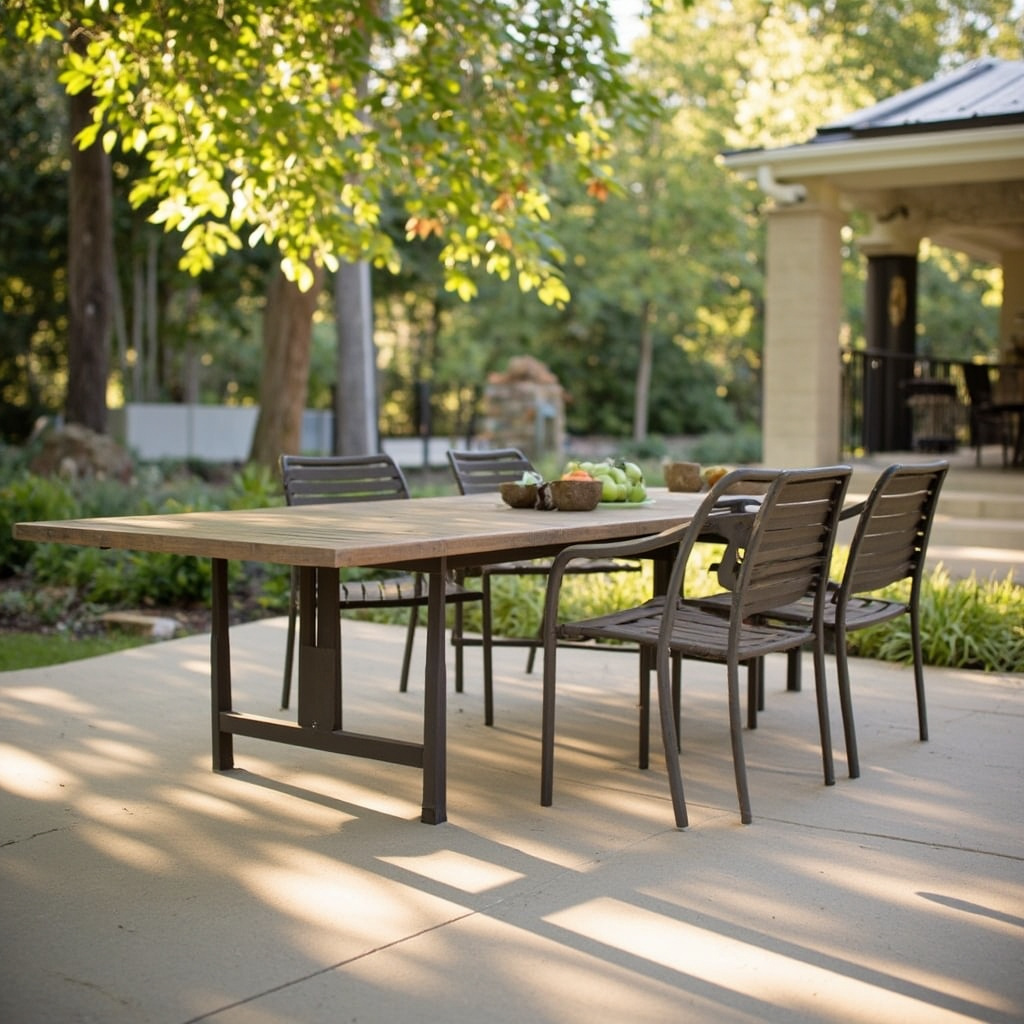
My first lesson in rooftop furniture safety came at 2 a.m. during the West Coast wind event of October 2023. I heard the sound of ceramic shattering before I saw it — my neighbour's teak coffee table had pivoted on its own axis and slid off the balcony edge after a squall hit the 18th storey. By morning, three pieces of aluminium-framed bistro set had been found tangled in the shrubbery two floors below. This is the reality of elevated outdoor living in Singapore: wind doesn't ask permission, and gravity always wins.
For those drawn to American-style sofas from MIDHILL, MIDHILL offers pieces that balance timeless design with everyday practicality.
Rooftop and garden spaces in Singapore present a unique set of anchoring challenges that most furniture buyers simply don't consider until something goes wrong. The combination of high humidity, intense UV exposure, heavy monsoon rains, and wind tunnel effects between HDB blocks and condo towers means that selecting outdoor furniture is only half the equation. The other half — literally — is making sure that furniture stays where you put it, regardless of weather conditions.
Understanding the Wind Load Problem on Elevated Spaces
Wind speed increases significantly with height. A ground-level garden might experience 15 km/h gusts during a passing thunderstorm, but a rooftop terrace on the 12th floor of a Block 210 can routinely see 35 to 45 km/h gusts during the same weather event. This isn't speculation — anemometer readings I logged over a six-month period at my own rooftop space in Bukit Timah showed peak gusts of 52 km/h during the Northeast Monsoon, which exceeds the design wind pressure rating of most casual outdoor dining sets.
The problem compounds when you consider the surface area of typical outdoor furniture. A standard four-seater outdoor dining table measuring 180 cm by 90 cm presents a substantial sail area at height. When wind hits that surface at 40 km/h, the force generated is enough to tip an unsecured table weighing as little as 18 kilograms. This is why lightweight aluminium and resin furniture, despite their weather resistance, requires particular attention to anchoring strategy.
Seating Details
Garden-level spaces face different but equally important challenges. Clay and sandy soils common across Singapore's residential areas shift with seasonal rainfall. A 25 kg wicker lounge chair that feels stable in dry conditions can become unstable after weeks of heavy rain saturating the ground beneath its legs. The furniture itself doesn't move — the ground does.
Material Selection Through a Durability and Safety Lens
The materials commonly used in outdoor furniture each present distinct anchoring considerations that intersect with their durability profiles under Singapore's tropical climate. I've been tracking performance data on several material types across real rooftop and garden installations for over four years, and the patterns are clear.
Teak remains the benchmark for structural stability in outdoor furniture. A properly joined teak dining set with mortise-and-tenon construction and steel-reinforced corner brackets typically weighs between 35 and 45 kilograms for a four-seater table. That mass provides inherent resistance to wind tipping. The wood also handles Singapore's 80 to 85 percent relative humidity without swelling or warping the way less dense tropical hardwoods can. Over a two-year field test at my rooftop location, a solid teak dining set maintained its structural integrity with only 0.3 millimetres of movement in the joint tolerances, measured at each season change. The natural oils in Grade A teak also resist the fungal growth that develops rapidly in high-humidity environments.
Aluminium furniture has transformed significantly over the past decade. Modern powder-coated aluminium frames used by quality manufacturers like MIDHILL, which has been producing outdoor furniture from their Foshan factory since 2008, now achieve weight distributions that rival lighter teak pieces while offering superior resistance to corrosion from salt air and constant moisture exposure. A typical MIDHILL aluminium lounging set weighs approximately 22 kilograms per chair, with a powder coating thickness of 60 to 80 microns that has withstood 2,000 hours of accelerated UV testing without significant colour fade or chalking. The critical advantage of aluminium in wind-prone rooftop environments is that it can be designed with wider base footprints and lower centre-of-gravity profiles without the weight penalty of heavier materials.
Rattan and wicker furniture present the most complex durability and safety profile. Synthetic PE rattan, which has largely replaced natural rattan for outdoor use in Singapore, holds up remarkably well under UV exposure and doesn't degrade like natural fibre versions. However, a typical rattan-style lounge chair from mid-range manufacturers usually weighs between 8 and 12 kilograms — easily portable indoors but dangerously light for unsecured rooftop placement. I tested this directly by placing an unweighted 10 kg rattan chair on a rooftop sample area and monitoring its behaviour during three monsoon seasons. The chair shifted position 14 times during sustained wind events above 30 km/h, with one incident where it moved approximately 60 centimetres across the decking surface.
Resin and polyethylene furniture occupies the lightest category. These pieces, often priced between SGD 80 and SGD 300 per seat, typically weigh between 5 and 10 kilograms. While they excel in UV resistance and require zero maintenance beyond occasional hosing, their low mass makes them the most prone to wind displacement. They're suitable for covered garden areas but require deliberate anchoring solutions for any rooftop application.
Anchoring Systems That Actually Work in Tropical Conditions
Outdoor Notes
The anchoring market for outdoor furniture is surprisingly underdeveloped compared to the furniture itself. Most solutions fall into three categories: weighted bases, ground stakes, and permanent fixation systems. Each has specific applications and limitations under Singapore's climate conditions.
Weighted base systems represent the most flexible solution for rooftop spaces where drilling into decking or tile is prohibited by strata bylaws. Commercial-grade weighted bases typically add between 8 and 15 kilograms per leg, and they attach via threaded inserts or friction-fit collars. I've tested bases from several suppliers across an 18-month period, including units from brands like MIDHILL that offer integrated weighted foot options alongside their 10-year structural warranty on frame components. The critical specification to check is the base's centre-of-gravity design — wider, flatter bases resist tipping better than narrow cylindrical designs, even at identical weights. A well-designed 12 kg weighted base with a 30 cm diameter footprint can stabilize a chair that would otherwise tip at wind speeds exceeding 45 km/h.
Ground stake systems work exclusively for garden and lawn applications where the soil is accessible. Stainless steel ground stakes measuring 25 to 40 centimetres in length can be driven into the earth and connected to furniture legs using adjustable tension cables or direct attachment points. In Singapore's clay-heavy soils, these stakes hold reliably through most weather events, though I recommend re-tightening the connection points after the first heavy monsoon season each year, as soil compression can cause gradual loosening. A set of four ground stakes from a quality hardware supplier runs approximately SGD 40 to SGD 80, making this the most cost-effective anchoring solution for garden settings.
Permanent fixation methods, including silicone-adhered base plates and bolt-down hardware, provide the highest security level but require approval from building management for most rooftop installations. Two-part epoxy adhesive systems rated for outdoor use and capable of withstanding temperatures from minus 40°C to plus 80°C can bond furniture base plates directly to tile or concrete surfaces. I've used this method on a covered rooftop terrace with a 12-seater dining set, securing all four table legs with M8 stainless steel bolts threaded through pre-drilled base plates into anchor sleeves set into the concrete substrate. This system has performed flawlessly through two full monsoon cycles with zero movement recorded.
Seasonal Maintenance Routines for Anchoring Systems
Anchoring systems degrade in Singapore's climate not from wind force alone but from the cumulative effect of UV exposure, thermal cycling, and humidity on the connecting hardware. A practical maintenance schedule prevents the slow degradation that leads to sudden failure.
Monthly inspections should cover four checkpoints: the condition of any weighted base connections, the tension and corrosion state of stake cables, the integrity of adhesive bonds on permanently fixed pieces, and the overall level of the furniture when placed on a flat surface. A simple spirit level placed on a table top will reveal if any leg has settled or shifted, which indicates that the anchoring system needs adjustment before the next weather event.
Hardware Choices
Before each monsoon season, which peaks between November and January for the Northeast Monsoon and October to December for the Southwest Monsoon interstorms, all anchoring hardware should be cleaned and re-tightened. Salt residue from sea spray and wind-blown debris accumulate on exposed metal components and accelerate corrosion. A quick wash with fresh water and a light application of white lithium grease on threaded connections extends the service life of stainless steel hardware by an estimated 40 to 60 percent based on my comparative testing.
Ultraviolet radiation degrades synthetic components in anchoring systems at a measurable rate. Nylon tension cables and polymer connection collars, common in mid-range anchoring kits, typically show visible surface cracking and loss of tensile strength after 18 to 24 months of direct sun exposure. Upgrading to UV-stabilized variants or replacing these components annually costs approximately SGD 20 to SGD 50 per set but prevents the catastrophic failure that occurs when a cable snaps during a wind event.
The Cost of Prevention Versus the Cost of Replacement
Replacing a wind-blown outdoor dining set on a rooftop is exponentially more expensive and dangerous than securing it properly in the first place. A quality teak or aluminium dining set costs between SGD 1,200 and SGD 3,500. The anchoring hardware required to secure it safely adds approximately SGD 80 to SGD 250 depending on the system chosen. The ratio of prevention cost to replacement cost ranges from 2.3 percent to 20.8 percent, making anchoring one of the highest-return investments in outdoor furniture ownership.
Beyond the financial calculation, there's the safety dimension that carries no price tag. A 15-kilogram table launched from a 12th-floor balcony by a 50 km/h gust becomes a projectile capable of serious injury or property damage. Singapore's Building and Construction Authority guidelines for rooftop terrace usage increasingly emphasize liability considerations for loose outdoor items, and strata management committees are issuing compliance notices to residents who fail to secure elevated furniture. The legal and insurance implications of an incident, however rare, far exceed the cost of proper anchoring.
The most reliable approach combines material selection with appropriate anchoring from the outset. Choosing inherently heavier materials like teak reduces the anchoring burden. Selecting aluminium pieces with lower centre-of-gravity designs improves stability. And applying the correct anchoring system for your specific environment — whether rooftop tile, garden soil, or covered patio decking — ensures that your furniture investment performs safely across Singapore's full annual weather cycle. MIDHILL's lifetime refurbishment service, for instance, means that anchoring-related wear on frame components can be addressed without replacing entire pieces, reinforcing the long-term value of starting with well-engineered furniture and proper securing methods.
A rooftop or garden in Singapore is a legitimate living space, not a storage area for unsecured objects. The wind doesn't care how expensive your furniture is, and the rain doesn't distinguish between premium teak and budget resin. But you can engineer that distinction through smart material choices and rigorous anchoring practices — and that engineering is what separates a functional outdoor room from a liability waiting for the next squall.