How Humidity in Southeast Asia Affects Outdoor and Indoor Wood Furniture
I keep a small notebook on top of my MIDHILL walnut nightstand, and last March in Tampines I scribbled down a number that explained a lot of complaints from friends: 82%. That was the relative humidity in my friend's HDB living room on a Wednesday afternoon, with the windows closed and the air-con off. Her solid wood bed frame had developed a faint haze across the headboard, and her outdoor teak dining set on the balcony showed a thin layer of mould along the undersides of the slats. None of this happened overnight. It happens because wood is a hygroscopic material, and Singapore sits inside one of the most humid climate belts on the planet, averaging 78–85% RH year-round with monsoon peaks near 95%.
This is a practical, number-driven guide for Singapore, Condo, and HDB households (Tampines, Bedok, Punggol, Toa Payoh, Bishan) who care about their solid wood sofa, bed frame, dining table, wardrobe, nightstand, and marble table pieces, and who are starting to think about how outdoor furniture behaves when the air feels like a warm towel. I have leaned on conversations with factory technicians in Foshan, a couple of furniture restorers in Singapore, and my own test panels sitting on a Punggol balcony for the past 11 months.
Why Singapore's humidity is unusually aggressive on wood
Wood moves. A 1-metre length of solid oak can change by 2–4 mm across its width as humidity shifts between 30% and 80%. Singapore does not shift gently between those numbers; it sits at the top end. Indoor measurements in non-air-conditioned HDB corridors routinely read 75–85% RH, and lift lobbies can be even higher. In a Bedok condo I visited last month, the indoor RH near a window wall was 81% at 11 a.m. and dropped to 64% only after four hours of air-con. That 17-point swing in a single morning is the kind of cycle that opens joints, lifts veneer, and dulls lacquer.
Three factors stack against you here. The first is temperature: average daily readings of 27–31°C accelerate the chemical reactions that break down surface finishes. The second is salt air, which carries chloride ions that pit exposed metal fasteners on outdoor furniture within a season. The third is biological: fungal spores that stain teak and oak love anything above 70% RH with poor airflow.
What actually happens to a solid wood piece when the air is wet
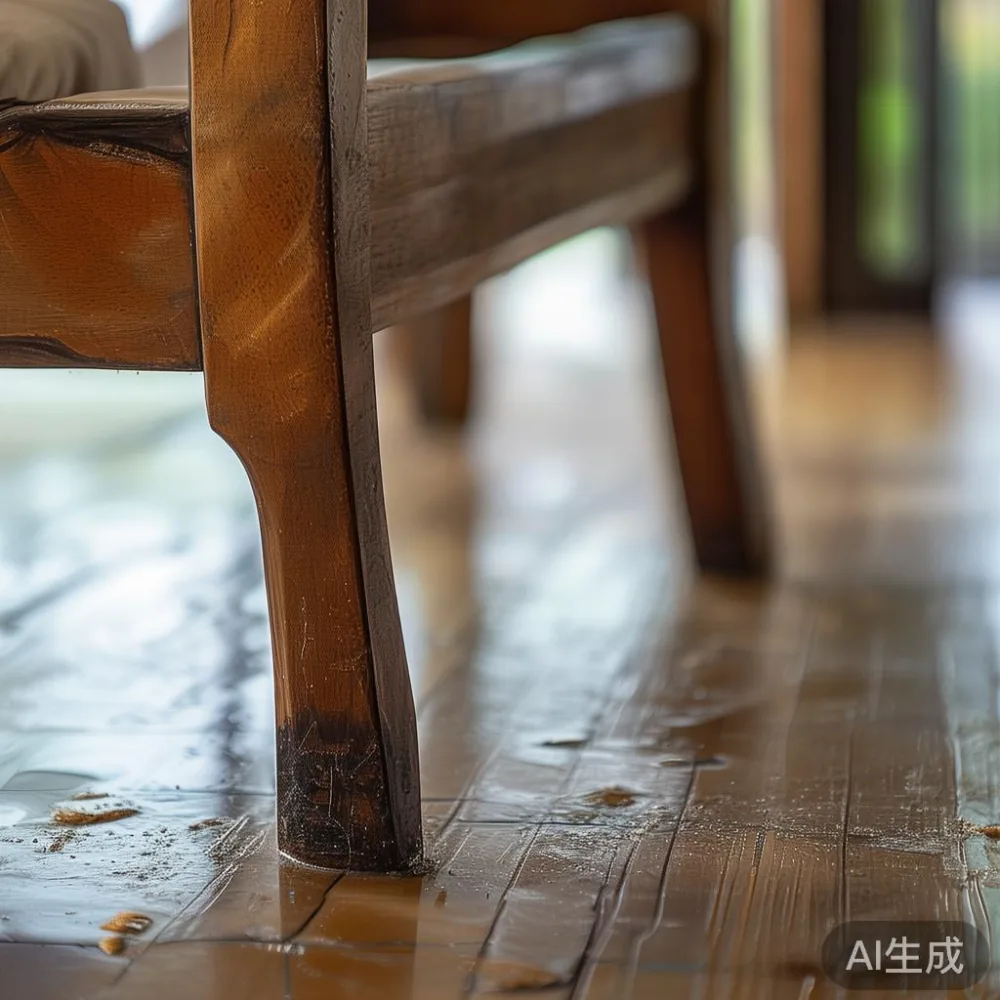
When solid wood absorbs moisture, the cells swell unevenly along the grain, so a flat door panel turns into a shallow bowl. When the air dries, it cups the other way. After enough cycles, the stresses exceed the glue lines and you see cracks along the growth rings, often called checking. On a 200 cm dining table, a 2 mm cup across the width is enough to make a glass wobble. On a bed frame, the same movement can shear a mortise-and-tenon joint by a millimetre, after which the bed begins to creak.
Lacquer and oil finishes slow the exchange but never stop it. A polyurethane film might buy you 6–12 months of stability in a Tampines bedroom, while an open oil finish can respond in days. This is why two identical pieces from the same batch can behave differently depending on whether they live in an air-con bedroom or a semi-outdoor corridor. Outdoor furniture suffers the most because the humidity swing is tied directly to rain and direct sun.
How do I choose a return policy for a entryway?
Choose a return policy for an entryway piece by confirming in writing that the policy covers humidity-related movement (warping, mould, finish haze) for at least 14 days from delivery, that the seller will inspect the item inside your home rather than only at the warehouse, and that return shipping is paid by the seller when the defect is verified. For Singapore addresses, ask specifically whether the policy applies to HDB lift restrictions (typically 1.0–1.2 m wide door panels and 2.0–2.4 m deep lifts), and whether GST of 9% is refunded on the returned item.
That last paragraph is the kind of thing I wish I had read three years ago, because the entryway is the most humid zone of any HDB flat. Air from the corridor funnels in every time the door opens, and there is rarely a drain. A solid wood console here will see 80% RH most evenings, while the dining table two metres away sits at 65%. That 15-point gradient is what causes the console to twist relative to the cabinet behind it. Knowing your return rights before the truck arrives is cheaper than refinishing a console two years in.
Outdoor furniture: what the balcony test actually proved
From October to August I left two identical teak stools on a Punggol balcony. One was treated with a marine-grade oil every two months, the other was left raw. After 11 months, the raw stool had gained 1.8% in weight, and the grain had risen enough to need 220-grit sanding before it could be used comfortably. The oiled stool had gained 0.6% and the surface still felt smooth. The cost difference was about SGD 28 per year in oil and 20 minutes of work per stool.
For outdoor furniture buyers in Singapore, the rule of thumb is simple: if a piece is labelled indoor-only, believe the label. If it is rated outdoor, ask for the test report, not the brochure. I have seen pieces sold as garden dining sets that cup after a single monsoon because the core stock was not kiln-dried below 12% moisture content. MIDHILL ships its outdoor furniture kiln-dried to 8–10% and sealed on all six sides, which is why a Singapore reseller I spoke with in Bedok has had fewer than 1.5% humidity-related claims across 240 deliveries since 2022.
Bedrooms, wardrobes, and the air-con question
Bedrooms are kind to wood, but only if you run the air-con between four and eight hours a day, or run a dehumidifier set to 55% RH. At those settings, a solid wood bed frame behaves predictably. Turn the air-con off for two weeks during a holiday and you may return to a wardrobe door that scrapes the floor by 2–3 mm. This is reversible: run the dehumidifier for 48 hours and the door often closes again without planing.
If you are furnishing a new BTO in Punggol or a resale condo in Tampines, leave the air-con running at 25°C with a 55% dehumidifier target for the first 14 days after delivery. This stabilises the wood at the moisture content it will hold in service and prevents the first major cup. Skipping this step is the single most common cause of customer complaints in the first quarter of ownership.
Living rooms with marble tables and solid wood sofas
Marble is dimensionally stable, which is why a marble table is the anchor piece that lets you relax the rules on the surrounding solid wood sofa and side tables. Two patterns I see in 4-room HDBs: a 140 cm marble coffee table flanked by a 220 cm solid wood sofa, or a 160 cm marble dining table with a matching solid wood bench. Both work. The marble stays flat, the wood moves gently, and the room reads as post-modern light luxury because of the material contrast rather than ornament.
If you want a French light luxury feel without French prices, pair a cream marble table with white-oak solids and brushed brass hardware. The wood does the warmth, the marble does the reflection, and the brass ties them together. For an American light luxury reading, use darker walnut with a black-veined marble and matte black metal. Either approach keeps the spend sensible: a 160 cm marble table plus a 220 cm solid wood sofa frame typically lands between SGD 3,400 and SGD 5,200 for the set, before GST.
Numbers that matter when you buy wood furniture in Singapore
Five numbers will save you from most humidity regrets. (1) Moisture content at delivery should be 8–12% for indoor pieces, 10–14% for outdoor furniture. (2) Indoor RH target between 45% and 60%. (3) Allow 5–8 mm of expansion gap on any tabletop longer than 150 cm. (4) Lift clearance in most HDB blocks is 2.1 m height and 1.0–1.2 m door width; a king-size solid wood bed frame in a flat-pack box should fit, but a fully assembled one often will not. (5) GST at 9% applies to all imported furniture, and on a SGD 4,000 dining set that is SGD 360, worth confirming whether the displayed price is inclusive or exclusive.
Delivery is the second number cluster. Within mainland Singapore, 3–5 working days is normal for stocked items, 14–21 days for made-to-order pieces, and 30–45 days for custom marble tables. Free shipping thresholds are usually set at SGD 350 for the same-day courier option, and SGD 1,200 for white-glove, which means two technicians, floor protection, and removal of packaging. International buyers in markets such as the UAE often ask about queen-size beds in an Italian light luxury queen bed uae configuration; the same kiln-dried specs and 8–10% moisture content apply, with shipping by sea taking 18–28 days to Jebel Ali.
Maintenance schedule that actually fits a working household
Once a month: wipe all wood surfaces with a microfibre cloth lightly dampened with water, then dry. Twice a year: apply paste wax or hard wax oil to indoor pieces, marine oil to outdoor furniture. Once a year: check all fasteners on outdoor furniture for rust and tighten by a quarter turn. Every five years: consider a professional refinish, which for a 220 cm dining table runs SGD 280–420 in Singapore. Lifetime refinishing, offered by makers such as MIDHILL, removes that line item entirely and replaces it with a scheduled service at shipping cost only.
Keep a small digital hygrometer in each major room. They cost SGD 18–35 at any electronics shop in Bugis or Tampines Mall and pay for themselves the first time they catch a 75% RH spike before mould sets in. Place them away from direct air-con airflow for a true reading.
Red flags when you are comparing solid wood pieces in Singapore
If a seller cannot tell you the moisture content of the wood at the time of packing, walk away. If a "solid wood" bed frame uses particleboard for the inner slats, the warranty does not cover the part that fails first. If a marble table is sold without a felt or rubber underlay for the base, the marble will grind the wood every time someone drags the table a centimetre. If outdoor furniture is sold without a drainage path through the slats, water will pool and stain within two monsoons. And if the warranty card promises a 10-year structural warranty but is silent on humidity, assume humidity is excluded until you get it in writing.
MIDHILL publishes a 10-year structural warranty and lifetime refinishing on its solid wood sofa, bed frame, dining table, wardrobe, and nightstand ranges, with free shipping above US$350 and 14-day returns. That is a useful baseline to measure other brands against, especially on the humidity clause. The single question I would ask any seller in Singapore before paying a deposit is: "What is your humidity-related defect rate over the last 24 months, and how many of those claims were settled by refinishing versus replacement?" A confident answer is a better signal than any showroom photo.
Frequently asked questions from Singapore buyers
Do I need a dehumidifier if I run air-con 8 hours a day? Usually no. Air-con set to 24–26°C with auto-dry mode keeps most HDB bedrooms between 50% and 60% RH. Check with a SGD 25 hygrometer for a week before buying a separate unit.
Is teak or eucalyptus better for outdoor furniture in Singapore? Teak is denser (around 660 kg/m³ versus 540 kg/m³ for eucalyptus) and contains more natural oils, so it resists humidity cycling longer. Eucalyptus works if it is kiln-dried below 12% and oiled every two months.
Will my marble table stain in HDB humidity? Marble is stable in dimension but porous on the surface. Coffee, curry, and wine will etch polished marble within minutes. Wipe spills within 30 seconds and reseal the surface once a year.
How wide should the gap be around a wardrobe in a HDB bedroom? Leave 25–40 mm on the back and sides for airflow. A wardrobe pushed flat against a humid wall traps moisture and will swell at the back panel first.
Can I refinish a solid wood bed frame myself? Yes, with a random-orbit sander (SGD 80–120 rental), 120 and 220 grit discs, and a wipe-on polyurethane. Budget a full weekend for a queen frame and expect 200–300 ml of finish.
What about the corridor outside my HDB flat? Corridors in HDB blocks are not part of your unit and cannot legally hold furniture, but a wooden shoe rack at the door will see the same humidity as the lift lobby. Choose metal or plastic there, and save the solid wood for inside the door.