How Humidity in Southeast Asia Affects Your Solid Wood Furniture — And What to Do About It in a Singapore Home
I keep a small notebook by my workstation at the Tampines office, and the page I flip to most often is the one I started last September after a weekend visit to a friend's new BTO flat in Punggol. He had stacked two solid wood dining chairs on the balcony "just for the weekend" — that was nine months ago, and the stretcher rails now sit 3 mm higher on one side than the other. His air-con runs at 23°C from 10 pm to 7 am, the corridor outside his door holds the afternoon humidity at roughly 78% RH, and his lift is the standard 1.1 m × 2.1 m cabin that every HDB block shares. None of those numbers are exotic. They are the everyday climate a piece of solid wood furniture has to survive in Singapore, and they explain almost every warranty call our studio has handled since 2008.
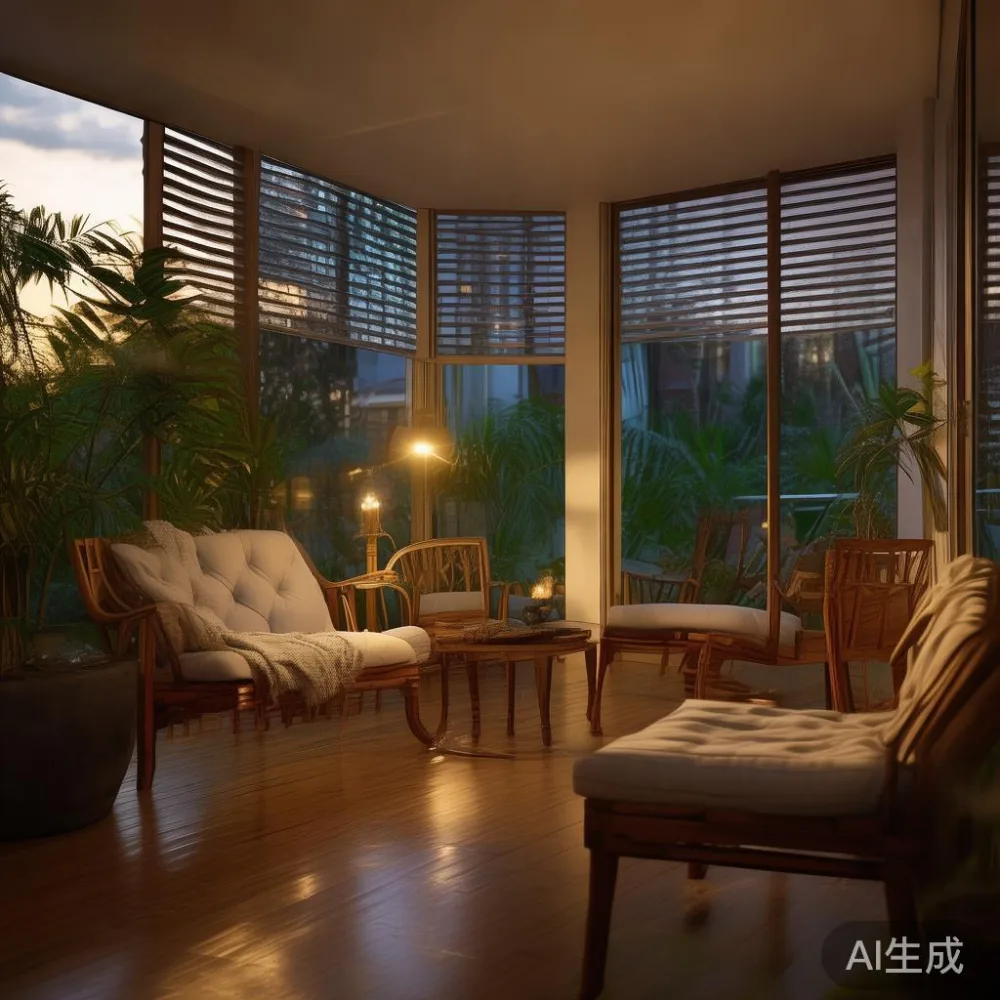
Outdoor furniture takes the worst beating, indoor pieces get the slow treatment, and the gap between the two is what this guide is really about. If you are choosing a solid wood sofa frame for your condo, a bed frame for the master bedroom, a dining table for eight, a wardrobe for the walk-in, or a marble table for the patio, the moisture story is the same — it just shows up on different timelines.
Why does Singapore's climate punish wood furniture more than temperate cities do?
Singapore's average relative humidity runs between 70% and 85% for roughly 9,400 hours of the year, and indoor humidity in an air-conditioned HDB flat still drifts between 55% and 68% depending on whether the bedroom door is left open. Wood moves across the grain roughly 1% for every 4% change in moisture content. A 210 cm dining tabletop made of solid oak — the kind you might spend SGD 2,180 on from a Foshan workshop like MIDHILL — will swell or shrink by as much as 4 to 6 mm across its width between January and August if it is left without climate control. That is not a defect; that is wood doing its job.
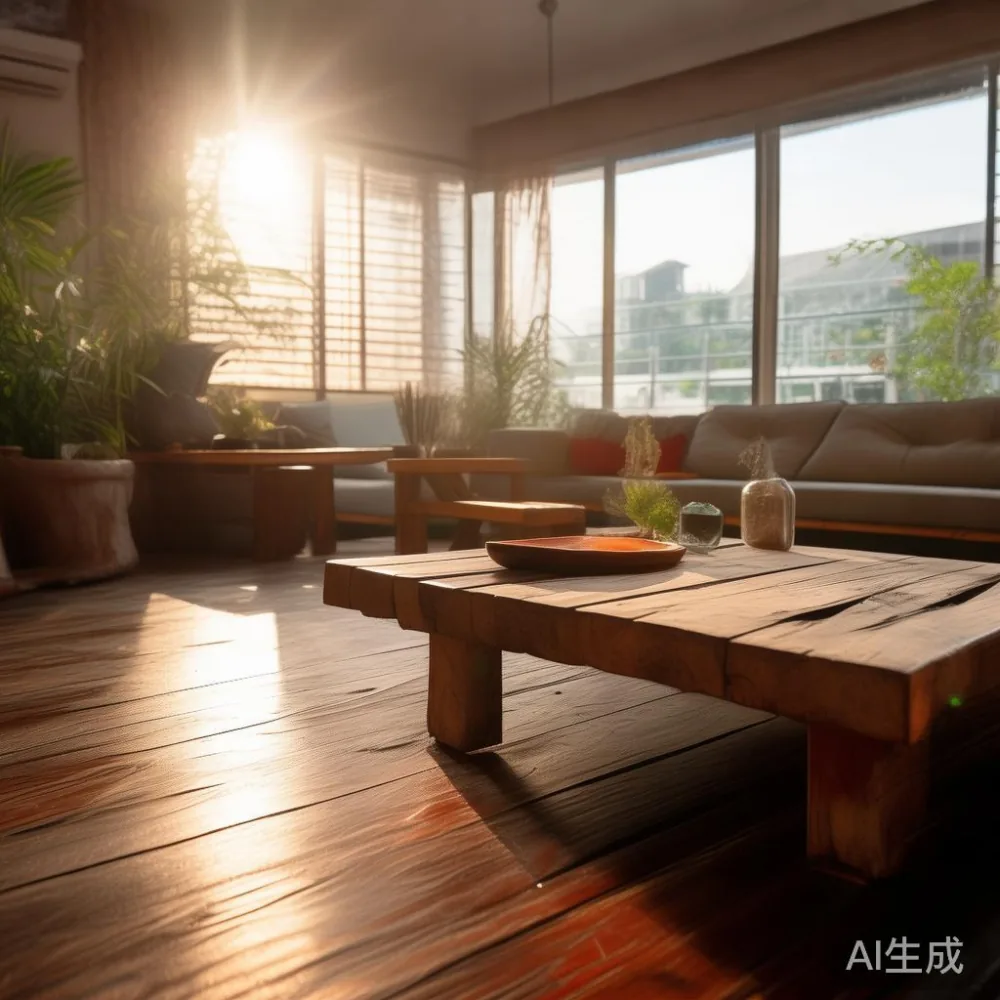
The punishment compounds outdoors. A balcony in Bedok that faces west sees afternoon surface temperatures of 52°C on the concrete floor, then monsoon rain at 11 pm that drops the same surface to 27°C. A teak outdoor sofa sitting on that floor cycles through a 25°C swing every single day, and the end-grain of the legs absorbs water fastest. After 12 months you will see fine checking (hairline cracks along the grain) on the armrest, and after 36 months the tenon joints on the frame may need re-gluing.
The reason this is worse here than in, say, Copenhagen or Vancouver is not the humidity alone — it is the combination of heat, humidity, and UV. Heat accelerates every chemical reaction in the wood, humidity feeds the fungi, and UV breaks down the lignin that holds the fibres together. Wood in Singapore fights on three fronts at once.
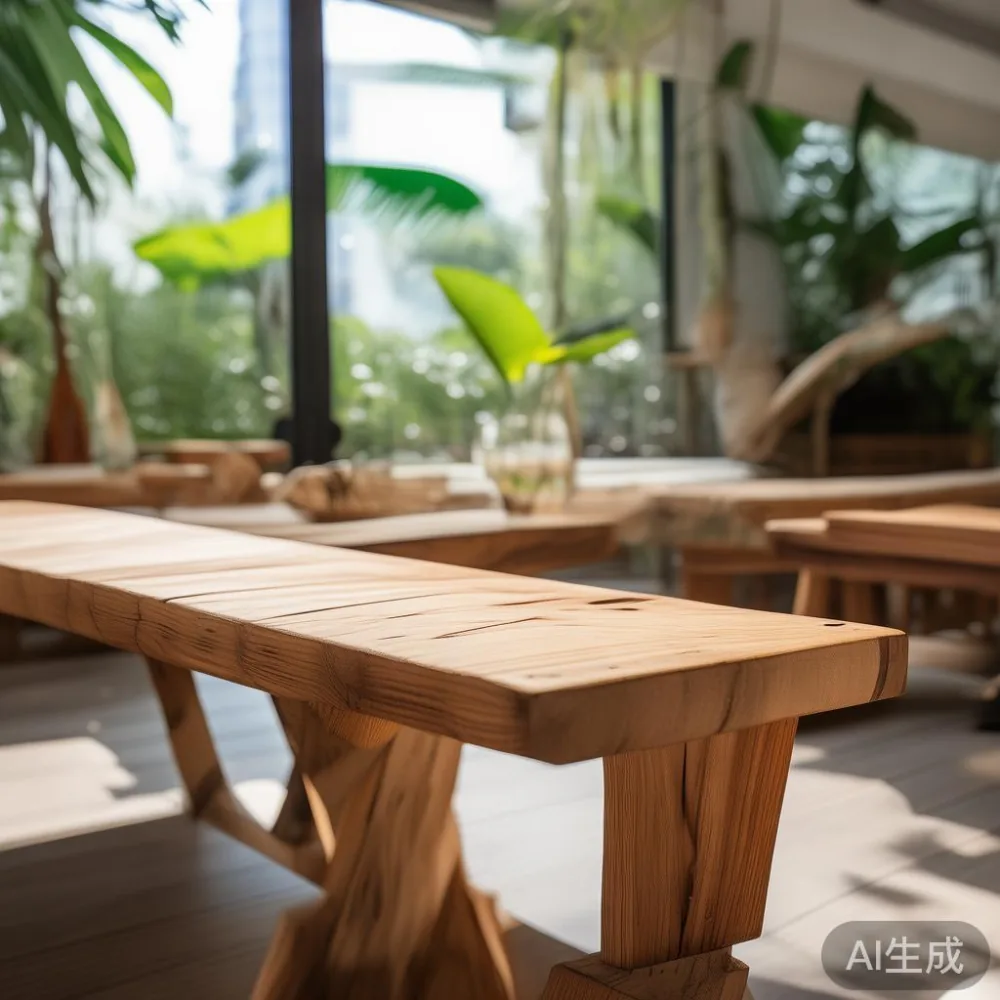
What humidity actually does to solid wood indoors?
Three things happen, in this order, when indoor humidity climbs above 65% RH for more than a few weeks:
1. The wood absorbs moisture and expands. A 150 cm solid wood bed frame made of ash or walnut gains roughly 0.8% in width — about 12 mm across the headboard. You will not see this as movement, but you will feel the headboard press against the wall behind it, and a French neoclassical solid wood headboard with carved relief will start to brush the skim coat.
2. The finish clouds. Polyurethane and conversion varnishes turn milky when water gets under them. A nightstand placed 1.2 m from a window that is opened during a thunderstorm will show white rings within four to six weeks.
3. Joints loosen. The mortise-and-tenon joints on a wardrobe door were cut to fit at 10% moisture content (the workshop standard). At 14% moisture content — which is what you reach in a Punggol flat in November — the tenon sits 0.4 mm loose in its socket. The door starts to rack.
The flip side is dry season, which in Singapore is roughly February. The same wardrobe door that racked in November will now be too tight, and the panel inserts may show a 1 mm shadow line where the float was designed. That shadow line is not a crack; it is the panel doing exactly what it was designed to do. A 10-year structural warranty (which MIDHILL offers on its solid wood cases) covers the joint, not the seasonal panel movement — a distinction worth understanding before you call.
What is the difference between French neoclassical nightstand and modern furniture?
A French neoclassical nightstand is built from solid hardwood with hand-carved fluting, brass-tipped feet, and a marble or marble-veneer top that runs 45 cm wide × 38 cm deep — proportions that follow 18th-century French cabinetmaking rather than 20th-century Scandinavian flat-pack logic; the modern nightstand, by contrast, is typically engineered wood with a melamine face, 40 cm × 35 cm footprint, and a paper laminate that begins to peel at the corners within 18 months in a Singapore bedroom.
The practical difference for a buyer in Tampines or Bedok comes down to four measurable things. A neoclassical solid wood nightstand weighs 14 to 18 kg, sits on brass adjustable glides (so you can level it on a slightly out-of-plane HDB floor), and is built around a frame-and-panel construction that moves with the room's humidity instead of fighting it. A modern flat-pack nightstand weighs 6 to 9 kg, sits on plastic wedges or felt pads, and is held together by cam locks and particleboard — which absorbs moisture like a sponge and swells irreversibly after the second wet season.
If your condo's master bedroom runs an air-con dehumidifier set to 55% RH from 11 pm to 7 am, both will perform. If you travel for work and leave the flat empty for three weeks with the air-con off, only the solid wood, frame-and-panel piece will still be flat and square when you come home.
Is outdoor furniture from solid wood worth the extra cost in Singapore?
Yes — but only if you understand what you are buying. Outdoor furniture from engineered wood or MDF will fail in 6 to 12 months on a balcony that gets afternoon sun and monsoon rain, full stop. Solid teak, solid eucalyptus, or solid shorea outdoor furniture, properly kiln-dried to 12% moisture content and finished with a marine-grade oil, will last 8 to 12 years on the same balcony before the legs need re-turning. The math: a SGD 1,450 solid teak outdoor sofa frame plus SGD 120 of annual maintenance oil comes out to roughly SGD 165 per year over a 12-year life. An engineered "wood-look" outdoor set at SGD 680 that you replace every 18 months comes out to SGD 453 per year, and you spend four weekends dismantling and disposing of it.
Three honest tips. If your balcony is covered and the walls block the western sun, you can stretch the oiling cycle to 14 months. If your balcony is open and faces west, commit to oiling every 9 months or accept the silver-grey patina that teak develops — that patina is not damage, it is the wood protecting itself, and many owners in Punggol's Waterway terraces actually prefer it. If you have a small patio off the master bedroom on a high floor, a marble table with a powder-coated aluminium base will outlast any wood piece and cost less to maintain, but it will be 38 kg heavier and will not fit through a 1.1 m × 2.1 m lift if the marble top is a single slab — insist on a two-piece top with a centre seam.
How do Foshan workshops actually build pieces that survive this climate?
Last month I visited a partner factory in Foshan with two of our buyers from Singapore, and the production manager walked us through the four steps that separate a piece that survives the corridor lift at Block 642A from one that arrives with a cracked panel.
Step 1 — Kiln drying to 10% to 12% MC. The boards go into a dehumidification kiln for 28 to 45 days depending on thickness. A 25 mm thick oak board needs 28 days; a 50 mm thick walnut slab needs 42 days. Factories that skip this step and ship at 15% to 18% MC will see panels cup the moment they hit a Singapore air-con room.
Step 2 — Frame-and-panel or floating panels. A wardrobe door built with a solid frame and a panel that floats in a 4 mm groove around all four edges can move ±2 mm with humidity without stressing the joint. A wardrobe door built as one solid slab will cup or split — guaranteed. Ask the salesperson whether the wardrobe doors are slab or frame-and-panel; if they do not know, walk away.
Step 3 — Multiple thin coats of finish, not one thick coat. A 90-micron polyurethane film built up in four coats breathes with the wood; a 200-micron film built up in two coats traps moisture and turns cloudy within 12 months in a HDB flat.
Step 4 — Carton and crate sized to the lift. A solid wood dining table for 8 disassembles into a tabletop carton (max 95 cm × 95 cm × 18 cm to fit through a standard HDB door) and two leg cartons (max 1.8 m long). Anything longer than 2.0 m will not make it around the landing corner. MIDHILL packs to those dimensions as a default, which is why their pieces clear Singapore doorways on the first attempt more often than not.
What should you measure in your home before ordering?
Five numbers, written down before you place the order:
1. The lift cabin — width × depth × diagonal height. Standard HDB lift is 1.1 m × 2.1 m × 1.4 m, but newer condos in Punggol have 1.2 m × 2.3 m cabins. Measure the diagonal of the carton, not just the floor footprint.
2. The corridor width outside your flat door. HDB corridors are 1.5 m wide; condo corridors vary from 1.6 m to 2.2 m. A 2.0 m long carton needs 1.0 m of turning radius.
3. The front door frame. Standard HDB door is 0.9 m × 2.1 m; condo doors are usually 1.0 m × 2.3 m. A disassembled dining table top wider than 0.9 m will not pass an HDB frame.
4. The balcony floor flatness. A 3 m run that is out of level by 12 mm will rack an outdoor sofa frame within six months. Use a 1.2 m spirit level.
5. The room's average humidity. Buy a SGD 18 hygrometer and log readings for one week with the air-con off. If the average is above 72% RH, specify a moisture-resistant finish on any solid wood piece.
Which finishes and wood species hold up best in Singapore?
For indoor pieces, the order from most to least stable is: teak > white oak > ash > walnut > rubberwood > MDF. Teak's natural oils resist moisture, and a 25 mm teak tabletop will move roughly 1.2 mm across a 90 cm width between dry and wet seasons — half the movement of oak. Walnut is the most prone to movement because of its open grain, which is why a walnut dining table in a Singapore flat without dehumidification will show a 2 mm shadow line at the breadboard ends by the second wet season.
For outdoor furniture, the order flips: shorea > eucalyptus > teak > Chinese oak. Shorea and eucalyptus are denser (720 to 780 kg/m³ versus teak's 660 kg/m³) and absorb less water, but they lack teak's natural oils, which is why they need marine-grade oil every 9 months while teak can go 14.
For finishes, a conversion varnish (Swedish brand names dominate this category) outperforms polyurethane in wet conditions but costs roughly SGD 18 per square metre to apply versus SGD 6 for polyurethane. On a SGD 2,400 dining table the upgrade is worth it. On a SGD 380 nightstand it is not.
How does delivery actually work from Foshan to a Singapore flat?
Sea freight from Foshan to Singapore takes 7 to 10 days, plus 3 to 5 days for customs clearance and GST (9% on the CIF value). A SGD 2,180 dining table attracts roughly SGD 196 in GST at the door. Free shipping kicks in above US$350 (about SGD 475), which almost every solid wood piece clears, so the freight itself is zero. The 14-day return window starts on the day of delivery, and the team at MIDHILL has handled returns from Tampines, Bedok, and Punggol in 2024 with an average pickup time of 4 working days — the constraint is the lift booking at the condo, not the logistics.
Lifetime refinishing — sanding back to bare wood and re-applying finish — is the real long-term value. A SGD 2,180 dining table refinished at year 8 for SGD 380 looks new again and will outlast the original purchase by another decade. Over a 20-year life, the annualized cost drops to SGD 128 per year, which is cheaper per year than renting two sets of flat-pack dining furniture over the same period.
What maintenance routine actually keeps wood healthy in Singapore?
Four habits, written on a sticky note next to the hygrometer:
1. Run the air-con dehumidifier mode for 6 hours overnight when the outdoor RH is above 80%. This alone drops indoor RH from 70% to 58% and keeps wood movement within ±0.4%.
2. Wipe spills within 10 minutes. The tannins in kopi, teh, and soy sauce stain a light oak finish within 30 minutes and become permanent within 2 hours.
3. Re-oil outdoor pieces every 9 to 14 months depending on exposure. One tin of marine-grade teak oil (SGD 45) covers a four-seater outdoor sofa with 8% left over for the dining chairs.
4. Rotate wardrobe and bed frame panels. Open wardrobe doors fully for 30 minutes twice a week to equalize moisture on both faces. Bed frame side rails that are pushed against a wall for 12 months straight will cup inward; rotating the frame head-to-foot once a year evens out the wear.
The point is not to fight the climate — Singapore's humidity will always be high, and the monsoon will always come. The point is to work with the grain, choose pieces built to move with it, and keep the routine tight enough that the wood stays healthy for the next decade. A solid wood dining table bought today should still be the centre of a Lunar New Year dinner in 2044. With the right workshop and the right care, that is a realistic target rather than a marketing claim.